





















































































Popular
Should I watch it?
Ask Your Own Question

What is the plot?
Sorry, we aren't able to watch and write up a full detailed plot yet. Check back in a few days.









What is the ending?
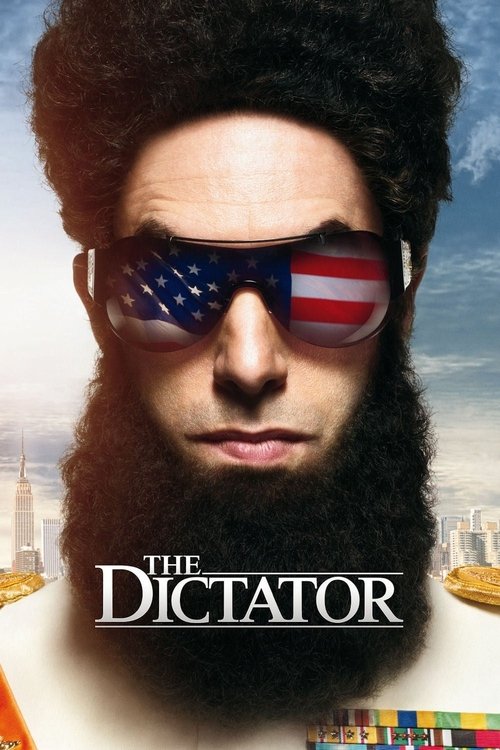
In the ending of "The Dictator," General Aladeen, after a series of misadventures and personal growth, ultimately returns to his homeland of Wadiya. He confronts the challenges of his leadership and the changes in his character, leading to a resolution that embraces democracy. He also finds love with Zoey, the woman who helped him throughout his journey.
Now, let's delve into the ending in a more detailed narrative fashion:
As the climax of the film approaches, General Aladeen, played by Sacha Baron Cohen, finds himself in a precarious situation. After being stripped of his identity and power, he has undergone a transformation, albeit reluctantly. He is now in New York City, where he has experienced the complexities of life outside his tyrannical rule. His journey has been filled with comedic missteps, but it has also forced him to confront his own flaws and the absurdity of his previous beliefs.
In the final act, Aladeen learns that his uncle has taken over Wadiya in his absence, and a democratic election is set to take place. This news ignites a fierce determination within him. He realizes that he must return to Wadiya to reclaim his position and prevent his country from falling into chaos under his uncle's rule. The stakes are high, and Aladeen's internal conflict is palpable; he grapples with the idea of leadership and what it means to truly care for his people.
Upon his return to Wadiya, Aladeen is met with a mix of fear and admiration from his citizens. He bursts into the election venue, where his uncle is about to be declared the new leader. The scene is charged with tension as Aladeen confronts his uncle, who is smug and confident in his newfound power. The audience watches as Aladeen, despite his initial bravado, begins to realize that he must adapt to the changing political landscape.
In a moment of unexpected vulnerability, Aladeen speaks to the crowd, attempting to connect with them on a human level. He acknowledges the flaws of his past leadership and expresses a desire to change. This marks a significant shift in his character; he is no longer the tyrant who rules through fear but a man seeking redemption. The crowd, initially skeptical, begins to respond to his sincerity.
Meanwhile, Zoey, played by Anna Faris, has been a constant presence in Aladeen's journey. She represents the values of freedom and democracy that Aladeen has struggled to understand. As Aladeen makes his speech, Zoey watches from the sidelines, her expression a mix of hope and concern. She has been instrumental in Aladeen's transformation, and her support is crucial as he navigates this pivotal moment.
As the scene unfolds, Aladeen's speech culminates in a declaration that he will not only lead Wadiya but will also embrace the principles of democracy. He proposes a new vision for the country, one that includes the voices of its citizens. The crowd begins to cheer, and the atmosphere shifts from one of fear to one of hope. Aladeen's uncle, realizing he is losing control, attempts to undermine Aladeen, but the momentum has shifted.
In the final moments, Aladeen and Zoey share a tender moment, solidifying their bond. Aladeen, who once viewed relationships as a means to an end, now understands the value of love and partnership. The film closes with a sense of optimism as Aladeen stands before his people, ready to lead them into a new era, one that he hopes will be marked by progress and understanding.
In summary, the fates of the main characters are as follows: General Aladeen embraces a new role as a leader who values democracy, moving away from his tyrannical past. Zoey, having played a crucial role in his transformation, stands by his side, symbolizing the change he has undergone. The uncle, representing the old regime, is left powerless as Aladeen takes back control, but in a way that suggests a new beginning for Wadiya. The film concludes with a sense of hope and the possibility of change, highlighting the journey of its characters from oppression to a more enlightened understanding of leadership and love.
Is there a post-credit scene?
Yes, "The Dictator" features a post-credit scene. In this brief segment, we see General Aladeen, played by Sacha Baron Cohen, who has undergone a significant transformation throughout the film. After his experiences in America, he is now in a more vulnerable state, reflecting on his journey.
The scene shows Aladeen in a more casual setting, where he is attempting to adapt to a new life outside of his dictatorial regime. He is seen engaging in a humorous and awkward interaction with a group of people, showcasing his struggle to fit in and his inability to fully shed his authoritarian persona. This moment serves as a comedic reminder of his character's journey from a tyrannical leader to someone trying to navigate a more democratic and open society, albeit with his unique and often misguided perspective.
The post-credit scene encapsulates the film's themes of identity, power, and the absurdity of trying to change one's nature, leaving the audience with a final laugh at Aladeen's expense.
What motivates General Aladeen to travel to America?
General Aladeen, the tyrannical leader of the fictional North African country of Wadiya, is motivated to travel to America to address the United Nations and secure his country's nuclear program. He is driven by a desire to maintain his power and ensure that his regime is not threatened by international scrutiny or intervention.
How does Aladeen's character change throughout the film?
Initially, Aladeen is portrayed as a ruthless dictator who is self-absorbed and dismissive of others. However, as he navigates life in America, he experiences moments of vulnerability and begins to understand the value of personal connections and democracy. His interactions with Zoey, a woman who helps him, challenge his views and lead to a gradual transformation.
What role does Zoey play in Aladeen's journey?
Zoey, played by Anna Faris, is a progressive activist who initially opposes Aladeen's oppressive views. As the story unfolds, she becomes a pivotal character in his journey, helping him adapt to American culture and challenging his outdated beliefs. Her influence prompts Aladeen to reconsider his views on leadership and relationships.
What is the significance of Aladeen's identity crisis in America?
Aladeen faces an identity crisis when he arrives in America and is mistaken for a common man after losing his beard and being unable to reveal his true identity. This situation forces him to confront the realities of being powerless and living without the privileges of dictatorship, leading to comedic yet poignant moments that highlight his struggle for self-identity.
How does Aladeen's relationship with his uncle affect the plot?
Aladeen's relationship with his uncle, who is portrayed as a scheming character, significantly impacts the plot. His uncle seeks to take over the leadership of Wadiya in Aladeen's absence, which adds tension and urgency to Aladeen's mission to return home and reclaim his power. This familial conflict underscores themes of betrayal and loyalty throughout the film.
Is this family friendly?
"The Dictator," produced in 2012, is not considered family-friendly due to its explicit content and adult themes. Here are some potentially objectionable or upsetting aspects that may occur for children or sensitive viewers:
-
Strong Language: The film features frequent use of profanity and vulgar language throughout, which may be inappropriate for younger audiences.
-
Sexual Content: There are several scenes that include sexual innuendos, suggestive situations, and nudity, which may be uncomfortable for children or sensitive viewers.
-
Violence and Gore: The film contains scenes of violence, including physical altercations and references to brutal acts, which may be disturbing.
-
Political Satire: The film's portrayal of dictatorship and political oppression may be confusing or upsetting for younger viewers, as it deals with serious themes in a comedic context.
-
Cultural Insensitivity: Some jokes and scenarios may be perceived as offensive or insensitive to certain cultures or groups, which could be troubling for some audiences.
-
Drug Use: There are references to drug use and substance abuse, which may not be suitable for children.
Overall, the film's humor and themes are geared towards an adult audience, making it less appropriate for family viewing.








