










































Popular
What motivates the Phantom to fall in love with Christine Daaé?
How does Christine Daaé's relationship with Raoul develop throughout the film?
What role does the opera house itself play in the story?
How does the Phantom's disfigurement affect his interactions with other characters?
What is the significance of the music in the Phantom's relationship with Christine?
Should I watch it?
Ask Your Own Question

What is the plot?
Sorry, we aren't able to watch and write up a full detailed plot yet. Check back in a few days.
More Movies Like This
Browse All Movies →







What is the ending?
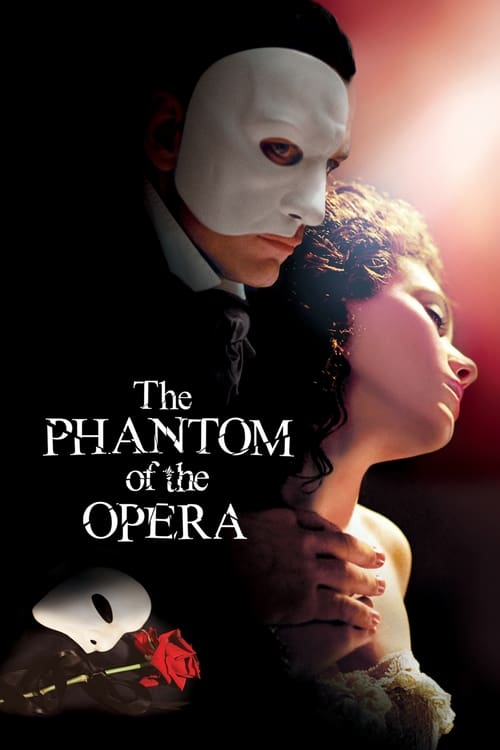
In the ending of "The Phantom of the Opera" (2004), Christine Daaé confronts the Phantom, leading to a tragic resolution. The Phantom, heartbroken and desperate, ultimately lets Christine go with Raoul, realizing that his love cannot be reciprocated. He disappears into the shadows of his lair, leaving behind a single rose with a black ribbon, symbolizing his unrequited love and sorrow.
As the film concludes, Raoul and Christine escape together, while the Phantom is left alone, mourning his lost love. The final scene shows the Phantom's mask lying on the ground, a poignant reminder of his presence and the love he had for Christine.
As the final act unfolds, the atmosphere in the Paris Opera House is thick with tension. The grand chandelier, a symbol of the Phantom's power, hangs ominously above the stage. Christine Daaé, now fully aware of the Phantom's obsession, stands at a crossroads between her love for Raoul and the dark allure of the Phantom.
In a climactic confrontation, Christine visits the Phantom in his lair, a cavernous space filled with haunting music and flickering candlelight. The Phantom, cloaked in shadows, reveals his deep-seated pain and longing for love. He implores Christine to stay with him, expressing his feelings through a haunting melody that echoes through the underground lair. Christine, torn between fear and compassion, sees the man behind the mask, yet she cannot ignore the darkness that surrounds him.
Meanwhile, Raoul, determined to rescue Christine, ventures into the depths of the opera house, guided by the whispers of the Phantom's legend. He finds Christine and the Phantom, and a tense standoff ensues. The Phantom, feeling betrayed and desperate, threatens Raoul, showcasing his volatile nature. Christine, caught in the middle, pleads for peace, her heart aching for both men.
In a moment of clarity, Christine reaches out to the Phantom, offering him a chance at redemption. She kisses him gently, a gesture of compassion that momentarily softens his heart. However, the Phantom understands that true love cannot be forced. He realizes that Christine's heart belongs to Raoul, and in a moment of profound sorrow, he releases her, allowing her to leave with Raoul.
As Christine and Raoul escape, the Phantom is left alone in his lair, surrounded by the remnants of his unfulfilled dreams. He watches them depart, his heart heavy with loss. In a final act of love, he places a single rose with a black ribbon on the spot where Christine once stood, a symbol of his enduring affection and the pain of his solitude.
The film closes with the Phantom's mask lying on the ground, a haunting reminder of his presence and the love he had for Christine. The camera lingers on the mask, emphasizing the themes of love, loss, and the duality of beauty and monstrosity that permeate the story. The Phantom, once a figure of terror, is revealed as a tragic character, forever haunted by his unrequited love.
Is there a post-credit scene?
The 2004 film "The Phantom of the Opera" does not have a post-credit scene. The movie concludes with a poignant and emotional ending, focusing on the aftermath of the Phantom's actions and the fate of Christine Daaé. After the climactic confrontation in the lair, the film ends with Christine leaving the Phantom behind, and the final scenes depict the Phantom alone in his underground lair, reflecting on his lost love. The film closes with a haunting image of the Phantom's mask left behind, symbolizing his tragic existence and the love he could never fully attain. There are no additional scenes or credits that follow this conclusion.
What motivates the Phantom to fall in love with Christine Daaé?
The Phantom, a disfigured musical genius living beneath the Paris Opera House, becomes enamored with Christine Daaé after hearing her sing. He sees in her a pure talent that mirrors his own passion for music, and he becomes obsessed with her beauty and voice. His love is complicated by his own feelings of isolation and rejection, leading him to both protect and manipulate her.
How does Christine Daaé's relationship with Raoul develop throughout the film?
Christine Daaé's relationship with Raoul begins in childhood, where they share a deep bond. As they reunite in adulthood, their connection rekindles into a romantic relationship. Raoul's determination to protect Christine from the Phantom's influence showcases his bravery and love, culminating in a confrontation with the Phantom as he seeks to rescue Christine from his grasp.
What role does the opera house itself play in the story?
The Paris Opera House serves as a character in its own right, embodying the grandeur and mystery of the story. It is the setting for the Phantom's haunting presence, with its hidden passages and grand stages. The opera house reflects the themes of beauty and terror, as it is both a place of artistic expression and a site of the Phantom's tragic isolation.
How does the Phantom's disfigurement affect his interactions with other characters?
The Phantom's disfigurement profoundly impacts his interactions, instilling a deep sense of shame and anger. He hides his face behind a mask, which symbolizes his emotional scars. This leads to a complex dynamic with Christine, who sees beyond his appearance, and with Raoul, who represents the societal norms that the Phantom feels alienated from. His disfigurement fuels his jealousy and possessiveness over Christine.
What is the significance of the music in the Phantom's relationship with Christine?
Music is the lifeblood of the Phantom's relationship with Christine, serving as a means of communication and connection. He teaches her to sing and composes music specifically for her, which deepens their bond. The music reflects his emotions, ranging from love to despair, and ultimately becomes a tool of manipulation as he uses it to control her career and life, showcasing the duality of creation and obsession.
Is this family friendly?
The 2004 film "The Phantom of the Opera" contains several elements that may be considered objectionable or upsetting for children or sensitive viewers. Here are some aspects to consider:
-
Violence and Threats: There are scenes that depict violence, including the Phantom's aggressive behavior towards characters, which may be frightening for younger audiences.
-
Dark Themes: The film explores themes of obsession, unrequited love, and isolation, which can be emotionally intense and may be difficult for children to fully understand.
-
Death and Mourning: There are references to death and the impact of loss, particularly in relation to the character of Christine and her emotional struggles.
-
Disturbing Imagery: The Phantom's appearance is unsettling, with his disfigured face revealed in certain scenes, which could be frightening for some viewers.
-
Romantic Tension: The film includes complex romantic relationships that may not be suitable for younger audiences, as they involve themes of manipulation and emotional turmoil.
-
Supernatural Elements: The presence of a ghostly figure and the eerie atmosphere of the opera house may be unsettling for sensitive viewers.
These elements contribute to a darker tone that may not be appropriate for all children or sensitive individuals.






