
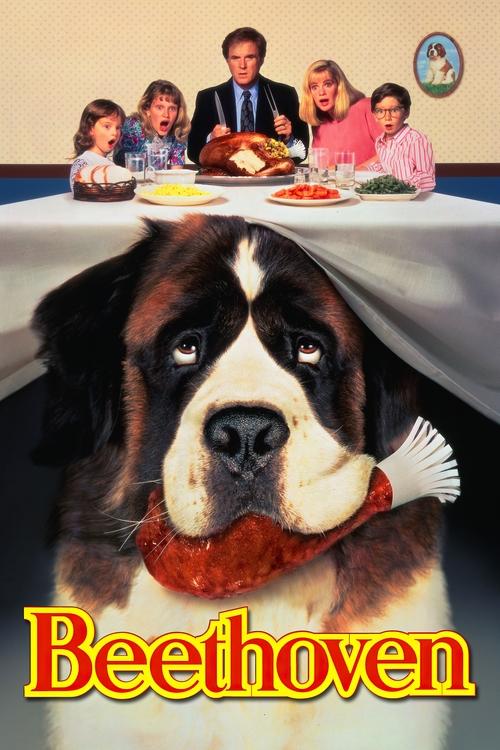
























Popular
What is the significance of Beethoven the dog in the Newton family's life?
How does George Newton's character evolve throughout the film?
What role does the veterinarian, Dr. Varnick, play in the plot?
How do the children in the Newton family react to Beethoven's arrival?
What comedic situations arise from Beethoven's size and behavior?
Should I watch it?
Ask Your Own Question

What is the plot?
Sorry, we aren't able to watch and write up a full detailed plot yet. Check back in a few days.




What is the ending?
In the ending of the movie "Beethoven," the St. Bernard dog, Beethoven, is saved from a dangerous situation orchestrated by the villainous veterinarian, Dr. Varnick. The Newton family comes together to rescue him, ultimately defeating Varnick and ensuring Beethoven's safety. The family realizes the importance of love and loyalty, and they embrace Beethoven as a cherished member of their family.
As the climax of the film unfolds, the Newton family is in a state of panic. They have discovered that Dr. Varnick, the unscrupulous veterinarian, has sinister plans for Beethoven. The family learns that Varnick intends to use Beethoven for his own nefarious purposes, which include testing and experimentation. The tension escalates as the family races against time to save their beloved dog.
The scene shifts to Varnick's clinic, where Beethoven is being held. The atmosphere is tense and foreboding, filled with the sounds of barking dogs and the sterile smell of the clinic. George Newton, the father, is filled with determination and fear for Beethoven's safety. He gathers his family, including his wife, Alice, and their children, Emily and Ryce, to devise a plan to rescue Beethoven. Each family member is motivated by their love for the dog, showcasing their unity and commitment to saving him.
As they infiltrate the clinic, the family encounters various obstacles, including Varnick's henchmen. The action is frantic, with the family working together to navigate through the clinic's corridors. The children, particularly Emily, show bravery and resourcefulness, embodying the film's themes of loyalty and courage. They manage to locate Beethoven, who is frightened but relieved to see his family.
In a climactic confrontation, the Newtons face off against Varnick. The scene is filled with chaos as Beethoven breaks free, creating a ruckus that distracts Varnick and his men. The family works in unison, using their wits and teamwork to outsmart Varnick. The tension peaks as they finally manage to escape the clinic with Beethoven, who joyfully reunites with them.
The final scenes depict the Newton family back at home, where they celebrate their victory and the return of Beethoven. The atmosphere is warm and joyful, filled with laughter and relief. The family reflects on their adventure, realizing how much they have grown closer through the ordeal. George and Alice share a moment of understanding, recognizing the importance of family and the unconditional love that Beethoven has brought into their lives.
As the credits roll, the audience sees glimpses of Beethoven enjoying his life with the Newtons, playing in the yard and being a part of family activities. The film concludes on a heartwarming note, emphasizing the bond between the family and their dog, and the happiness that comes from love and loyalty. Each character, having faced their fears and challenges, emerges stronger and more united, with Beethoven firmly established as a beloved member of the family.
Is there a post-credit scene?
The movie "Beethoven," produced in 1992, does not have a post-credit scene. The film concludes with a heartwarming resolution as the St. Bernard, Beethoven, is embraced by the Newton family after they successfully thwart the villainous veterinarian, Dr. Varnick, who intended to use Beethoven for unethical experiments. The final moments show the family enjoying their time together with Beethoven, solidifying their bond and love for their pet. The credits roll without any additional scenes following them.
What is the significance of Beethoven the dog in the Newton family's life?
Beethoven, the St. Bernard, becomes a pivotal figure in the Newton family's life, representing loyalty, love, and the chaos that comes with it. His arrival brings joy and excitement, especially to the children, but also leads to a series of comedic and chaotic events that challenge the family's dynamics.
How does George Newton's character evolve throughout the film?
George Newton, initially portrayed as a strict and uptight father, experiences significant character development. His frustration with Beethoven's antics and the mess he creates leads to moments of conflict, but as the story progresses, George learns to appreciate the joy and love that Beethoven brings to the family, ultimately embracing the chaos.
What role does the veterinarian, Dr. Varnick, play in the plot?
Dr. Varnick serves as the antagonist in the film, representing a threat to Beethoven's safety. His character is driven by a desire to conduct experiments on dogs, and he becomes increasingly menacing as he pursues Beethoven, creating tension and urgency for the Newton family to protect their beloved pet.
How do the children in the Newton family react to Beethoven's arrival?
The children, particularly Emily and Ryce, are ecstatic about Beethoven's arrival. They quickly bond with him, seeing him as a playful companion and protector. Their excitement contrasts with their father's initial disapproval, highlighting the innocence and joy that pets can bring to a family.
What comedic situations arise from Beethoven's size and behavior?
Beethoven's large size and clumsy behavior lead to numerous comedic situations throughout the film. From knocking over furniture to causing chaos during family events, his antics create a series of laugh-out-loud moments that showcase the challenges of having such a big dog, while also endearing him to the audience.
Is this family friendly?
"Beethoven," produced in 1992, is generally considered a family-friendly film, but it does contain a few scenes that might be potentially objectionable or upsetting for children or sensitive viewers. Here are some aspects to consider:
-
Dog Napping: There is a scene where Beethoven, the St. Bernard, is kidnapped by a group of men who intend to use him for unethical purposes. This can be distressing for younger viewers who may feel anxious about the dog's safety.
-
Animal Mischief: Beethoven gets into various mischief throughout the film, including causing chaos in the house. While this is played for comedic effect, some scenes may involve messiness or destruction that could be upsetting to sensitive viewers.
-
Family Conflict: There are moments of tension within the family, particularly between the parents regarding the dog and the responsibilities of pet ownership. This conflict may resonate with children who are sensitive to family dynamics.
-
Slight Violence: The film includes some slapstick humor that involves mild physical comedy, such as characters being knocked over or startled. While not graphic, it may be jarring for some viewers.
-
Emotional Moments: There are scenes that evoke strong emotions, particularly related to the bond between Beethoven and the family. These moments may be touching but could also be upsetting for those who are sensitive to themes of loss or danger.
Overall, while "Beethoven" is designed to be entertaining for families, these elements may require parental guidance for younger viewers.








