







































Popular
What is the role of media mogul Elliot Carver in the plot of Tomorrow Never Dies?
How does James Bond first encounter Wai Lin in Tomorrow Never Dies?
What is the significance of the stealth boat in the film?
What motivates James Bond to stop Elliot Carver's plans?
How does the film portray the relationship between James Bond and M?
Should I watch it?
Ask Your Own Question

What is the plot?
Sorry, we aren't able to watch and write up a full detailed plot yet. Check back in a few days.







What is the ending?
In the ending of "Tomorrow Never Dies," James Bond confronts the villain Elliot Carver aboard his stealth ship. After a fierce battle, Bond manages to defeat Carver, who meets his demise when he is killed by his own satellite weapon. Bond then escapes the ship just before it is destroyed, and he reunites with his love interest, Wai Lin. The film concludes with Bond and Wai Lin sharing a moment of intimacy, while the world is saved from Carver's plans.
Now, let's delve into the ending in a more detailed, chronological narrative.
As the climax of "Tomorrow Never Dies" unfolds, James Bond finds himself aboard the stealth ship of the media mogul Elliot Carver. The atmosphere is tense, filled with the sounds of alarms and the distant echoes of chaos as Bond navigates through the ship's dimly lit corridors. He is determined to stop Carver's plan to instigate a war between China and the UK, which he intends to broadcast live to boost his media empire.
Bond's internal motivation is clear; he is not just fighting for his country but also for the lives that hang in the balance due to Carver's manipulations. As he moves stealthily, he encounters armed guards, engaging in a series of intense hand-to-hand combat sequences. Each fight showcases Bond's resourcefulness and physical prowess, as he uses the environment to his advantage, taking down opponents with a mix of skill and cunning.
Eventually, Bond confronts Carver in the control room, where the villain is smugly confident about his plan. Carver's arrogance is palpable as he reveals his intentions to use a satellite weapon to create a conflict that will lead to a ratings bonanza for his news network. Bond, however, remains unfazed, his resolve unwavering. The tension escalates as they exchange barbs, revealing Carver's twisted motivations and Bond's commitment to thwarting him.
In a dramatic turn, Bond manages to disable the satellite weapon, but not before Carver attempts to escape. The confrontation escalates into a physical struggle, culminating in a fierce fight that spills out onto the deck of the ship. The visuals are striking, with the backdrop of the ocean and the ship's machinery creating a chaotic yet cinematic battleground. Bond's determination is evident as he fights not just for victory, but for justice.
As the battle reaches its peak, Carver's hubris leads to his downfall. In a moment of poetic justice, he is killed by his own satellite weapon, which he had intended to use against others. The scene is charged with emotion, as Bond watches Carver's demise, a mix of relief and grim satisfaction washing over him. The stakes of the conflict are underscored by the realization that Carver's ambition has led to his own destruction.
With Carver defeated, Bond makes a narrow escape from the ship just as it begins to self-destruct. The visuals are intense, with explosions lighting up the night sky as Bond races against time. He finds Wai Lin, who has been a formidable ally throughout the film, and together they navigate the chaos, showcasing their chemistry and mutual respect forged through their shared experiences.
As they escape, the ship is engulfed in flames, symbolizing the end of Carver's reign of terror. The destruction of the ship serves as a metaphor for the obliteration of his corrupt ambitions. Bond and Wai Lin share a moment of relief and triumph, their bond strengthened by the trials they have faced together. The emotional weight of their journey culminates in a passionate kiss, a moment of intimacy amidst the chaos, highlighting their connection.
In the final scenes, Bond and Wai Lin are seen on a boat, drifting away from the wreckage. The world is safe once more, and the threat of war has been averted. The film closes with a sense of resolution, as Bond reflects on the events that transpired, his character growth evident in his ability to connect with Wai Lin on a deeper level. The fate of the main characters is clear: Bond continues his role as a protector, while Wai Lin stands as an equal partner, both having emerged stronger from their ordeal.
The ending of "Tomorrow Never Dies" encapsulates the themes of resilience, the consequences of unchecked ambition, and the power of collaboration, leaving the audience with a sense of closure and hope for the future.
Is there a post-credit scene?
Tomorrow Never Dies, produced in 1997, does not have a post-credit scene. The film concludes with James Bond and Wai Lin sharing a moment after their adventure, but there are no additional scenes or content that appear after the credits roll. The film ends on a note of triumph and camaraderie, typical of the Bond series, but it does not include any further narrative or teasing of future events.
What is the role of media mogul Elliot Carver in the plot of Tomorrow Never Dies?
Elliot Carver, played by Jonathan Pryce, is the primary antagonist of the film. He is a powerful media mogul who seeks to manipulate global events to increase his media empire's influence. Carver orchestrates a series of incidents, including the sinking of a British warship, to provoke a war between the UK and China, believing that the ensuing chaos will boost his ratings and allow him to control the narrative.
How does James Bond first encounter Wai Lin in Tomorrow Never Dies?
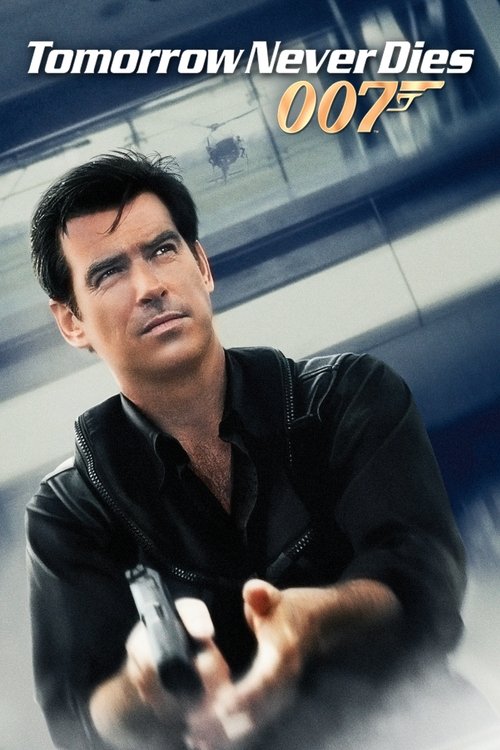
James Bond, portrayed by Pierce Brosnan, first encounters Wai Lin, played by Michelle Yeoh, in a tense situation in a Chinese hotel. Bond is on a mission to investigate Carver's activities, and during a confrontation with Carver's henchmen, he finds himself working alongside Wai Lin, who is also investigating Carver. Their initial meeting is marked by mutual suspicion, but they quickly realize they share a common goal.
What is the significance of the stealth boat in the film?
The stealth boat, known as the 'Carver One,' is a key plot device in Tomorrow Never Dies. It is a technologically advanced vessel that allows Carver to carry out his plans undetected. The boat is equipped with cutting-edge weaponry and stealth technology, which Carver uses to stage attacks and manipulate international relations. The climax of the film revolves around Bond's efforts to stop Carver from using the boat to escalate tensions between the UK and China.
What motivates James Bond to stop Elliot Carver's plans?
James Bond is motivated by a sense of duty to protect global stability and prevent war. As a British secret agent, he feels a personal responsibility to thwart Carver's dangerous schemes, which threaten not only his country but also international peace. Additionally, Bond's growing partnership with Wai Lin adds a personal stake to his mission, as he seeks to ensure her safety and success in their shared objective.
How does the film portray the relationship between James Bond and M?
In Tomorrow Never Dies, the relationship between James Bond and M, played by Judi Dench, is characterized by a blend of respect and tension. M is portrayed as a strong, authoritative figure who challenges Bond's traditional methods and often questions his reckless behavior. Their interactions highlight a dynamic where M demands accountability from Bond, pushing him to adapt to modern threats while still recognizing his skills as a secret agent.
Is this family friendly?
"Tomorrow Never Dies," produced in 1997, is a James Bond film that contains several elements that may not be considered family-friendly. Here are some potentially objectionable or upsetting aspects:
-
Violence: The film features numerous action sequences, including gunfights, explosions, and hand-to-hand combat. Characters are shown being shot, injured, or killed, which may be intense for younger viewers.
-
Sexual Content: There are scenes that include innuendo, suggestive dialogue, and sexual situations. Bond's relationships with women often involve flirtation and intimacy, which may not be suitable for all audiences.
-
Language: The film contains occasional strong language and mild profanity, which could be inappropriate for children.
-
Themes of Espionage and Betrayal: The plot revolves around themes of espionage, betrayal, and corporate greed, which may be complex and unsettling for younger viewers to understand.
-
Tension and Suspense: The film includes moments of high tension and suspense, particularly in scenes involving hostage situations or threats to characters' lives, which could be distressing.
-
Mature Themes: The storyline involves mature themes such as war, terrorism, and the moral ambiguities of espionage, which may not resonate well with younger audiences.
Overall, while "Tomorrow Never Dies" is an action-packed thriller, its content may not be suitable for children or sensitive viewers.







