


Popular
What motivates Oda Nobunaga in his quest for power during the confrontation at Okehazama?
How does Takeda Shingen's character influence the events at Okehazama?
What role does the weather play in the battle at Okehazama?
How does the character of Mitsuhide Akechi contribute to the plot in this episode?
What is the significance of the duel between Oda Nobunaga and Takeda Shingen?
Should I watch it?
Ask Your Own Question

What is the plot?
The episode begins with a dramatic introduction to the battlefield at Okehazama, where the forces of Oda Nobunaga are preparing for an imminent confrontation. The atmosphere is tense, filled with the sounds of clashing swords and the cries of soldiers. Nobunaga, a fierce and ambitious warlord, is shown strategizing with his generals, including the loyal and skilled warrior, Katsuie Shibata. Nobunaga's determination to unify Japan is palpable, and he is eager to prove his strength against the Takeda clan.
As the scene shifts, we see Takeda Shingen, the powerful leader of the Takeda clan, rallying his troops. Shingen is portrayed as a formidable and charismatic leader, inspiring his men with his confidence and battle prowess. He is aware of Nobunaga's growing power and is determined to crush him before he can become a significant threat. The tension between the two warlords is established, setting the stage for the conflict that is about to unfold.
The narrative then focuses on the character of Masamune Date, who is introduced as a lone wolf warrior. He is shown riding through the countryside, reflecting on his own ambitions and the chaos of the ongoing wars. Masamune is depicted as a fierce and proud fighter, with a desire to carve his own path in the tumultuous landscape of feudal Japan. His internal struggle and desire for recognition are highlighted, foreshadowing his eventual involvement in the conflict.
Back at Okehazama, the battle begins as Nobunaga's forces clash with Shingen's army. The animation captures the chaos of war, with soldiers engaging in fierce hand-to-hand combat. Nobunaga leads his troops with a fierce resolve, showcasing his tactical genius as he maneuvers his forces strategically. The battle is intense, with both sides suffering heavy casualties. Nobunaga's determination to win is evident as he fights valiantly alongside his men.
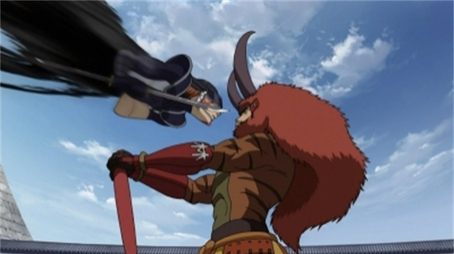
As the battle rages on, Nobunaga faces off against Shingen in a dramatic confrontation. The two warlords engage in a fierce duel, showcasing their exceptional swordsmanship and combat skills. The fight is filled with dynamic movements and powerful strikes, emphasizing the stakes of their rivalry. Nobunaga's resolve to defeat Shingen is fueled by his desire to unify Japan, while Shingen fights to protect his clan's honor and power.
In a pivotal moment, Nobunaga manages to gain the upper hand in the duel, using his cunning and strategic mind to outmaneuver Shingen. Just as it seems that Nobunaga is about to claim victory, a sudden twist occurs. The battlefield is thrown into chaos as a third party intervenes, disrupting the fight between the two warlords. This unexpected turn of events shifts the focus of the battle, leaving both Nobunaga and Shingen momentarily stunned.
The episode then shifts to Masamune, who arrives at the battlefield just in time to witness the chaos. He is intrigued by the power struggle between Nobunaga and Shingen, recognizing the potential for his own ambitions amidst the turmoil. Masamune's presence adds another layer of complexity to the conflict, as he contemplates his next move in this unpredictable environment.
As the episode progresses, the battle continues to escalate, with both sides regrouping and strategizing for the next phase of the conflict. Nobunaga, fueled by his desire for victory, rallies his troops for a final push against Shingen's forces. The stakes are higher than ever, and the tension builds as both warlords prepare for the decisive moments of the battle.
In the climax of the episode, Nobunaga and Shingen find themselves face to face once again, their rivalry reaching its peak. The two engage in a final, intense duel, each determined to emerge victorious. The animation captures the emotional weight of their confrontation, highlighting their motivations and the consequences of their actions. The fight is fierce and relentless, showcasing the skills and determination of both warriors.
As the episode draws to a close, the outcome of the battle remains uncertain, leaving viewers on the edge of their seats. The episode ends with a sense of anticipation, as the conflict at Okehazama sets the stage for future confrontations and alliances in the ongoing struggle for power in feudal Japan. The characters' motivations and ambitions are left hanging, promising further developments in the episodes to come.








What is the ending?
In the ending of "Horrific! Confrontation at Okehazama!", the battle reaches a climactic point as Oda Nobunaga faces off against Takeda Shingen and his forces. Nobunaga, fueled by his ambition and desire for power, unleashes a devastating attack that leads to a significant victory. The episode concludes with Nobunaga's triumph, solidifying his position as a formidable warlord, while Shingen and his men are left to regroup after suffering heavy losses.
As the episode unfolds, the tension builds towards the confrontation at Okehazama. The scene opens with Oda Nobunaga, portrayed with a fierce determination, preparing for battle. His internal thoughts reveal his ambition to unify Japan under his rule, showcasing his relentless drive. The atmosphere is thick with anticipation as his forces gather, ready to face the approaching army of Takeda Shingen.
Meanwhile, Takeda Shingen, known for his strategic brilliance, is seen rallying his troops. His demeanor is calm yet resolute, reflecting his confidence in their strength and tactics. The contrasting motivations of the two leaders are palpable; Nobunaga seeks to dominate, while Shingen aims to protect his territory and uphold his honor.
As the battle commences, the clash of swords and the cries of warriors fill the air. Nobunaga's forces, though outnumbered, fight with fervor, driven by their leader's charisma. The animation captures the chaos of war, with vivid depictions of combat and the emotional turmoil of the soldiers. Nobunaga, in a moment of desperation, unleashes a powerful attack that turns the tide of battle in his favor.
In a pivotal scene, Nobunaga confronts Shingen directly. The two leaders exchange fierce blows, their fighting styles reflecting their personalities--Nobunaga's aggressive and unyielding approach against Shingen's calculated and defensive maneuvers. The intensity of their duel symbolizes the larger conflict between their ambitions and ideologies.
As the dust settles, Nobunaga emerges victorious, standing amidst the remnants of the battlefield. His expression is a mix of triumph and the weight of his actions, hinting at the burdens of leadership and the cost of ambition. Shingen, on the other hand, is left to retreat, his forces decimated, but his spirit unbroken. The episode closes with Nobunaga's declaration of his intent to unify Japan, setting the stage for future conflicts and the ongoing struggle for power.
In summary, the episode concludes with Nobunaga's victory at Okehazama, solidifying his reputation as a formidable warlord, while Shingen and his men face the consequences of their defeat, leaving the audience with a sense of the ongoing conflict that will shape the future of Japan.
Is there a post-credit scene?
In the episode "Horrific! Confrontation at Okehazama!" of Sengoku BASARA: Samurai Kings, there is no post-credit scene. The episode concludes without any additional content after the credits roll. The focus remains on the intense battle and character developments that take place during the episode, particularly highlighting the conflict between Oda Nobunaga and his adversaries. The narrative wraps up with the events of the battle, leaving no further scenes or teasers for future episodes.
What motivates Oda Nobunaga in his quest for power during the confrontation at Okehazama?
Oda Nobunaga is driven by a fierce ambition to unify Japan under his rule. His desire for power is fueled by a need to prove himself as a formidable leader, especially in the face of overwhelming odds. During the confrontation at Okehazama, he exhibits a cold determination, viewing the battle as a pivotal moment to demonstrate his strength and strategic prowess.
How does Takeda Shingen's character influence the events at Okehazama?
Takeda Shingen is portrayed as a powerful and honorable warrior, whose presence looms over the battlefield. His reputation as a fierce general influences the morale of his troops and instills fear in his enemies. Shingen's strategic mind and desire for glory drive him to confront Nobunaga, setting the stage for a dramatic clash that highlights the contrasting ideals of honor and ambition.
What role does the weather play in the battle at Okehazama?
The weather during the battle at Okehazama is depicted as tumultuous, with heavy rain and mud creating a chaotic environment. This serves to heighten the tension of the confrontation, as the adverse conditions challenge both armies. The rain symbolizes the unpredictability of war and adds to the dramatic atmosphere, impacting the strategies employed by both Nobunaga and Shingen.
How does the character of Mitsuhide Akechi contribute to the plot in this episode?
Mitsuhide Akechi serves as Oda Nobunaga's loyal retainer, and his character adds depth to Nobunaga's motivations. Throughout the episode, Akechi's unwavering support and strategic insights help Nobunaga navigate the complexities of the battle. His internal conflict and admiration for Nobunaga's ambition also foreshadow future tensions, highlighting the intricate dynamics of loyalty and ambition.
What is the significance of the duel between Oda Nobunaga and Takeda Shingen?
The duel between Oda Nobunaga and Takeda Shingen is significant as it encapsulates the clash of their contrasting ideologies--Nobunaga's ruthless ambition versus Shingen's honorable warrior code. This confrontation not only serves as a pivotal moment in the battle but also symbolizes the larger struggle for power in Japan. The intensity of their duel reflects their personal stakes and the broader implications for their respective clans.
Is this family friendly?
In "Horrific! Confrontation at Okehazama!" from Sengoku BASARA: Samurai Kings, there are several elements that may be considered objectionable or upsetting for children or sensitive viewers:
-
Violence and Combat: The episode features intense battle scenes with sword fighting, bloodshed, and characters engaging in lethal confrontations. The depiction of violence is stylized but can still be graphic.
-
Death and Injury: Characters experience injuries and there are moments that imply or show death, which may be distressing for younger audiences.
-
Dark Themes: The overarching themes of betrayal, ambition, and the harsh realities of war can be heavy and may not be suitable for all viewers, particularly children.
-
Emotional Turmoil: Characters display a range of strong emotions, including anger, despair, and vengeance, which may be intense for sensitive viewers.
-
Supernatural Elements: Some characters exhibit supernatural abilities, which might be frightening or confusing for younger audiences.
These aspects contribute to a tone that may not be entirely family-friendly, depending on the viewer's age and sensitivity to such themes.