


Popular
What motivates Date Masamune in his quest for power?
How does the relationship between Sanada Yukimura and Tokugawa Ieyasu evolve throughout the season?
What role does Oda Nobunaga play in the power struggles of the series?
How does the rivalry between Takeda Shingen and Uesugi Kenshin manifest in the series?
What is the significance of the character of Kasuga in the story?
Should I watch it?
Ask Your Own Question

What is the plot?
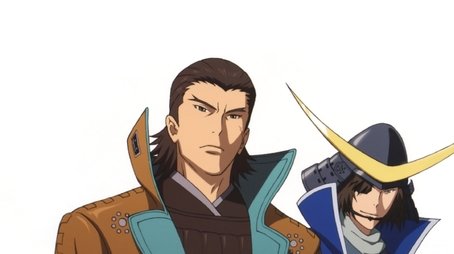
In the opening of Sengoku BASARA: Samurai Kings, the story is set in the tumultuous Sengoku period of Japan, where various warlords vie for power. The series begins with a dramatic scene showcasing the chaos of battle. The camera pans over a battlefield littered with fallen warriors, emphasizing the brutality of the era. We are introduced to the main character, Date Masamune, a fierce and ambitious warlord known for his one-eyed appearance and his desire to unify Japan. He rides into battle with his loyal retainer, Katakura Kojūrō, by his side, showcasing his confidence and determination.
As the battle rages on, Masamune encounters his rival, Sanada Yukimura, a passionate and skilled warrior who fights for the Takeda clan. Their clash is intense, filled with swift swordplay and powerful attacks. Masamune's desire to prove himself as the strongest warrior is evident, while Yukimura fights with a sense of honor and loyalty to his lord, Takeda Shingen. The fight ends inconclusively, with both warriors recognizing each other's strength, setting the stage for their ongoing rivalry.
Meanwhile, we are introduced to the antagonist, Oda Nobunaga, a ruthless and cunning warlord who seeks to dominate all of Japan. Nobunaga's forces are shown executing a brutal campaign against his enemies, employing treachery and overwhelming force. His character is marked by a cold demeanor and a strategic mind, as he plots to eliminate any opposition. Nobunaga's ambition drives him to seek out powerful allies, including the enigmatic and deadly warrior, Akechi Mitsuhide.
As the story progresses, Masamune learns of Nobunaga's plans and decides to take action. He gathers his forces and allies, including the fierce warrior, Uesugi Kenshin, who is known for his tactical brilliance and strong sense of justice. The two warlords form a temporary alliance against Nobunaga, driven by their shared goal of stopping his tyranny. This alliance is fraught with tension, as both Masamune and Kenshin have strong personalities and differing ideals.
The narrative shifts to a series of battles between the allied forces of Masamune and Kenshin against Nobunaga's troops. Each battle is depicted with vivid detail, showcasing the strategies employed by both sides. In one significant confrontation, Masamune leads a charge against Nobunaga's forces, demonstrating his prowess in combat. The clash is chaotic, with soldiers clashing and the sounds of battle echoing throughout the landscape. Masamune's determination to protect his land and people fuels his ferocity in battle.
During these encounters, we also see the internal struggles of the characters. Masamune grapples with the weight of leadership and the responsibility of his decisions. He is driven by a desire for glory but also feels the burden of the lives that depend on him. Kenshin, on the other hand, is motivated by a sense of justice and honor, often questioning the morality of their actions in the face of Nobunaga's cruelty.
As the conflict escalates, Nobunaga's tactics become increasingly ruthless. He employs deception and betrayal, leading to a shocking ambush that catches Masamune and his allies off guard. In a pivotal moment, Masamune faces off against Nobunaga in a dramatic duel. The fight is intense, filled with powerful strikes and emotional stakes, as both warriors embody their respective ideals. Masamune fights not only for his own ambition but for the future of Japan, while Nobunaga seeks to crush any opposition to his rule.
The duel culminates in a climactic moment where Masamune, despite being pushed to his limits, manages to gain the upper hand. However, just as victory seems within reach, Nobunaga reveals a hidden weapon, showcasing his cunning nature. The battle takes a turn, and Masamune is forced to retreat, realizing that the fight against Nobunaga will require more than just strength; it will require strategy and unity among the warlords.
In the aftermath of the battle, Masamune reflects on his defeat and the challenges ahead. He understands that to stand against Nobunaga, he must forge stronger alliances and rally other warlords to his cause. This realization sets him on a path of diplomacy and negotiation, as he seeks to unite the fragmented factions of Japan against the common threat.
As the season progresses, we witness the development of relationships between the characters. Masamune's bond with Kojūrō deepens, highlighting the loyalty and trust between them. Meanwhile, Yukimura's admiration for Masamune grows, leading to a complex friendship that blurs the lines between rivalry and camaraderie. The emotional stakes rise as personal motivations intertwine with the larger political landscape.
The season culminates in a final confrontation between the allied forces and Nobunaga's army. The battle is grand in scale, with multiple factions clashing on the battlefield. Masamune, Kenshin, and Yukimura lead their troops with determination, showcasing their growth as leaders. The fight is filled with dramatic moments, including sacrifices made by key characters, emphasizing the cost of war.
In the climax, Masamune faces Nobunaga once more, this time with the support of his allies. The duel is fierce, with both warriors pushing each other to their limits. Masamune's resolve is tested as he fights not just for himself but for the future of Japan. The battle ends with a significant twist, as Nobunaga is momentarily defeated but escapes, leaving the war unresolved and setting the stage for future conflicts.
The season concludes with Masamune and his allies standing together, united in their cause but aware of the challenges that lie ahead. The emotional weight of their journey is palpable, as they prepare for the next chapter in their fight against tyranny, leaving viewers eager for more.









What is the ending?
In the ending of Sengoku BASARA: Samurai Kings, Season 1, the conflict reaches its climax as the main characters face off in a final battle. Date Masamune confronts his rival, Toyotomi Hideyoshi, leading to a fierce showdown. The battle is intense, showcasing the strength and determination of both warriors. Ultimately, Masamune emerges victorious, but the victory is bittersweet as he reflects on the cost of war and the loss of comrades. The season concludes with Masamune vowing to continue fighting for a better future, while Hideyoshi's ambitions are thwarted, leaving a sense of unresolved tension in the air.
As the final episodes unfold, the atmosphere is charged with anticipation. The stage is set for the ultimate confrontation between Date Masamune and Toyotomi Hideyoshi. The landscape is a battlefield, scarred by previous conflicts, with the sun setting in the background, casting an orange hue over the scene. Masamune, clad in his distinctive armor, stands resolute, his one eye gleaming with determination. He reflects on the journey that has brought him to this moment, filled with memories of his fallen allies and the sacrifices made along the way.
The tension escalates as Hideyoshi, adorned in his elaborate armor, approaches with a confident stride. His ambition to unify Japan has driven him to this point, and he is prepared to eliminate any who stand in his way. The two warriors exchange fierce words, their motivations clashing as they prepare for battle. Masamune fights not just for himself, but for the ideals of honor and freedom, while Hideyoshi embodies the ruthless pursuit of power.
The battle erupts with a flurry of strikes and parries, each warrior showcasing their unique fighting styles. Masamune's agility and speed contrast with Hideyoshi's brute strength and tactical prowess. The choreography of their fight is dynamic, with each clash of their weapons echoing the weight of their convictions. As the fight progresses, Masamune's resolve strengthens, fueled by the memories of his comrades who have fallen in the struggle for a better Japan.
In a pivotal moment, Masamune gains the upper hand, delivering a decisive blow that sends Hideyoshi sprawling to the ground. The victory is hard-won, and as Masamune stands over his fallen rival, he is struck by a wave of conflicting emotions. He realizes that while he has defeated Hideyoshi, the cycle of violence and ambition continues. The cost of this victory weighs heavily on him, and he understands that the path to peace is fraught with challenges.
As the dust settles, Masamune looks out over the battlefield, contemplating the future. He vows to continue fighting, not for glory or power, but for a world where people can live without fear of tyranny. The season closes with a sense of hope intertwined with the reality of ongoing conflict, leaving viewers with the understanding that the struggle for a better Japan is far from over.
In the aftermath of the battle, the fates of the main characters are revealed. Date Masamune, having triumphed, is left to lead with the burden of leadership and the memories of those lost. Toyotomi Hideyoshi, defeated but not broken, retreats, his ambitions thwarted but his spirit unyielding, hinting at the possibility of future conflicts. Other characters, such as Sanada Yukimura and Uesugi Kenshin, are left to ponder their roles in the ongoing struggle, setting the stage for future confrontations and alliances. The season concludes with a lingering sense of uncertainty, emphasizing the complexities of war and the enduring spirit of those who fight for their beliefs.
Is there a post-credit scene?
In "Sengoku BASARA: Samurai Kings," Season 1, there is no post-credit scene following the final episode. The series concludes with a climactic battle and resolution of the main conflicts, leaving no additional scenes or content after the credits roll. The focus remains on the intense action and character arcs throughout the episodes, culminating in a satisfying conclusion without the need for further scenes.
What motivates Date Masamune in his quest for power?
Date Masamune, known for his ambition and fierce independence, is driven by a desire to unify Japan under his rule. His internal conflict stems from his need to prove himself as a capable leader, especially in the shadow of his father's legacy. Masamune's determination is fueled by his longing for recognition and respect, which he seeks through battles and strategic alliances.
How does the relationship between Sanada Yukimura and Tokugawa Ieyasu evolve throughout the season?
Sanada Yukimura and Tokugawa Ieyasu initially find themselves on opposing sides of the conflict, with Yukimura fiercely loyal to his master, Takeda Shingen. However, as the season progresses, their encounters reveal a mutual respect for each other's skills and ideals. Yukimura's unwavering dedication to honor clashes with Ieyasu's pragmatic approach to warfare, leading to a complex dynamic that highlights their contrasting motivations.
What role does Oda Nobunaga play in the power struggles of the series?
Oda Nobunaga is portrayed as a cunning and ruthless warlord, whose ambition to conquer Japan drives much of the conflict in the series. His strategic mind and willingness to employ brutal tactics make him a formidable antagonist. Nobunaga's character embodies the chaos of the Sengoku period, as he manipulates alliances and betrays former allies to achieve his goals, showcasing his relentless pursuit of power.
How does the rivalry between Takeda Shingen and Uesugi Kenshin manifest in the series?
The rivalry between Takeda Shingen and Uesugi Kenshin is central to the narrative, characterized by their legendary status as warriors. Their encounters are marked by intense battles and philosophical clashes, as both leaders embody the ideals of honor and strength. Shingen's bold and aggressive tactics contrast with Kenshin's more strategic and contemplative approach, leading to a series of confrontations that highlight their deep-seated rivalry and mutual respect.
What is the significance of the character of Kasuga in the story?
Kasuga serves as a skilled ninja and loyal aide to Sanada Yukimura, embodying the themes of loyalty and sacrifice. Her character adds depth to the narrative, as she navigates the dangers of war while supporting Yukimura's ambitions. Kasuga's internal struggles with her feelings for Yukimura and her duty as a warrior create emotional tension, illustrating the personal costs of the ongoing conflict and the sacrifices made for loyalty.
Is this family friendly?
"Sengoku BASARA: Samurai Kings" is set in a stylized version of Japan's Sengoku period, featuring intense battles, political intrigue, and supernatural elements. While the show is visually striking and action-packed, it does contain several aspects that may be objectionable or upsetting for children or sensitive viewers.
-
Violence and Bloodshed: The series features frequent battles with sword fighting, martial arts, and other forms of combat. Characters are often shown in combat situations where they sustain injuries, and there are instances of bloodshed.
-
Death and Destruction: Many scenes depict the aftermath of battles, including the loss of life and destruction of villages. The emotional weight of these events can be heavy, as characters grapple with loss and betrayal.
-
Dark Themes: The narrative explores themes of ambition, betrayal, and the quest for power, which may be complex and unsettling for younger audiences. Characters often face moral dilemmas and the consequences of their actions.
-
Supernatural Elements: Some characters possess supernatural abilities or engage in fantastical battles, which may be frightening or confusing for younger viewers.
-
Intense Emotional Conflicts: Characters experience deep emotional struggles, including feelings of revenge, despair, and loneliness, which may resonate strongly with sensitive viewers.
Overall, while "Sengoku BASARA: Samurai Kings" is an engaging series for fans of action and historical drama, its content may not be suitable for all children or sensitive individuals due to its violent and emotionally charged themes.