


Popular
What motivates Mitsuhide Akechi to rebel against Nobunaga Oda in this episode?
How does Nobunaga Oda react to the betrayal during the episode?
What role does the setting of Honnouji play in the episode's climax?
What is the significance of the fire in Honnouji for the characters involved?
How do the other characters react to Mitsuhide's actions during the rebellion?
Should I watch it?
Ask Your Own Question

What is the plot?
The episode begins with a tense atmosphere at Honnouji, where Nobunaga Oda is preparing for a meeting. He is confident and somewhat arrogant, believing that his power is unassailable. Meanwhile, Mitsuhide Akechi, who has been a loyal retainer to Nobunaga, is shown in a state of inner turmoil. He grapples with his feelings of betrayal and resentment towards Nobunaga, who he believes has become increasingly tyrannical and dismissive of his allies.
As the scene shifts, Mitsuhide is seen gathering his forces, revealing his plan to rebel against Nobunaga. He is determined to confront his lord, driven by a mix of loyalty and a desire for justice. The tension builds as he prepares for the confrontation, showcasing his internal conflict and the weight of his decision.
The narrative then cuts to Nobunaga, who is in the midst of a lavish banquet, surrounded by his generals. He is dismissive of any threats, showcasing his arrogance. However, the atmosphere shifts when Mitsuhide and his forces launch a surprise attack on Honnouji. The suddenness of the assault catches Nobunaga off guard, and chaos ensues as Mitsuhide's troops storm the temple.
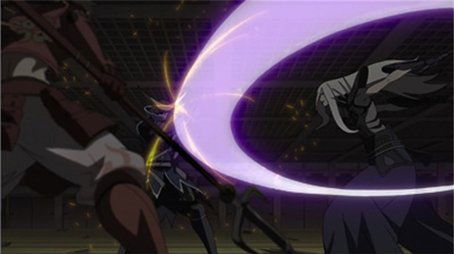
In the ensuing battle, Mitsuhide confronts Nobunaga directly. The two engage in a fierce exchange, with Mitsuhide expressing his grievances and Nobunaga responding with disdain. The fight is intense, with both characters showcasing their combat skills. Mitsuhide's determination is palpable as he fights not just for victory, but to reclaim his honor and rectify the wrongs he perceives in Nobunaga's rule.
As the battle rages on, the temple is set ablaze, creating a dramatic backdrop for the confrontation. Flames engulf the surroundings, adding to the chaos and urgency of the moment. Nobunaga, realizing the gravity of the situation, attempts to escape, but Mitsuhide is relentless. The fire symbolizes the destruction of their relationship and the end of an era.
In a climactic moment, Mitsuhide finally gains the upper hand. He delivers a decisive blow to Nobunaga, who is left wounded and cornered. The emotional weight of the moment is heavy, as Mitsuhide grapples with the reality of his actions. He has achieved his goal, but at the cost of his loyalty and the life of his lord.
As the flames continue to consume Honnouji, Mitsuhide stands amidst the destruction, reflecting on the consequences of his rebellion. The episode closes with a sense of foreboding, as the aftermath of the battle leaves both the physical and emotional landscape irrevocably changed. Mitsuhide's rebellion marks a turning point in the ongoing conflict, setting the stage for future confrontations and the shifting allegiances in the Sengoku period.









What is the ending?
In the ending of "Mitsuhide's Rebellion! Honnouji Destroyed by Fire!!," the episode culminates in a dramatic confrontation at Honnouji. Mitsuhide Akechi betrays his lord, Oda Nobunaga, leading to a fierce battle. As the flames engulf Honnouji, Nobunaga faces his fate, while Mitsuhide grapples with the consequences of his actions. The episode concludes with a sense of chaos and uncertainty, leaving the characters' futures hanging in the balance.
As the episode unfolds, the tension builds with Mitsuhide Akechi's internal conflict. He stands at the precipice of rebellion, torn between loyalty and ambition. The scene shifts to Honnouji, where Oda Nobunaga, confident and commanding, prepares for a meeting. The atmosphere is thick with anticipation, and the audience can feel the weight of Mitsuhide's decision looming over him.
Mitsuhide, cloaked in shadows, gathers his forces, his heart racing with the gravity of his betrayal. He recalls moments of loyalty to Nobunaga, but the desire for power and recognition drives him forward. The scene transitions to Nobunaga, who is surrounded by his loyal retainers, exuding an air of invincibility. He is unaware of the impending doom that Mitsuhide has orchestrated.
As the sun sets, the battle begins. Mitsuhide's forces launch a surprise attack on Honnouji, and chaos erupts. The clash of swords and the cries of warriors fill the air, creating a cacophony of conflict. Nobunaga, realizing the betrayal, fights valiantly, his expression a mix of shock and fury. He confronts Mitsuhide, their eyes locking in a moment of shared history and betrayal.
The flames begin to engulf Honnouji, casting an ominous glow over the battlefield. Nobunaga, in a final act of defiance, fights back against Mitsuhide, but the odds are stacked against him. The fire spreads rapidly, consuming the temple and the remnants of Nobunaga's power. In a poignant moment, Nobunaga reflects on his life and the choices that led him to this point, his face a mask of determination and regret.
Mitsuhide, witnessing the destruction, feels a mix of triumph and sorrow. He has achieved his goal, but at what cost? The flames roar around him, and he is left to grapple with the reality of his actions. As Honnouji crumbles, the scene shifts to the aftermath, where the once-mighty fortress lies in ruins, a symbol of the fleeting nature of power.
In the final moments, the fate of the main characters is revealed. Nobunaga, surrounded by flames, meets his end, his legacy reduced to ashes. Mitsuhide, now a fugitive, stands amidst the destruction, haunted by the consequences of his rebellion. The episode closes with a sense of uncertainty, leaving viewers to ponder the future of the warring states and the characters who have been irrevocably changed by their choices.
Is there a post-credit scene?
In the episode "Mitsuhide's Rebellion! Honnouji Destroyed by Fire!!" of Sengoku BASARA: Samurai Kings, there is no post-credit scene. The episode concludes without any additional content after the credits roll, focusing instead on the intense events that transpired during the main storyline. The narrative wraps up with the dramatic fallout from Mitsuhide Akechi's rebellion against Nobunaga Oda, leaving viewers with a sense of closure regarding the episode's central conflict.
What motivates Mitsuhide Akechi to rebel against Nobunaga Oda in this episode?
Mitsuhide Akechi's rebellion is driven by a deep sense of betrayal and a desire for revenge against Nobunaga Oda. Throughout the episode, Mitsuhide grapples with feelings of inadequacy and the weight of his loyalty to Nobunaga, which is shattered by Nobunaga's ruthless ambition and disregard for those around him. This internal conflict culminates in Mitsuhide's decision to set Honnouji ablaze, symbolizing his break from Nobunaga's oppressive rule.
How does Nobunaga Oda react to the betrayal during the episode?
Nobunaga Oda's reaction to Mitsuhide's betrayal is one of shock and fury. As he realizes that his trusted general has turned against him, he displays a mix of disbelief and anger. The emotional turmoil is palpable as he confronts the flames engulfing Honnouji, representing not only the physical destruction of his stronghold but also the crumbling of his power and the loyalty he once commanded.
What role does the setting of Honnouji play in the episode's climax?
Honnouji serves as a critical backdrop for the episode's climax, symbolizing both the height of Nobunaga's power and the impending downfall. The temple's serene exterior contrasts sharply with the chaos of the rebellion, enhancing the emotional stakes. As Mitsuhide ignites the flames, the setting transforms into a hellish landscape, reflecting the destruction of Nobunaga's ambitions and the personal conflicts of the characters involved.
What is the significance of the fire in Honnouji for the characters involved?
The fire at Honnouji is a pivotal moment that signifies the end of an era for both Nobunaga and Mitsuhide. For Nobunaga, it represents the loss of control and the consequences of his tyrannical rule, while for Mitsuhide, it symbolizes liberation from oppression, albeit through an act of treachery. The flames serve as a metaphor for their tumultuous relationship, burning away the past and igniting a new chapter filled with uncertainty.
How do the other characters react to Mitsuhide's actions during the rebellion?
The reactions of other characters to Mitsuhide's rebellion are varied and intense. Some, like Masamune Date, view the rebellion as a necessary upheaval against Nobunaga's tyranny, while others are shocked by the betrayal of a once-loyal general. The chaos of the rebellion creates a ripple effect, influencing alliances and rivalries, as characters must reassess their loyalties in the wake of Mitsuhide's drastic actions.
Is this family friendly?
"Sengoku BASARA: Samurai Kings" is known for its intense action and dramatic storytelling, which may not be suitable for all audiences, particularly children or sensitive viewers. In episode 11, "Mitsuhide's Rebellion! Honnouji Destroyed by Fire!!," there are several elements that could be considered objectionable or upsetting:
-
Violence: The episode features battle scenes with sword fighting, bloodshed, and characters being injured or killed, which may be graphic for younger viewers.
-
Destruction: The setting of Honnouji is depicted being set ablaze, showcasing destruction and chaos that could be distressing.
-
Emotional Turmoil: Characters experience intense emotional conflicts, betrayal, and despair, which may resonate deeply and be unsettling for sensitive individuals.
-
Themes of Betrayal: The plot revolves around themes of treachery and rebellion, which could be complex and potentially upsetting for younger audiences to process.
-
Dark Atmosphere: The overall tone of the episode is serious and somber, with moments of tension that may be overwhelming for some viewers.
These aspects contribute to a narrative that, while engaging for many, may not be appropriate for all children or sensitive viewers.