


Popular
How does Battler's perception of Beatrice change during the episode?
What is the significance of the chess game between Battler and Beatrice in episode 13?
What role does the concept of 'gambit' play in the episode's narrative?
What emotional revelations occur for Battler during the chess match?
How does the episode explore the theme of belief through the characters' interactions?
Should I watch it?
Ask Your Own Question

What is the plot?
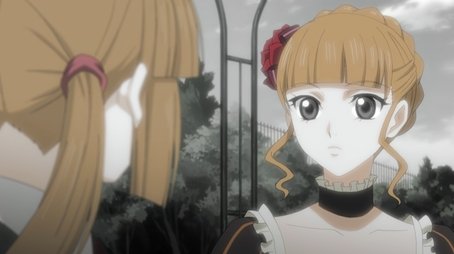
The episode begins with a tense atmosphere as the characters gather in the dining hall of the Ushiromiya family mansion. The family is still reeling from the events of the previous episodes, where the mysterious murders have left them on edge. Battler Ushiromiya, determined to confront the situation, engages in a heated discussion with Beatrice, the Golden Witch. Their dialogue is charged with emotion, as Battler challenges Beatrice's claims of being able to manipulate reality and the murders occurring on the island.
As the conversation unfolds, Beatrice presents a new game to Battler, one that involves a series of gambits. She proposes that he must prove her wrong by solving the mystery of the murders, while she will continue to manipulate the events around them. Battler, fueled by a mix of frustration and determination, accepts the challenge, setting the stage for a high-stakes intellectual battle between the two.
The scene shifts to the other family members, who are still grappling with their own fears and suspicions. The tension escalates as they begin to suspect one another, leading to a series of confrontations. Maria Ushiromiya, the young girl with a deep connection to Beatrice, becomes increasingly agitated, caught between her loyalty to the witch and her family. Her emotional turmoil adds to the already charged atmosphere, as she clings to the idea of magic and the supernatural.
Meanwhile, Battler continues to gather clues about the murders, analyzing the events that have transpired. He recalls the previous deaths and begins to piece together a timeline, trying to find inconsistencies in Beatrice's narrative. His internal struggle is palpable as he wrestles with the idea of whether magic truly exists or if there is a rational explanation for the horrors unfolding around them.
As the episode progresses, the family members are drawn into a series of confrontations, each revealing their own motivations and fears. The paranoia among them grows, leading to accusations and blame. Battler attempts to mediate, but his efforts are met with resistance, as each character grapples with their own survival instincts and the desire to uncover the truth.
In a pivotal moment, Beatrice reveals a new layer to the game, introducing the concept of "gambits" that can change the course of the events. She challenges Battler to think outside the box and consider the possibility of betrayal within the family. This revelation forces Battler to reconsider his approach, as he realizes that the stakes are higher than he initially thought.
The episode culminates in a dramatic confrontation between Battler and Beatrice, where they engage in a battle of wits. Battler presents his deductions, attempting to dismantle Beatrice's claims of omnipotence. The tension reaches a boiling point as they exchange barbs, each trying to outsmart the other. Battler's determination to protect his family and uncover the truth drives him forward, while Beatrice's enigmatic nature keeps him on his toes.
As the episode draws to a close, the atmosphere is thick with uncertainty. The family remains divided, and the threat of further violence looms large. Battler's resolve strengthens as he vows to continue the fight against Beatrice, setting the stage for the next phase of their deadly game. The episode ends on a cliffhanger, leaving viewers eager to see how the intricate web of deception and truth will unravel in the episodes to come.








What is the ending?
In the ending of "Umineko: When They Cry," Season 1, Episode 13 titled "Gambit," the episode culminates in a tense confrontation between Battler and Beatrice. Battler, determined to challenge Beatrice's claims of being the witch responsible for the murders, engages in a game of wits. The episode concludes with a dramatic revelation about the nature of the game and the characters' fates, leaving viewers with a sense of uncertainty and intrigue.
As the episode begins, the atmosphere is thick with tension. Battler stands resolute, facing Beatrice in the grand hall of the mansion. The room is lavishly decorated, yet it feels ominous, filled with the weight of the past and the bloodshed that has occurred. Battler's determination is palpable; he is not just fighting for his own life but for the truth behind the murders that have plagued his family.
Beatrice, with her ethereal presence and playful demeanor, taunts Battler, challenging him to prove that the murders could not have been committed by a witch. The stakes are high, and the air crackles with the intensity of their confrontation. Battler's internal struggle is evident; he grapples with his disbelief in the supernatural while trying to protect his loved ones. His emotions swing from anger to desperation as he recalls the tragic events that have unfolded.
As the game progresses, the scene shifts to a series of flashbacks that reveal the backstory of the characters involved. We see glimpses of the family dynamics, the betrayals, and the secrets that have led to the current situation. Each character's motivations are laid bare, showcasing their fears, desires, and the burdens they carry. The tension builds as Battler pieces together the clues, trying to outsmart Beatrice in her own game.
In a pivotal moment, Battler makes a bold move, declaring that he will not accept Beatrice's version of reality. He challenges her to provide evidence that cannot be dismissed as mere magic or illusion. The atmosphere becomes electric as Beatrice, momentarily taken aback, realizes that Battler's resolve is stronger than she anticipated. This confrontation is not just a battle of wits; it is a clash of ideologies, with Battler representing human reason and Beatrice embodying the allure of the supernatural.
As the episode nears its climax, the tension reaches a breaking point. Battler's determination to uncover the truth leads to a shocking revelation about the nature of the game itself. The boundaries between reality and fantasy blur, leaving both Battler and the audience questioning what is real. The episode ends on a cliffhanger, with Battler's fate hanging in the balance as he confronts the ultimate truth behind the murders and the existence of Beatrice.
In the final moments, the screen fades to black, leaving viewers with lingering questions about the characters' fates. Battler's struggle against Beatrice symbolizes the broader conflict between belief and skepticism, and the episode closes with an air of uncertainty, setting the stage for the next chapter in this intricate tale of mystery and intrigue.
Is there a post-credit scene?
In "Umineko: When They Cry," season 1, episode 13 titled "Gambit," there is no post-credit scene. The episode concludes without any additional content after the credits roll. The focus remains on the intense and intricate narrative that unfolds throughout the episode, emphasizing the psychological and strategic elements of the characters' interactions and the overarching mystery. The absence of a post-credit scene allows the tension and themes of the episode to resonate without distraction, leaving viewers to ponder the implications of the events that have transpired.
How does Battler's perception of Beatrice change during the episode?
Throughout episode 13, Battler's perception of Beatrice evolves significantly. Initially, he views her as a mere antagonist, a witch who embodies the supernatural elements of the murders on Rokkenjima. However, as the chess game progresses, he begins to see her as a complex character with her own motivations and vulnerabilities. This shift is highlighted by his internal struggle to reconcile his feelings of anger and frustration with a growing sense of empathy towards her tragic backstory.
What is the significance of the chess game between Battler and Beatrice in episode 13?
In episode 13, titled 'Gambit', the chess game between Battler and Beatrice serves as a metaphor for their ongoing battle of wits and ideologies. The game symbolizes the struggle between logic and magic, with Battler representing rationality and Beatrice embodying the fantastical elements of the world. As they play, the stakes are raised, and the tension between them escalates, reflecting their deeper emotional conflicts and the overarching themes of belief and doubt.
What role does the concept of 'gambit' play in the episode's narrative?
The concept of 'gambit' is central to the narrative of episode 13, as it reflects the strategic moves made by both Battler and Beatrice in their intellectual duel. Each character employs gambits--sacrificing pieces or making bold moves--to gain an advantage, mirroring the larger game of life and death unfolding on Rokkenjima. This theme of sacrifice and strategy underscores the episode's tension and highlights the characters' motivations as they navigate their complex relationship.
What emotional revelations occur for Battler during the chess match?
During the chess match in episode 13, Battler experiences several emotional revelations that deepen his character. As he confronts Beatrice's challenges, he grapples with his own beliefs about truth and the nature of their conflict. The match forces him to confront his feelings of helplessness and frustration, leading to moments of introspection where he questions his own understanding of love, loss, and the reality of the situation on Rokkenjima. These revelations are pivotal in shaping his resolve to fight against Beatrice's narrative.
How does the episode explore the theme of belief through the characters' interactions?
In episode 13, the theme of belief is intricately explored through the interactions between Battler and Beatrice. Their dialogue during the chess game reveals the stark contrast between Battler's skepticism and Beatrice's unwavering faith in the magical elements of their world. As they challenge each other's beliefs, the episode delves into the emotional weight of their convictions, showcasing how deeply personal experiences shape their perspectives. This exploration of belief not only drives the plot forward but also adds layers to their character development.
Is this family friendly?
"Umineko: When They Cry" is not considered family-friendly, and episode 13, titled "Gambit," contains several potentially objectionable or upsetting aspects.
-
Violence and Death: The episode features discussions and depictions of murder, which can be graphic and unsettling. The atmosphere is tense, with characters often in peril.
-
Psychological Manipulation: There are themes of manipulation and betrayal among family members, which can be emotionally distressing.
-
Dark Themes: The narrative delves into themes of despair, hopelessness, and existential dread, which may be heavy for younger viewers or sensitive individuals.
-
Intense Emotional Conflict: Characters experience significant emotional turmoil, including anger, fear, and desperation, which can be intense and unsettling.
-
Mystery and Suspense: The suspenseful nature of the plot may create anxiety, as characters face life-and-death situations.
These elements contribute to a mature atmosphere that may not be suitable for children or those who are sensitive to such themes.