


Popular
What challenge does Big Show face in 'The Big Brain' episode?
How does JJ's project affect her relationship with Big Show?
What role do the other daughters play in this episode?
What is the significance of the science fair in the episode?
How does Big Show's wrestling background influence his approach to JJ's project?
Should I watch it?
Ask Your Own Question

What is the plot?
The episode begins with Big Show, the former professional wrestler, in his home, where he is trying to help his daughter, JJ, with her homework. JJ is struggling with a particularly challenging math problem, and Big Show, despite his size and strength, feels out of his depth when it comes to academic subjects. He tries to assist her, but his explanations are overly simplistic and do not resonate with her, leading to frustration on both sides.
Meanwhile, Big Show's wife, Cassy, is busy preparing for a big dinner party they are hosting. She is stressed about the preparations and wants everything to be perfect. She enlists the help of their other daughters, Mandy and Lola, to assist with the party planning. The girls are excited but also distracted, leading to some comedic moments as they try to juggle their tasks.
As the dinner party approaches, JJ becomes increasingly anxious about her math test the next day. She confides in her father that she feels she needs to do well to prove herself. Big Show, wanting to support her, decides to take a different approach. He reaches out to his old wrestling friend, who is now a math teacher, to help JJ with her studies. This decision shows Big Show's determination to be a good father and support his daughter in a way that resonates with her.
The scene shifts to the dinner party, where guests begin to arrive. Cassy is on edge, trying to manage the chaos of the evening. Big Show, meanwhile, is preoccupied with JJ's math situation and is not fully present at the party. As the guests mingle, the tension builds, and comedic mishaps occur, such as food spilling and awkward conversations.
During the party, JJ's math teacher arrives, and Big Show introduces him to JJ. The teacher is enthusiastic and immediately connects with her, explaining the math concepts in a way that makes sense to her. This moment is pivotal as it highlights the importance of finding the right support and mentorship for children.
As the evening progresses, the dinner party takes a turn when one of the guests accidentally spills a drink on Cassy's carefully arranged table. This leads to a humorous yet chaotic cleanup effort, with Big Show trying to help but only making things messier due to his size. The scene captures the lighthearted chaos of family life and the challenges of hosting.
In the climax of the episode, JJ, feeling inspired by her teacher's help, decides to take a risk and confront her fears about the math test. She expresses her determination to do her best, and Big Show, seeing her confidence, feels proud. This moment solidifies their bond and showcases Big Show's growth as a father.
The episode concludes with the aftermath of the dinner party. Despite the chaos, the family comes together, reflecting on the evening's events. Big Show and Cassy share a moment of understanding about the challenges of parenting and the importance of supporting their children. JJ feels empowered and ready to tackle her math test, and the family shares a heartfelt moment, emphasizing their unity and love for one another.





What is the ending?
In the ending of "The Big Show Show," Season 1, Episode 3 titled "The Big Brain," Big Show helps his daughter, JJ, realize that she doesn't need to be perfect to be successful. After a series of events where JJ struggles with a science project, she learns to embrace her creativity and individuality. The episode concludes with a heartwarming moment where Big Show supports her, and they celebrate her unique approach to the project.
As the episode unfolds towards its conclusion, we see Big Show, who has been trying to help his daughter JJ with her science project, feeling the pressure of wanting her to succeed. JJ is initially overwhelmed by the expectations she places on herself, believing that she must create a perfect project to impress her classmates and teacher. This pressure leads to frustration and self-doubt, which is palpable in her demeanor.
In the final scenes, Big Show, realizing that JJ is struggling, decides to step back and allow her to find her own way. He encourages her to think outside the box and to embrace her own ideas rather than conforming to what she thinks is expected. This pivotal moment is filled with emotional weight as Big Show shares his own experiences of facing challenges and the importance of being true to oneself.
As JJ begins to let go of her need for perfection, she starts to incorporate her own creative flair into the project. The transformation is evident as she becomes more confident and excited about her work. The scene captures her joy and relief as she realizes that her unique perspective is valuable.
The episode culminates in a presentation at school where JJ showcases her project. The audience, including her classmates and teacher, responds positively to her creativity. This moment is a significant turning point for JJ, as she learns that success does not solely hinge on perfection but rather on authenticity and self-expression.
In the closing moments, Big Show and JJ share a heartfelt exchange, reinforcing their bond and the lesson learned. Big Show expresses pride in JJ for being herself, and they celebrate her achievement together. The episode ends on a high note, emphasizing the importance of individuality and the supportive relationship between father and daughter. Each character, particularly JJ, emerges from the experience with a renewed sense of confidence and understanding of their own strengths.
Is there a post-credit scene?
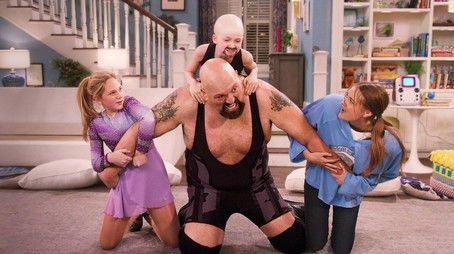
In "The Big Brain," the third episode of The Big Show Show, there is indeed a post-credit scene. After the main storyline concludes, the scene shifts to a light-hearted moment featuring The Big Show and his daughters. They are gathered in the living room, where The Big Show is attempting to help his daughters with a science project.
As they work together, The Big Show humorously struggles to understand the project, which involves a complicated model of the solar system. His daughters, particularly the eldest, are clearly more knowledgeable and take the lead, while The Big Show comically mispronounces the names of the planets and makes exaggerated gestures to illustrate his points.
The scene captures the warmth and humor of their family dynamic, showcasing The Big Show's endearing clumsiness and his desire to connect with his daughters, despite his lack of expertise in the subject matter. The laughter and playful banter highlight the show's themes of family bonding and the challenges of parenting, leaving viewers with a light-hearted and joyful conclusion to the episode.
What challenge does Big Show face in 'The Big Brain' episode?
In 'The Big Brain', Big Show faces the challenge of helping his daughter, JJ, with a school project that involves a science fair. He wants to support her but struggles with the concept of the project.
How does JJ's project affect her relationship with Big Show?
JJ's project initially causes tension between her and Big Show as she feels he is not taking it seriously. However, as they work together, they bond over the project, leading to a deeper understanding of each other.
What role do the other daughters play in this episode?
The other daughters, Mandy and Hannah, play a supportive role in JJ's project. They provide comic relief and help JJ navigate her feelings about her father's involvement, showcasing the dynamics of sibling relationships.
What is the significance of the science fair in the episode?
The science fair serves as a pivotal moment for JJ, allowing her to showcase her hard work and creativity. It also highlights the importance of family support and collaboration in achieving personal goals.
How does Big Show's wrestling background influence his approach to JJ's project?
Big Show's wrestling background influences his approach by making him overly competitive and eager to win the science fair. This leads to humorous situations as he applies his wrestling mindset to a non-wrestling context.
Is this family friendly?
"The Big Show Show," particularly in the episode titled "The Big Brain," is generally family-friendly, aimed at a younger audience with humor and themes suitable for children. However, there are a few aspects that might be considered potentially objectionable or upsetting for some viewers, especially sensitive children:
-
Sibling Rivalry: The episode features moments of competition and jealousy among the siblings, which could resonate with children who have similar experiences but might also evoke feelings of discomfort.
-
Emotional Conflict: There are scenes where characters express frustration or disappointment, which may be intense for younger viewers who are sensitive to emotional conflicts.
-
Mild Humor: Some jokes may involve mild teasing or sarcasm, which could be misinterpreted by younger children as acceptable behavior in real-life situations.
-
Physical Comedy: The show includes physical comedy that, while intended to be humorous, might be perceived as rough or aggressive by some viewers.
Overall, while the episode is designed to be light-hearted and entertaining, these elements could be sensitive for certain children or viewers.