


Popular
What challenges does Big Show face as a father in the series?
How does Big Show's wrestling background influence his parenting style?
How does Big Show's relationship with his daughters evolve throughout the season?
What role does Lola play in the family dynamics?
What conflicts arise between Big Show and his daughters regarding their personal choices?
Should I watch it?
Ask Your Own Question

What is the plot?
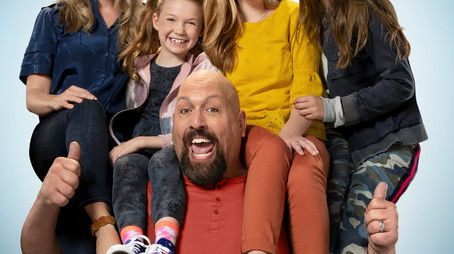
The Big Show Show begins with Paul Wight, known as The Big Show, living a quiet life in Tampa, Florida, after retiring from wrestling. He is adjusting to his new role as a father to his three daughters: 16-year-old Lola, 14-year-old Hannah, and 8-year-old J.J. The show opens with Big Show trying to connect with his daughters, but he struggles to understand their teenage lives and interests.
In the first episode, Big Show's wife, Jill, is introduced as a supportive partner who encourages him to be more involved in their daughters' lives. The family dynamic is established, showcasing the challenges of parenting teenage girls. Big Show attempts to bond with Lola by attending her school's talent show, but he embarrasses her instead, leading to tension between them.
As the episode progresses, Lola reveals her desire to pursue a career in music, which Big Show initially dismisses. This leads to a confrontation where Lola expresses her frustration about feeling unsupported. Big Show realizes he needs to change his approach and decides to help her prepare for the talent show, hoping to mend their relationship.
In a comedic turn, Big Show tries to coach Lola in singing, but his methods are clumsy and overbearing. Despite the awkwardness, they share a heartfelt moment that brings them closer. The talent show arrives, and Lola performs, receiving a warm reception from the audience. Big Show cheers her on, and they share a proud moment together, solidifying their bond.
Meanwhile, Hannah and J.J. have their own subplot. Hannah is dealing with typical teenage issues, including friendship drama, while J.J. is more focused on her playful antics. The two sisters often bicker, but they also support each other in their own ways. Their interactions provide comic relief and highlight the sibling dynamics within the family.
As the season unfolds, Big Show faces various challenges in parenting, including navigating social media, school events, and the girls' friendships. Each episode introduces new conflicts, such as Lola's first crush, Hannah's struggles with self-esteem, and J.J.'s mischievous behavior. Big Show learns to adapt his parenting style, often with humorous results.
In a pivotal episode, Big Show is invited to a wrestling event, and he grapples with the decision to return to the ring for a special appearance. His daughters encourage him to embrace his past, but he worries about how it will affect their perception of him. Ultimately, he decides to participate, showcasing his wrestling skills while also demonstrating his growth as a father.
The season culminates in a family crisis when Lola faces a significant setback in her music career. Big Show steps in to support her, reminding her of the importance of perseverance. This moment reinforces the family's bond and highlights the growth of Big Show as a father who learns to balance his past with his present responsibilities.
Throughout the season, the characters evolve, with Big Show becoming more attuned to his daughters' needs and aspirations. The show concludes with a heartwarming family moment, emphasizing the importance of love, support, and understanding within the family unit.



What is the ending?
In the final episode of "The Big Show Show," titled "The Big Show Show," the family comes together to support each other during a challenging time. Big Show realizes the importance of family and the need to balance his wrestling career with his responsibilities at home. The episode concludes with a heartfelt moment where the family unites, showcasing their love and support for one another.
As the episode unfolds, we see Big Show, who is feeling the pressure of his wrestling career and the demands of being a father. He is torn between his obligations to his job and his desire to be present for his daughters. The scene opens with Big Show preparing for a big wrestling match, but he is distracted by thoughts of his family. His daughters, Lola, J.J., and Mandy, are dealing with their own challenges, each seeking their father's attention and support in different ways.
In a pivotal moment, Big Show's daughters confront him about his absence and how it affects them. They express their feelings of being overlooked, which leads to an emotional conversation. Big Show, realizing the impact of his choices, vows to make more time for his family. This moment is crucial as it highlights the theme of family unity and the importance of being present for loved ones.
As the wrestling match approaches, Big Show's internal conflict intensifies. He is torn between his passion for wrestling and his commitment to his family. The scene shifts to the wrestling arena, where Big Show is about to enter the ring. The atmosphere is electric, with fans cheering and the excitement palpable. However, instead of focusing solely on the match, Big Show reflects on his daughters' words and the love they share.
In a climactic moment, Big Show decides to prioritize his family over the match. He walks away from the ring, much to the surprise of the audience and his fellow wrestlers. This decision signifies a turning point for Big Show, as he chooses to embrace his role as a father above all else. The scene captures the emotional weight of his choice, showcasing his love for his daughters and the realization that family comes first.
The episode concludes with a heartwarming family gathering, where Big Show and his daughters share a moment of connection and understanding. They express their love for one another, reinforcing the bond that holds them together. Each character finds resolution in their individual arcs, with Big Show embracing his role as a dedicated father, and his daughters feeling valued and supported.
In the end, Big Show's journey reflects the importance of family, love, and the sacrifices one makes for those they care about. The episode closes on a hopeful note, with the family united and stronger than ever, ready to face whatever challenges come their way together.
Is there a post-credit scene?
In "The Big Show Show," Season 1, there is no post-credit scene. The episodes conclude without any additional scenes or content after the credits roll. Each episode wraps up its storyline within the main content, focusing on the comedic and heartfelt moments of the Big Show and his family. The show emphasizes family dynamics, humor, and the challenges of balancing a wrestling career with being a father, but it does not include any extra scenes after the credits.
What challenges does Big Show face as a father in the series?
In 'The Big Show Show', Big Show, a retired professional wrestler, grapples with the challenges of being a father to his three daughters, particularly as he tries to balance his larger-than-life persona with the everyday realities of parenting. He often feels out of touch with their lives, especially as they navigate their teenage years, leading to humorous yet heartfelt moments as he learns to connect with them.
How does Big Show's wrestling background influence his parenting style?
Big Show's wrestling background heavily influences his parenting style, as he often applies his larger-than-life persona and wrestling metaphors to everyday situations. This leads to humorous scenarios where he tries to use wrestling tactics to solve family problems, often resulting in exaggerated outcomes. His experiences in the ring also provide him with unique insights into resilience and teamwork, which he attempts to instill in his daughters.
How does Big Show's relationship with his daughters evolve throughout the season?
Throughout the season, Big Show's relationship with his daughters evolves significantly. Initially, he struggles to understand their interests and the challenges they face, leading to comedic misunderstandings. However, as he makes an effort to engage with them, he learns to appreciate their individuality, leading to deeper emotional connections and moments of bonding, especially during family activities and crises.
What role does Lola play in the family dynamics?
Lola, Big Show's youngest daughter, plays a pivotal role in the family dynamics. Her innocent yet bold personality often serves as a catalyst for various plotlines, as she challenges her father's authority and encourages him to embrace his softer side. Her interactions with her sisters and Big Show highlight the importance of family support and understanding, often leading to comedic yet touching moments.
What conflicts arise between Big Show and his daughters regarding their personal choices?
Conflicts arise between Big Show and his daughters regarding their personal choices, particularly as they assert their independence. For instance, when his daughters make decisions about friendships, school activities, or dating, Big Show often reacts with protective instincts that clash with their desires for autonomy. These conflicts serve as key plot points, showcasing the generational differences and ultimately leading to moments of growth and understanding for both Big Show and his daughters.
Is this family friendly?
"The Big Show Show" is generally considered family-friendly, aimed at a younger audience with humor and themes suitable for children. However, there are a few aspects that might be considered potentially objectionable or upsetting for some viewers:
-
Mild Language: There are instances of mild swearing or phrases that may not be suitable for very young children.
-
Physical Comedy: The show features physical humor that includes slapstick elements, which might be intense for sensitive viewers, though it is presented in a light-hearted manner.
-
Family Conflicts: Some episodes explore typical family disagreements or misunderstandings that could be relatable but might evoke emotional responses in sensitive viewers.
-
Wrestling Themes: Given the background of the main character, there are wrestling-related themes and scenarios that might be intense for some children, though they are portrayed in a comedic context.
Overall, while the show is designed to be entertaining for families, these elements may require parental guidance for younger viewers or those who are particularly sensitive.