


Popular
What role does the character of Rosemary play in the film's narrative?
How does the character of Guy Woodhouse contribute to the plot of Rosemary's Baby?
What is the significance of the character of Minnie Castevet in Rosemary's Baby?
How does Rosemary's relationship with her neighbors affect her mental state?
What are the implications of the dream sequences experienced by Rosemary?
Should I watch it?
Ask Your Own Question

What is the plot?
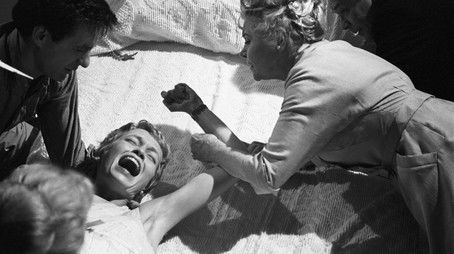
In the episode "Rosemary's Baby" from season 2 of Cursed Films, the narrative begins with an exploration of the film's production history and the unsettling atmosphere surrounding it. The episode opens with archival footage and images from the 1968 film, showcasing its iconic scenes and the eerie ambiance that permeates the story. The host introduces the film's premise, focusing on Rosemary Woodhouse, a young woman who becomes pregnant under mysterious and sinister circumstances.
As the episode progresses, it delves into the background of director Roman Polanski and the challenges he faced while making the film. Interviews with film historians and critics highlight the cultural impact of Rosemary's Baby, emphasizing its themes of paranoia and the loss of agency. The episode reveals how Polanski's own life experiences, particularly his traumatic past, influenced the film's dark tone.
The narrative shifts to the casting of Mia Farrow as Rosemary. The episode details her initial reluctance to take on the role, as she was concerned about the film's disturbing content. However, after discussions with Polanski, she ultimately accepts the part, driven by her desire to work with the acclaimed director. The episode captures her emotional state, reflecting her excitement mixed with apprehension about the film's themes.
As filming begins, the episode highlights the intense atmosphere on set. It describes the meticulous attention to detail that Polanski demanded, creating a sense of unease among the cast and crew. The episode features anecdotes from those involved in the production, revealing how the film's chilling scenes were often shot in a tense environment, contributing to the overall feeling of dread.
The focus then shifts to the film's plot, detailing Rosemary's descent into paranoia as she becomes increasingly suspicious of her husband, Guy, and their eccentric neighbors, the Castevets. The episode illustrates key scenes, such as Rosemary's dreams and visions, which blur the line between reality and nightmare. It emphasizes her growing isolation and fear, showcasing her emotional turmoil as she grapples with the implications of her pregnancy.
The episode also addresses the tragic events surrounding the film's release, particularly the murder of Sharon Tate, Polanski's wife, by the Manson Family. This real-life horror casts a shadow over the film's legacy, and the episode explores how this tragedy affected the cast and crew, as well as the public's perception of the film. Interviews with those who knew Tate and Polanski reveal the profound impact of this event on their lives.
As the episode concludes, it reflects on the lasting influence of Rosemary's Baby in the horror genre. It discusses how the film's themes of motherhood, trust, and betrayal resonate with audiences, and how it has inspired countless filmmakers. The episode ends with a somber acknowledgment of the film's dark legacy, leaving viewers with a sense of the haunting power of Rosemary's Baby and its place in cinematic history.








What is the ending?
In the ending of "Rosemary's Baby," Rosemary discovers that her husband, Guy, has conspired with their neighbors to use her as a vessel for the Antichrist. After giving birth, she finds her baby in a crib, revealing its demonic appearance. Overcome with horror and betrayal, she confronts Guy and the coven, ultimately deciding to embrace her child despite its monstrous nature.
As the episode unfolds, the tension builds around Rosemary's journey. The narrative begins with Rosemary Woodhouse, a young woman who is excited about starting a family with her husband, Guy. They move into a new apartment in New York City, where they meet their eccentric neighbors, the Castevets, who seem overly interested in Rosemary.
As Rosemary becomes pregnant, her health deteriorates, and she experiences strange dreams and visions. The audience witnesses her growing paranoia as she suspects that her husband and the Castevets are involved in dark rituals. Guy, who is initially supportive, becomes increasingly distant and secretive, revealing his ambition to succeed in his acting career, which he believes is tied to Rosemary's pregnancy.
In the climax, after a harrowing labor experience, Rosemary awakens to find herself in a mysterious room. She is disoriented and confused, but her maternal instincts kick in as she hears a baby crying. When she finally sees her child, the shock is palpable. The baby is not what she expected; it has a disturbing appearance, which is a culmination of the sinister plot that has unfolded around her.
In a moment of desperation, Rosemary confronts Guy, who reveals his betrayal. He admits that he made a deal with the Castevets to ensure his success, sacrificing Rosemary's autonomy and the safety of their child in the process. The emotional weight of this revelation is heavy, as Rosemary grapples with feelings of betrayal, fear, and maternal love.
The episode concludes with Rosemary, torn between horror and love, cradling her child. Despite the monstrous nature of the baby, she chooses to accept it, whispering, "What have you done to it?" This moment encapsulates her internal conflict and the tragic outcome of her journey, as she is left to navigate her new reality, forever changed by the events that transpired.
The fates of the main characters are sealed in this chilling conclusion. Rosemary is left in a state of emotional turmoil, having lost her agency and innocence. Guy, now fully entrenched in his ambition, has sacrificed his marriage and moral integrity for fame. The Castevets, representing the dark forces at play, remain unrepentant, having successfully manipulated Rosemary and Guy for their own ends. The episode closes on a haunting note, leaving viewers to ponder the implications of trust, betrayal, and the lengths one will go for ambition.
Is there a post-credit scene?
In the episode "Rosemary's Baby" from season 2 of Cursed Films, there is no post-credit scene. The episode concludes with a reflective summary of the themes and events discussed throughout, focusing on the legacy of the film and its impact on horror cinema. The narrative wraps up by emphasizing the real-life tragedies and controversies surrounding the film's production, leaving viewers with a sense of contemplation rather than a cliffhanger or additional scene.
What role does the character of Rosemary play in the film's narrative?
Rosemary Woodhouse, portrayed by Mia Farrow, is the central character whose journey from a hopeful young woman to a terrified mother unfolds throughout the film. Her emotional state shifts dramatically as she becomes increasingly isolated and paranoid, believing that her husband and their neighbors are conspiring against her.
How does the character of Guy Woodhouse contribute to the plot of Rosemary's Baby?
Guy Woodhouse, played by John Cassavetes, is Rosemary's husband who initially appears supportive but ultimately reveals a darker side. His ambition leads him to make a pact with their sinister neighbors, prioritizing his career over Rosemary's well-being, which adds to her feelings of betrayal and isolation.
What is the significance of the character of Minnie Castevet in Rosemary's Baby?
Minnie Castevet, portrayed by Ruth Gordon, is a pivotal character who embodies the manipulative and sinister forces surrounding Rosemary. Her seemingly friendly demeanor masks her true intentions, as she plays a crucial role in the conspiracy against Rosemary, further heightening the tension and horror of the narrative.
How does Rosemary's relationship with her neighbors affect her mental state?
Rosemary's interactions with her neighbors, particularly the Castevets, initially seem benign but quickly turn sinister. As she becomes more suspicious of their intentions, her mental state deteriorates, leading to feelings of paranoia and helplessness, which are visually represented through her increasingly frantic demeanor and isolation.
What are the implications of the dream sequences experienced by Rosemary?
The dream sequences in Rosemary's Baby serve as a reflection of her subconscious fears and anxieties. They are visually striking and filled with symbolic imagery, illustrating her internal struggle and foreshadowing the horrific events to come, ultimately deepening the viewer's understanding of her character's psychological turmoil.
Is this family friendly?
"Cursed Films" Season 2, Episode 2 titled "Rosemary's Baby" delves into the dark and unsettling themes surrounding the film "Rosemary's Baby." While the series is a documentary exploring the myths and controversies surrounding cursed films, it does contain elements that may not be suitable for children or sensitive viewers.
Potentially objectionable or upsetting aspects include:
-
Themes of Satanism and Occult Practices: The episode discusses the film's connections to witchcraft and the occult, which may be disturbing for younger audiences.
-
Paranoia and Psychological Horror: The emotional turmoil experienced by the main character, Rosemary, is depicted through intense scenes of fear and anxiety, which could be unsettling.
-
Discussion of Tragedy and Death: The episode touches on real-life tragedies associated with the film's production, including the murder of Sharon Tate, which may be distressing.
-
Imagery of Pregnancy and Birth: The film's focus on pregnancy, particularly in a horror context, may evoke discomfort, especially regarding themes of control and loss of autonomy.
-
Graphic Descriptions: There may be graphic discussions or depictions related to the film's horror elements that could be inappropriate for younger viewers.
Overall, while the documentary format may be informative, the subject matter is heavy and may not be suitable for all audiences, particularly children or those sensitive to horror themes.