










Popular
Should I watch it?
Ask Your Own Question

What is the plot?
Sorry, we aren't able to watch and write up a full detailed plot yet. Check back in a few days.






What is the ending?
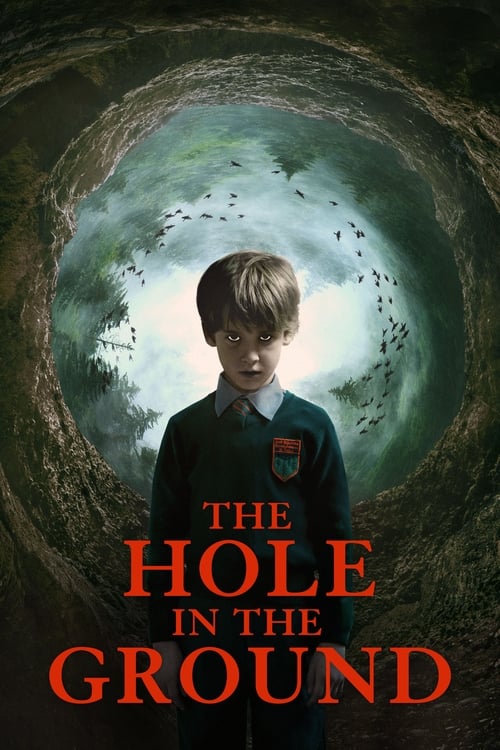
In the ending of "The Hole in the Ground," Sarah confronts the entity that has taken her son, Chris. After a tense struggle, she manages to push the creature into the hole in the ground, seemingly defeating it. However, the film concludes ambiguously, leaving viewers questioning whether she truly saved her son or if the entity has taken his place.
As the climax unfolds, Sarah, filled with desperation and fear, finds herself back at the ominous hole in the ground. The atmosphere is thick with tension, the air heavy with the weight of her choices. She is determined to rescue her son, Chris, who has been acting increasingly strange and unsettling since their encounter with the hole. The once innocent boy now exhibits behaviors that are eerily alien, raising doubts in Sarah's mind about his true identity.
In a pivotal scene, Sarah confronts Chris at their home. The boy, now displaying a cold demeanor, taunts her, revealing a deeper understanding of her fears. Sarah's heart races as she realizes that the creature has taken on Chris's form, manipulating her emotions and memories. The emotional stakes are high; she is torn between her love for her son and the horrifying possibility that he is no longer the boy she once knew.
Driven by a mix of maternal instinct and sheer terror, Sarah decides to return to the hole. The forest surrounding it is dark and foreboding, the trees looming like silent witnesses to her struggle. As she approaches the edge, she hears whispers and unsettling sounds, heightening her anxiety. The hole itself is a gaping maw, a symbol of the unknown and the fear of losing her child.
In a moment of confrontation, Sarah finds herself face-to-face with the creature that has taken Chris's place. The entity, a grotesque reflection of her son, embodies her worst fears. The struggle is visceral; Sarah fights not just for her son but for her sanity and sense of reality. She pushes the creature back towards the hole, a desperate act fueled by love and fear. The scene is chaotic, filled with raw emotion as she grapples with the entity, her heart pounding in her chest.
As the creature is finally pushed into the hole, a moment of silence envelops the scene. Sarah stands at the edge, breathless, her heart racing as she peers into the darkness. The hole seems to pulse with a life of its own, a reminder of the terror she has faced. In this moment, she believes she has triumphed, that she has saved her son from the clutches of the malevolent force.
However, the film leaves viewers with an unsettling ambiguity. As Sarah returns home, she finds Chris waiting for her, seemingly back to normal. But the lingering doubt remains; is this truly her son, or has the entity returned in his guise? The final shot captures Sarah's conflicted expression, a mix of relief and dread, as she grapples with the uncertainty of her reality. The film closes on this haunting note, leaving the fate of both Sarah and Chris shrouded in mystery, emphasizing the themes of motherhood, identity, and the fear of losing a loved one to an incomprehensible force.
Is there a post-credit scene?
The movie "The Hole in the Ground" does not have a post-credit scene. The film concludes with a tense and unsettling ending that leaves viewers with a sense of ambiguity and dread, focusing on the psychological horror elements rather than providing any additional scenes or resolutions after the credits roll. The final moments of the film emphasize the protagonist's emotional turmoil and the haunting implications of her experiences, effectively closing the narrative without the need for a post-credit sequence.
What happens to Sarah's relationship with her son Chris throughout the film?
Sarah's relationship with her son Chris is central to the film's emotional core. Initially, Sarah is a protective and caring mother, deeply concerned about Chris's well-being, especially after they move to a remote area. However, as the story progresses and Chris begins to exhibit strange and unsettling behavior after encountering the mysterious hole in the ground, Sarah's anxiety and fear grow. She becomes increasingly suspicious of Chris, feeling a disconnect that leads her to question his identity. This tension culminates in a heartbreaking struggle as Sarah grapples with her maternal instincts and the fear that the son she knows may no longer be the same.
What is the significance of the hole in the ground?
The hole in the ground serves as a pivotal symbol in the film, representing both a physical and psychological abyss. It is a dark, gaping chasm that evokes fear and curiosity. For Sarah, the hole becomes a source of dread as it is linked to her son Chris's transformation. The hole's depth and darkness mirror Sarah's growing paranoia and the unraveling of her reality. It is a place where the boundaries between the known and the unknown blur, leading to questions about identity and the nature of evil.
How does Sarah's past influence her actions in the film?
Sarah's past is marked by trauma, particularly the loss of her own mother, which deeply affects her psyche. This history of loss and abandonment shapes her protective instincts towards Chris. As she faces the strange occurrences surrounding her son, her unresolved grief and fear of losing him amplify her paranoia. Sarah's past also influences her interactions with other characters, such as her neighbor, who seems to understand the dangers of the hole, and her estranged relationship with her own mother, which echoes in her fears of repeating history.
What role does the neighbor, Niamh, play in the story?
Niamh, the neighbor, serves as a crucial figure in Sarah's journey. She is one of the few people who acknowledges the strangeness surrounding the hole and Chris's behavior. Niamh's warnings about the hole and her own experiences with it provide a sense of foreboding and urgency. Her character embodies the theme of community and isolation, as she tries to reach out to Sarah, but also reflects the skepticism and fear that others have towards the supernatural elements at play. Niamh's insights push Sarah to confront her fears and the reality of her situation.
What changes occur in Chris after he encounters the hole?
After Chris encounters the hole, he begins to exhibit increasingly bizarre and unsettling behavior. Initially, he seems to be the same child, but subtle changes in his demeanor--such as a lack of empathy, strange outbursts, and a chilling calmness--raise alarm for Sarah. His physical appearance also shifts, with moments where he seems almost otherworldly. These changes create a growing rift between mother and son, as Sarah struggles to reconcile the boy she loves with the entity she fears he has become. This transformation is central to the film's tension, as it raises questions about identity and the nature of the bond between mother and child.
Is this family friendly?
"The Hole in the Ground" is not considered family-friendly and contains several potentially objectionable or upsetting elements that may affect children or sensitive viewers.
-
Parental Anxiety and Fear: The film explores themes of motherhood, fear, and paranoia, which may be distressing for younger viewers. The protagonist, Sarah, experiences intense anxiety about her son, which can be unsettling.
-
Child Behavior: There are scenes depicting unsettling behavior from the child, which may be disturbing. This includes moments of aggression and emotional distress.
-
Horror Elements: The film contains horror elements, including suspenseful and tense scenes that may frighten younger audiences. The atmosphere is often dark and foreboding.
-
Violence: There are instances of implied violence and disturbing imagery that could be upsetting.
-
Isolation and Despair: The emotional weight of isolation and the protagonist's struggle with her mental state may be heavy for sensitive viewers.
-
Supernatural Themes: The film delves into supernatural themes that may be frightening or confusing for children.
Overall, the film's intense emotional themes, horror elements, and unsettling imagery make it more suitable for mature audiences.









