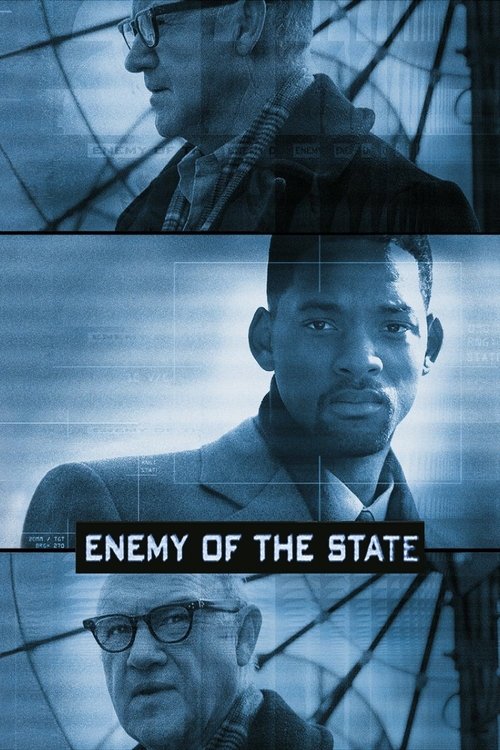

















































Popular
What evidence does Robert Clayton Dean discover that puts him in danger?
How does Dean's life change after he becomes a target of the NSA?
Who is the main antagonist pursuing Dean, and what are their motivations?
What role does the character of Edward Lyle play in helping Dean?
How does Dean's relationship with his wife and child evolve throughout the film?
Should I watch it?
Ask Your Own Question

What is the plot?
Sorry, we aren't able to watch and write up a full detailed plot yet. Check back in a few days.








What is the ending?
In the ending of "Enemy of the State," Robert Clayton Dean, played by Will Smith, successfully exposes the corrupt government officials who have been pursuing him. With the help of his allies, including the former intelligence operative Brill, portrayed by Gene Hackman, Dean manages to clear his name and ensure the safety of his family. The film concludes with Dean reclaiming his life, having outsmarted the powerful forces against him.
As the climax of "Enemy of the State" unfolds, Robert Clayton Dean finds himself cornered by the relentless pursuit of the National Security Agency (NSA). The tension escalates as Dean, who has been on the run after unknowingly receiving a video that implicates a high-ranking government official in a murder, seeks refuge with Brill. Brill, a seasoned ex-intelligence officer, becomes Dean's mentor and guide, teaching him how to navigate the treacherous landscape of surveillance and government corruption.
In a pivotal scene, Dean and Brill devise a plan to expose the NSA's illegal activities. They gather evidence that can incriminate the agency and its operatives, including the ruthless agent Thomas Reynolds, played by Jon Voight. As they work together, Dean's desperation transforms into determination; he is no longer just a victim but a man fighting for his life and the safety of his family.
The climax reaches its peak when Dean and Brill infiltrate a high-stakes meeting where the NSA's actions are discussed. They manage to record the conversation, capturing the incriminating evidence needed to bring the corrupt officials to justice. The tension is palpable as they navigate through the shadows, aware that they are being hunted. The stakes are high, and every moment is fraught with danger.
In the final confrontation, Dean faces Reynolds, who has been orchestrating the entire operation against him. The confrontation is intense, filled with the weight of betrayal and the fight for justice. Dean's resolve is unwavering; he is no longer the passive character he once was. He stands up to Reynolds, asserting his right to expose the truth.
As the dust settles, Dean's efforts pay off. The evidence they collected is made public, leading to a significant scandal that forces the NSA to confront its illegal surveillance practices. Reynolds and his accomplices are implicated, and the power dynamics shift. Dean's name is cleared, and he is finally able to return to his normal life, free from the shadows that once loomed over him.
In the aftermath, Dean reunites with his family, embracing them with a sense of relief and gratitude. The emotional weight of the journey is evident on his face; he has fought against overwhelming odds and emerged victorious. Brill, having played a crucial role in Dean's transformation, watches from a distance, satisfied that he has helped another person escape the clutches of a corrupt system.
The film concludes with a sense of hope and resilience. Dean has not only reclaimed his life but has also become a symbol of the fight against government overreach and the importance of standing up for one's rights. The final scenes emphasize the personal growth of Dean, who has evolved from a man caught in a web of conspiracy to a determined individual who has taken control of his destiny. The fate of the main characters is sealed: Dean is free, Brill has found purpose in helping others, and Reynolds faces the consequences of his actions, highlighting the film's themes of justice and accountability.
Is there a post-credit scene?
The movie "Enemy of the State," produced in 1998, does not have a post-credit scene. The film concludes with the resolution of the main plot, where Robert Clayton Dean, played by Will Smith, successfully exposes the corruption and illegal surveillance conducted by the National Security Agency (NSA). The story wraps up with Dean reclaiming his life and the safety of his family, leaving no additional scenes or content after the credits. The focus remains on the intense narrative and character development throughout the film, culminating in a satisfying conclusion without any further scenes.
What evidence does Robert Clayton Dean discover that puts him in danger?
Robert Clayton Dean, played by Will Smith, discovers a videotape that contains evidence of a politically motivated murder committed by a National Security Agency (NSA) official. This tape, which he inadvertently receives, shows the assassination of a congressman and implicates the NSA in a cover-up. The moment he realizes the significance of the tape, his life spirals into chaos as he becomes the target of a relentless manhunt.
How does Dean's life change after he becomes a target of the NSA?
After Dean becomes a target of the NSA, his life is turned upside down. Initially a successful and content lawyer, he finds himself constantly on the run, unable to trust anyone, including his friends and family. The paranoia sets in as he realizes that he is being watched at all times. His emotional state shifts from disbelief to fear, and ultimately to a desperate determination to clear his name and protect his loved ones.
Who is the main antagonist pursuing Dean, and what are their motivations?
The main antagonist pursuing Dean is Thomas Brigham, played by Jon Voight, who is a high-ranking official in the NSA. Brigham's motivations are rooted in the desire to protect the agency's interests and maintain the secrecy of their operations. He is willing to go to extreme lengths, including manipulation and violence, to eliminate any threats to the NSA, viewing Dean as a liability due to the evidence he possesses.
What role does the character of Edward Lyle play in helping Dean?
Edward Lyle, portrayed by Gene Hackman, is a former NSA operative who becomes an ally to Dean. Lyle is a skilled expert in surveillance and counter-surveillance techniques. He helps Dean navigate the dangerous world of espionage, teaching him how to evade the NSA's watchful eyes. Lyle's motivations stem from a sense of justice and a desire to expose the corruption within the agency, as well as a personal connection to Dean's plight.
How does Dean's relationship with his wife and child evolve throughout the film?
Dean's relationship with his wife, Carla, played by Regina King, and their child becomes strained as the events unfold. Initially, Carla is supportive, but as Dean's paranoia escalates and he becomes increasingly secretive, she grows worried and confused. The tension peaks when Dean's actions put their family in danger, forcing him to confront the impact of his choices on their lives. Ultimately, the ordeal brings them closer as they unite against a common threat, highlighting the importance of trust and communication.
Is this family friendly?
"Enemy of the State," produced in 1998, is not considered family-friendly due to several potentially objectionable or upsetting scenes and themes. Here are some aspects that may be concerning for children or sensitive viewers:
-
Violence: The film contains several intense action sequences, including physical confrontations, shootings, and a depiction of a brutal murder. These scenes can be graphic and may be distressing.
-
Language: There is frequent use of strong language throughout the film, including profanity that may not be suitable for younger audiences.
-
Paranoia and Suspense: The overarching theme of surveillance and the feeling of being hunted can create a tense atmosphere that might be unsettling for some viewers, particularly children.
-
Mature Themes: The film deals with serious issues such as government corruption, privacy invasion, and the consequences of whistleblowing, which may be complex and difficult for younger viewers to understand.
-
Death and Betrayal: The emotional weight of betrayal and the impact of loss are significant in the narrative, which may resonate deeply and evoke strong feelings.
-
Intimidation and Threats: Characters experience intimidation and threats to their safety, which can be frightening and may provoke anxiety.
These elements contribute to a mature viewing experience, making it more suitable for adult audiences.