
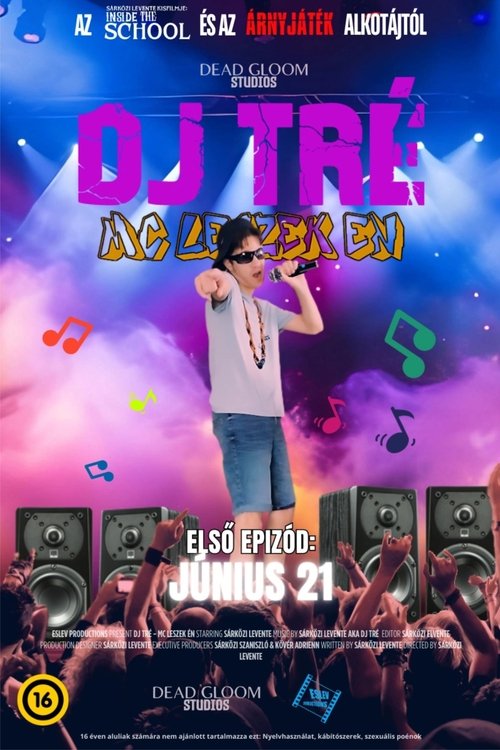



Popular
What specific trauma causes Roland Tarajos to change his personality and become DJ Tré?
How does Roland Tarajos's personality shift manifest in his behavior as DJ Tré?
What role does the character MC Leszek play in relation to DJ Tré in the series?
Are there key episodes that focus on DJ Tré's internal struggle with his new identity?
How do other characters in the series respond to DJ Tré's transformation from Roland Tarajos?
Should I watch it?
Ask Your Own Question

What is the plot?
Roland Tarajos experiences a traumatic event that profoundly changes his personality. Following this trauma, he adopts a new identity as DJ Tré and embarks on a career as a rapper. This marks the beginning of his transformation from his former self into an arrogant and egotistical artist known as DJ Tré.
In the first episode, titled "Hi, My Name is...DJ Tré!", Roland's shift is introduced, showing how the trauma triggers his new persona and his decision to pursue rap music seriously.
In the second episode, "A hírnév utóhatása" ("The Aftermath of Fame"), DJ Tré continues to build his career. He gains enough recognition to appear on a local talk show, which increases his visibility. Motivated by this growing fame, he applies to perform at the Hot Drop concert, a significant event that could further his career.
The third episode, "Hot Drop 2022," centers on DJ Tré's involvement with the Hot Drop concert. Although the detailed plot of this episode is not fully documented, it is implied that this event is a pivotal moment in his career trajectory, likely involving performances and interactions that test his new identity and ambitions.
Throughout the series, the key plot points revolve around Roland's psychological transformation into DJ Tré, his navigation of the music industry, and the challenges that come with his new ego and public persona. The narrative follows his rise in the local rap scene, his media appearances, and his attempts to secure high-profile gigs, all driven by his altered personality after the trauma.
No further detailed plot sequences, confrontations, or specific events beyond these major developments are available from the current sources.





What is the ending?
Roland Tarajos, after enduring a traumatic event, reinvents himself as DJ Tré and rises as a rapper in the Hungarian music scene. By the end of the series, he faces the consequences of his fame, confronts his past, and ultimately finds a sense of peace and self-acceptance, choosing to continue his career on his own terms.
The final episodes of DJ Tré - MC leszek én unfold with a steady rhythm, each scene building toward a resolution that feels both earned and deeply personal. The story begins with Roland Tarajos, a man shattered by a traumatic incident that leaves him emotionally adrift. In the aftermath, he sheds his former identity and emerges as DJ Tré, a bold new persona forged in the fires of pain and reinvention. He throws himself into the world of rap, channeling his anguish into lyrics that resonate with authenticity and vulnerability.
As DJ Tré's star rises, he is invited to appear on a local talk show, where he is confronted with questions about his past and the reasons behind his transformation. The interview is tense, with the host probing for details that DJ Tré is reluctant to share. He deflects with humor and bravado, but the cracks in his facade are visible. The scene is shot in close-ups, capturing the flicker of discomfort in his eyes and the way his hands grip the armrests of his chair. After the show, he receives an invitation to perform at the Hot Drop concert, a major event in the Hungarian music calendar. The news is met with excitement by his friends and collaborators, but DJ Tré is visibly anxious, haunted by the memories that his success cannot erase.
The Hot Drop concert arrives, a vibrant spectacle of lights, music, and energy. DJ Tré takes the stage, his entrance met with cheers and applause. As he begins to perform, the camera lingers on his face, showing the mix of determination and fear that plays across his features. The crowd is electric, but DJ Tré's mind is elsewhere, flashing back to the trauma that started it all. Midway through his set, he pauses, takes a deep breath, and speaks directly to the audience. He shares a brief, honest account of his journey, acknowledging the pain that shaped him and the courage it took to step into the spotlight. The crowd responds with a wave of support, their cheers growing louder and more heartfelt.
After the performance, DJ Tré is approached by members of his old life, including people who knew him as Roland Tarajos. There are moments of tension and awkwardness, but also of reconciliation. He meets with his family, who express their pride and concern in equal measure. The conversations are raw and emotional, with tears and laughter intermingling. DJ Tré listens, reflects, and begins to see himself not just as a rapper, but as a man who has survived and grown.
The series concludes with DJ Tré back in his studio, working on new music. The atmosphere is calm and focused, a stark contrast to the chaos of the earlier episodes. He is surrounded by friends and collaborators, but there is a sense of solitude in his demeanor. He records a final verse, one that speaks of healing, hope, and the ongoing journey of self-discovery. The camera pulls back, showing him alone in the booth, the lights dimming as the music fades out.
The fate of each main character is clear: DJ Tré has found a measure of peace and acceptance, choosing to continue his career with a renewed sense of purpose. His friends and collaborators remain supportive, their bond strengthened by the trials they have faced together. The series ends on a note of resilience, emphasizing the power of music and community to help individuals overcome adversity and find their true selves.
Is there a post-credit scene?
There is no publicly available information or credible source indicating that the 2024 TV mini series DJ Tré - MC leszek én features a post-credit scene in any of its episodes. The series, which follows Roland Tarajos as he transforms into DJ Tré after a trauma and begins his career as a rapper, is structured as a narrative-driven music-comedy mini series. Episode summaries and production details from official sources such as IMDb do not mention any post-credit scenes, nor is there any fan discussion or media coverage referencing such scenes. The series appears to conclude each episode with its main narrative, without additional scenes after the credits.
What specific trauma causes Roland Tarajos to change his personality and become DJ Tré?
Roland Tarajos experiences a terrible tragedy that triggers a profound personality change, leading him to adopt the new identity of DJ Tré and start a career as a rapper.
How does Roland Tarajos's personality shift manifest in his behavior as DJ Tré?
After the trauma, Roland becomes arrogant and egotistical as DJ Tré, a stark contrast to his previous self, which affects his interactions and career as a rapper.
What role does the character MC Leszek play in relation to DJ Tré in the series?
MC Leszek is a significant character connected to DJ Tré, likely serving as a collaborator or counterpart in the music scene, influencing DJ Tré's journey and development.
Are there key episodes that focus on DJ Tré's internal struggle with his new identity?
Yes, the mini-series includes episodes that explore DJ Tré's internal conflict and adjustment to his changed personality following the trauma, highlighting his emotional and psychological challenges.
How do other characters in the series respond to DJ Tré's transformation from Roland Tarajos?
Other characters react variably to DJ Tré's transformation, with some possibly supporting his new persona while others may confront or challenge the changes in his behavior and attitude.
Is this family friendly?
The TV show DJ Tré - MC leszek én, produced in 2024, is not strictly family friendly and may contain elements that could be objectionable or upsetting for children and sensitive viewers. The series centers on a protagonist who undergoes a significant personal transformation following a traumatic event, which is depicted with emotional intensity and may include scenes of psychological distress or anxiety. The narrative explores themes related to identity, fame, and personal struggle, sometimes portrayed through confrontational or tense interactions.
There are moments involving strong language, references to substance use, and depictions of conflict within personal relationships. Some scenes may feature aggressive behavior or heated arguments, and the portrayal of the music industry includes situations that touch on exploitation and pressure. While the show does not rely on graphic violence, there are instances of implied physical or emotional harm that could be disturbing to younger or more sensitive audiences. Overall, parental guidance is recommended due to mature themes and occasional intense content.









