













Popular
What is the significance of the character known as the Drifter in Bunraku?
How does the relationship between the Drifter and the Samurai evolve throughout the film?
What role does the character of Nicola play in the story, and what are his motivations?
What is the significance of the fight scenes in Bunraku, particularly the final showdown?
How does the character of the Bartender contribute to the narrative of Bunraku?
Should I watch it?
Ask Your Own Question

What is the plot?
Sorry, we aren't able to watch and write up a full detailed plot yet. Check back in a few days.

What is the ending?
In the ending of Bunraku, the main characters, the Drifter and the Samurai, confront the evil leader Nicola and his henchmen in a final battle. After a series of intense fights, they manage to defeat Nicola, who is ultimately killed. The Drifter finds closure and a sense of purpose, while the Samurai, having avenged his past, walks away with a renewed sense of honor. The film concludes with a sense of hope and the possibility of a new beginning for the characters.
As the climax of Bunraku unfolds, the atmosphere is thick with tension and anticipation. The Drifter, a man with a mysterious past, and the Samurai, a warrior seeking redemption, prepare to face the formidable Nicola, the tyrannical ruler of the city. The setting is a stylized, almost theatrical landscape, where the lines between reality and performance blur, enhancing the emotional stakes of the confrontation.
Scene by scene, the Drifter and the Samurai navigate through Nicola's lair, a place filled with danger and deception. They encounter Nicola's henchmen, each a unique character with their own fighting style, showcasing the film's choreographed action sequences. The Drifter, armed with his quick reflexes and agility, engages in a fierce battle, showcasing his skills and determination. Meanwhile, the Samurai, wielding his katana with precision, fights with honor and a sense of purpose, driven by the ghosts of his past.
As they progress, the duo faces increasingly difficult challenges, but their bond strengthens through shared struggles. The Drifter's internal conflict about his purpose begins to resolve as he fights alongside the Samurai, who embodies the ideals of honor and loyalty. The emotional weight of their journey culminates in their final confrontation with Nicola.
In the climactic battle, Nicola reveals his true power, but the Drifter and the Samurai, fueled by their resolve, work together to outmaneuver him. The fight is intense, filled with dramatic close-ups and sweeping camera movements that capture the raw energy of the moment. The Drifter's agility and the Samurai's strength complement each other, showcasing their growth as characters and allies.
Ultimately, the Drifter delivers the final blow to Nicola, a moment that symbolizes not just victory over evil but also the Drifter's acceptance of his own identity and purpose. Nicola's defeat is swift and brutal, emphasizing the consequences of tyranny and the triumph of good over evil.
As the dust settles, the Samurai stands over Nicola's lifeless body, a mixture of relief and sorrow washing over him. He has avenged his past and fulfilled his quest for honor, but the weight of his journey lingers. The Drifter, now transformed by his experiences, finds a sense of belonging and purpose. He looks to the future with hope, ready to embrace whatever comes next.
In the final moments, the Samurai walks away, leaving behind the chaos of the battle. He carries with him the lessons learned and the scars of his past, but there is a newfound lightness in his step. The Drifter, having found a friend and ally in the Samurai, stands tall, ready to face the world anew. The film closes on a note of optimism, suggesting that even in a world filled with darkness, there is always a chance for redemption and a new beginning.
Is there a post-credit scene?
In the movie "Bunraku," there is no post-credit scene. The film concludes its narrative without any additional scenes or content after the credits roll. The story wraps up with the resolution of the main conflict, focusing on the characters' journeys and their emotional arcs, leaving the audience with a sense of closure. The absence of a post-credit scene aligns with the film's stylistic choices and thematic focus, emphasizing the completion of the characters' stories rather than setting up for a sequel or additional content.
What is the significance of the character known as the Drifter in Bunraku?
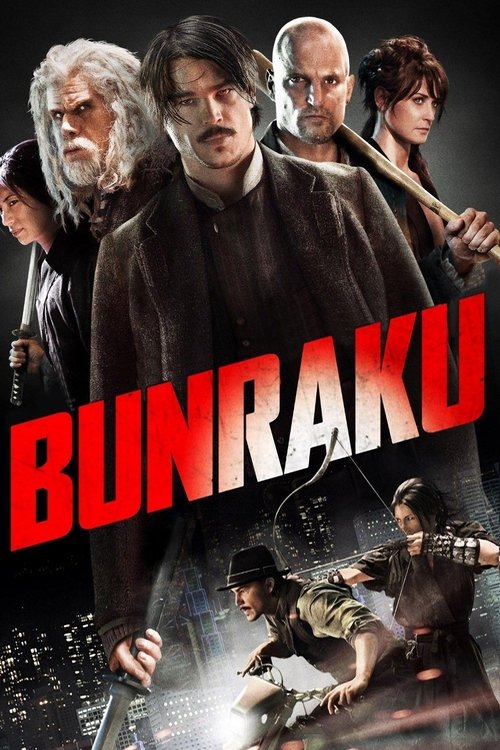
The Drifter, played by Josh Hartnett, is a mysterious and skilled fighter who arrives in the town ruled by the ruthless Nicola. His motivations are initially unclear, but as the story unfolds, it becomes evident that he seeks revenge for a personal loss. The Drifter's journey is marked by his internal struggle with his past and his desire for redemption, which drives him to confront Nicola and his henchmen.
How does the relationship between the Drifter and the Samurai evolve throughout the film?
The Drifter and the Samurai, portrayed by Gackt, initially meet as strangers with a common goal: to take down Nicola. Their relationship evolves from one of mutual suspicion to a deep bond forged through shared experiences and battles. The Samurai, who is also seeking vengeance for his own reasons, becomes a mentor figure to the Drifter, teaching him about honor and the importance of fighting for a cause greater than oneself.
What role does the character of Nicola play in the story, and what are his motivations?
Nicola, played by Ron Perlman, is the main antagonist of Bunraku. He is a tyrannical ruler who controls the town with an iron fist, using fear and violence to maintain his power. His motivations stem from a desire for absolute control and a personal vendetta against those who oppose him. Nicola's character embodies the themes of corruption and the abuse of power, making him a formidable foe for the protagonists.
What is the significance of the fight scenes in Bunraku, particularly the final showdown?
The fight scenes in Bunraku are not just action sequences; they are choreographed art that reflects the characters' emotional states and motivations. The final showdown between the Drifter, the Samurai, and Nicola's forces is a culmination of their journeys. It is visually striking, utilizing a blend of martial arts and stylized visuals that emphasize the stakes of their battle. The emotional weight of the fight is heightened by the characters' personal histories and the resolution of their arcs.
How does the character of the Bartender contribute to the narrative of Bunraku?
The Bartender, played by Woody Harrelson, serves as a crucial supporting character who provides guidance and wisdom to the Drifter and the Samurai. He acts as a mentor figure, offering insights into the nature of their quest and the challenges they face. His bar is a safe haven where the protagonists can regroup and strategize, and his backstory adds depth to the narrative, revealing his own struggles against Nicola's tyranny.
Is this family friendly?
"Bunraku," produced in 2010, is a visually striking film that combines elements of action, drama, and stylized storytelling. However, it contains several aspects that may not be suitable for children or sensitive viewers.
-
Violence: The film features stylized combat scenes, including sword fights and hand-to-hand combat, which can be intense and graphic in nature. The choreography is visually impressive but may be unsettling for younger audiences.
-
Death and Injury: Characters experience significant injuries and fatalities throughout the film. The portrayal of these events, while artistic, can be distressing.
-
Dark Themes: The narrative explores themes of revenge, betrayal, and the struggle against oppressive forces. These themes may be too mature for younger viewers.
-
Adult Language: There are instances of strong language that may not be appropriate for children.
-
Emotional Turmoil: Characters undergo significant emotional struggles, including loss and despair, which may be difficult for sensitive viewers to process.
Overall, while "Bunraku" is a unique cinematic experience, its content may not be suitable for all audiences, particularly children or those who are sensitive to violence and dark themes.









