



















Popular
What events lead to Lee Harvey Oswald's decision to assassinate President Kennedy?
How does the film portray President John F. Kennedy's character and leadership style?
What role does Marina Oswald play in Lee Harvey Oswald's life and actions?
How does the film depict the relationship between John F. Kennedy and Jacqueline Kennedy?
What specific events lead up to the assassination of President Kennedy in the film?
Should I watch it?
Ask Your Own Question

What is the plot?
Sorry, we aren't able to watch and write up a full detailed plot yet. Check back in a few days.
What is the ending?
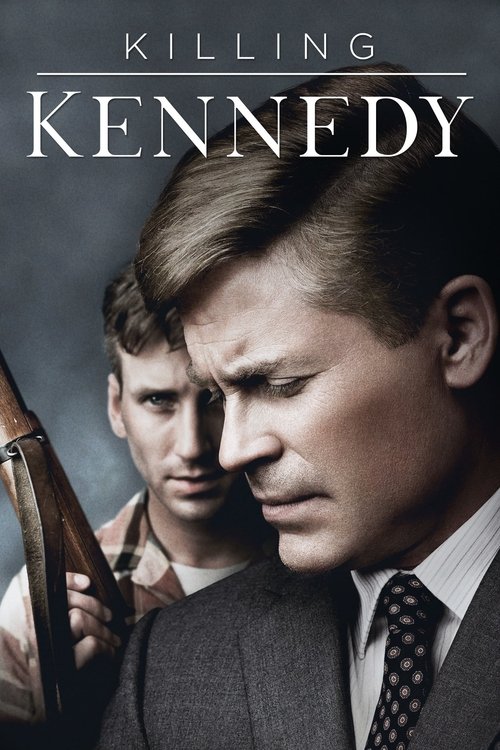
In the ending of "Killing Kennedy," Lee Harvey Oswald is apprehended after the assassination of President John F. Kennedy. He is later shot and killed by Jack Ruby in a Dallas police station. The film concludes with a reflection on the impact of Kennedy's death on the nation and the lives of those involved.
As the final act of "Killing Kennedy" unfolds, the tension in Dallas reaches a fever pitch. The scene opens with the motorcade of President John F. Kennedy gliding through the streets of Dallas on November 22, 1963. The atmosphere is electric, filled with excitement and anticipation from the gathered crowd. Kennedy, portrayed with a charismatic smile, waves to the enthusiastic supporters, unaware of the impending tragedy.
Cut to Lee Harvey Oswald, who is in a dimly lit room, his face a mask of determination and anxiety. He is preparing for the moment that will change history. The camera captures his internal struggle, the weight of his actions pressing down on him. He is conflicted, yet resolute, driven by a sense of purpose that he believes justifies his violent intentions.
As the motorcade approaches, the film shifts back and forth between Oswald and the jubilant crowd. The tension builds, and the sound of gunfire suddenly erupts, shattering the celebratory atmosphere. The camera captures the chaos that ensues as people scream and scatter, and the car carrying Kennedy is struck. The horror of the moment is palpable, with close-ups of shocked faces and frantic movements.
In the aftermath of the assassination, the scene transitions to the police station where Oswald is taken into custody. He is visibly shaken but maintains a façade of innocence, insisting that he is a patsy. The audience can sense his desperation as he tries to navigate the consequences of his actions, but the weight of his crime looms large.
The narrative then shifts to Jack Ruby, who is shown in a darkened bar, wrestling with his own motivations. He is portrayed as a man consumed by emotion, feeling compelled to take matters into his own hands. The film captures his internal conflict, leading to the fateful decision to confront Oswald.
In a shocking turn of events, Ruby enters the police station where Oswald is being transferred. The scene is tense, filled with anticipation as Ruby approaches Oswald. The moment is fraught with emotion, and the audience can feel the gravity of what is about to unfold. Ruby pulls out a gun and fires, hitting Oswald. The camera captures the chaos that erupts in the station, with officers rushing to subdue Ruby and the realization of what has just happened sinking in.
As Oswald lies on the ground, the life fading from his eyes, the film captures the finality of his fate. The camera lingers on his face, reflecting a mix of shock and resignation. The scene transitions to the aftermath of Kennedy's assassination, showing the nation in mourning. News reports flash across the screen, highlighting the profound impact of the tragedy on American society.
The film concludes with a somber reflection on the legacy of Kennedy and the ripple effects of his death. The final scenes depict the nation grappling with loss, uncertainty, and the questions that will linger for years to come. The emotional weight of the story hangs heavy, leaving the audience to ponder the fragility of life and the consequences of violence.
Is there a post-credit scene?
The movie "Killing Kennedy," produced in 2013, does not have a post-credit scene. The film concludes with the events surrounding the assassination of President John F. Kennedy, focusing on the emotional and historical impact of that day. After the credits roll, there are no additional scenes or content that follow. The film wraps up its narrative without extending into any further material.
What events lead to Lee Harvey Oswald's decision to assassinate President Kennedy?
The film delves into Lee Harvey Oswald's troubled past, showcasing his disillusionment with American society and his growing obsession with communism. It highlights his time in the Soviet Union, his return to the U.S., and his increasing alienation from those around him, including his wife, Marina. Oswald's internal conflict and desire for recognition culminate in his decision to assassinate Kennedy.
How does the film portray President John F. Kennedy's character and leadership style?
Killing Kennedy presents President Kennedy as a charismatic and ambitious leader, grappling with the pressures of the Cold War and domestic challenges. The film illustrates his charm and wit, particularly in his interactions with family and advisors, while also depicting his vulnerabilities, such as his health issues and the weight of his responsibilities, which contribute to his complex character.
What role does Marina Oswald play in Lee Harvey Oswald's life and actions?
Marina Oswald is portrayed as a conflicted figure, caught between her loyalty to her husband and her fear of his increasingly erratic behavior. The film explores her emotional turmoil as she struggles to understand Oswald's motivations and the implications of his actions, ultimately depicting her as a tragic character who is deeply affected by the events surrounding the assassination.
How does the film depict the relationship between John F. Kennedy and Jacqueline Kennedy?
The film illustrates the close yet complicated relationship between John and Jacqueline Kennedy. It showcases their moments of affection and support for one another, particularly during challenging times, while also hinting at the strains caused by Kennedy's infidelities and the pressures of public life. Their bond is portrayed as a mix of love, duty, and the burdens of their roles.
What specific events lead up to the assassination of President Kennedy in the film?
The film meticulously details the days leading up to the assassination, including Kennedy's visit to Dallas, the political climate of the time, and Oswald's preparations. It captures the tension and anticipation in Dallas as the motorcade is planned, interspersed with scenes of Oswald's final moments before the act, highlighting the convergence of their paths and the tragic inevitability of the event.
Is this family friendly?
"Killing Kennedy," produced in 2013, is a historical drama that depicts the events leading up to the assassination of President John F. Kennedy. While the film is based on real events, it contains several elements that may not be suitable for children or sensitive viewers.
-
Violence and Assassination: The film includes scenes depicting the assassination of JFK, which may be distressing due to the graphic nature of the event and the emotional impact on those involved.
-
Political Tension: There are scenes that portray the intense political climate of the 1960s, including discussions of conspiracy and threats against the president, which may be unsettling for younger audiences.
-
Emotional Distress: Characters experience significant emotional turmoil, including fear, anxiety, and grief, particularly in relation to the assassination and its aftermath.
-
Historical Context: The film addresses themes of betrayal, loss, and the impact of violence on society, which may be heavy for younger viewers to process.
-
Mature Themes: The narrative touches on complex issues such as power struggles, mental health (in relation to Lee Harvey Oswald), and the consequences of political actions, which may require a more mature understanding.
Overall, while "Killing Kennedy" is a historical portrayal, its themes and content may be more appropriate for older teens and adults rather than younger children.








