





















Popular
What happens to Beverly Weston at the beginning of the film?
How does Violet Weston react to Beverly's death?
What is the significance of the character Little Charles in the story?
What conflict arises between Barbara and Violet during the family gathering?
How does the character Ivy Weston cope with her family's dysfunction?
Should I watch it?
Ask Your Own Question

What is the plot?
Sorry, we aren't able to watch and write up a full detailed plot yet. Check back in a few days.









What is the ending?
In the ending of "August: Osage County," the Weston family confronts their deep-seated issues during a tense family gathering. After a series of explosive confrontations, the family members begin to disperse, leaving Violet Weston alone with her pain and addiction. The film concludes with a poignant moment where the family members, despite their conflicts, share a moment of connection before parting ways.
As the film approaches its conclusion, the tension in the Weston household reaches a boiling point. The family has gathered for the funeral of Beverly Weston, the patriarch, and the emotional fallout from his death has laid bare the fractures within the family.
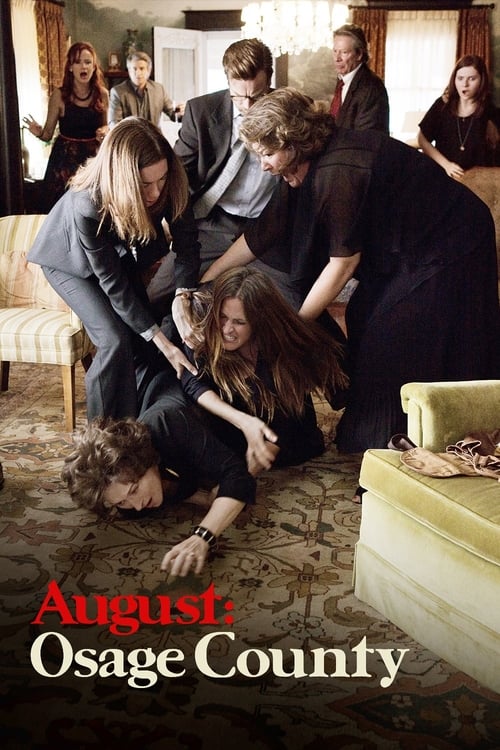
In the living room, Violet Weston, played by Meryl Streep, is at the center of the chaos. Her sharp tongue and biting remarks have alienated her daughters, Barbara (Julia Roberts), Ivy (Julianne Nicholson), and Karen (Juliette Lewis). The atmosphere is thick with unresolved grievances and unspoken truths. As the family members confront one another, the emotional stakes rise. Barbara, who has taken on the role of the family's protector, is particularly vocal about her mother's destructive behavior and the impact it has had on their lives.
The pivotal moment occurs when Barbara confronts Violet about her drug addiction and the toxic environment she has created. The confrontation escalates, revealing deep-seated resentments. Barbara's frustration is palpable as she tries to hold her family together while grappling with her own issues, including her crumbling marriage.
Meanwhile, Ivy, who has been the quiet observer, reveals her own struggles. She has been in a secret relationship with a man who is not accepted by the family, and her desire for independence clashes with her loyalty to her mother. The tension culminates when Ivy decides to leave the family home, seeking a life away from the chaos.
Karen, the youngest daughter, is also caught in the turmoil. She is engaged to a man named Steve, who is revealed to be inappropriate and dismissive of the family's dynamics. As the family confronts Steve, Karen is forced to choose between her loyalty to her family and her desire for love and acceptance.
As the family begins to fracture further, the emotional weight of their shared history becomes unbearable. One by one, they begin to leave the house, unable to cope with the pain and dysfunction that has been laid bare. Barbara, after a final confrontation with Violet, decides to take her daughter, Jean, and leave, feeling that she cannot change her mother or the family's toxic dynamics.
In the final scenes, Violet is left alone in the house, surrounded by the remnants of her family's presence. The camera lingers on her, capturing the loneliness and despair that envelops her. The film closes with a haunting image of Violet, a woman who has lost her family to the very demons she has fought against, leaving the audience with a sense of unresolved tension and the weight of familial bonds that are both a source of love and pain.
The fate of each main character is marked by their choices and the emotional scars they carry. Barbara leaves with her daughter, determined to break the cycle of dysfunction. Ivy steps away from her family's expectations, seeking her own path. Karen, despite her initial defiance, is left to confront the reality of her relationship with Steve. And Violet, the matriarch, is left alone, a poignant reminder of the cost of unresolved conflict and addiction. The film ends on a note of ambiguity, reflecting the complexities of family dynamics and the enduring impact of loss.
Is there a post-credit scene?
The movie "August: Osage County," produced in 2013, does not have a post-credit scene. The film concludes with the intense and emotional climax of the Weston family's gathering, leaving the audience with a powerful sense of resolution regarding the characters' struggles and relationships. After the credits roll, there are no additional scenes or content that follow. The focus remains on the complex dynamics and revelations that unfold throughout the film, culminating in the family's confrontation and the raw emotions that surface during their time together.
What happens to Beverly Weston at the beginning of the film?
At the beginning of 'August: Osage County', Beverly Weston, the patriarch of the Weston family, is introduced as a troubled poet and alcoholic. He is found to be missing, and it is later revealed that he has committed suicide. This tragic event sets off a chain reaction that brings the dysfunctional family together for the first time in years.
How does Violet Weston react to Beverly's death?
Violet Weston, played by Meryl Streep, is devastated by her husband Beverly's death, but her reaction is complex. She oscillates between grief and anger, often lashing out at her family members. Her addiction to prescription drugs exacerbates her emotional instability, leading to confrontations with her daughters and revealing deep-seated resentments.
What is the significance of the character Little Charles in the story?
Little Charles, the son of Violet's sister Mattie Fae, is portrayed as a somewhat awkward and sensitive character. His significance lies in his relationship with the family, particularly his romantic involvement with Ivy Weston, which is fraught with complications. He also serves as a mirror to the family's dysfunction, embodying the struggles of feeling out of place and the desire for acceptance.
What conflict arises between Barbara and Violet during the family gathering?
During the family gathering, a significant conflict arises between Barbara, Beverly and Violet's eldest daughter, and Violet herself. The tension escalates as Barbara confronts Violet about her manipulative behavior and drug use. This confrontation reveals the deep-seated issues between mother and daughter, showcasing Barbara's frustration with Violet's toxic influence and Violet's fierce, defensive nature.
How does the character Ivy Weston cope with her family's dysfunction?
Ivy Weston, the middle daughter, copes with her family's dysfunction by trying to maintain a sense of normalcy and support for her family. She is often seen as the peacemaker, attempting to mediate conflicts and keep the family together. However, her own struggles with loneliness and her secret relationship with Little Charles highlight her desire for love and acceptance amidst the chaos.
Is this family friendly?
"August: Osage County" is not considered family-friendly due to its mature themes and intense emotional content. Here are some potentially objectionable or upsetting aspects that may affect children or sensitive viewers:
-
Strong Language: The film features frequent use of profanity, which may be inappropriate for younger audiences.
-
Substance Abuse: Characters are depicted using alcohol and prescription drugs, which could be distressing for some viewers.
-
Family Conflict: The film revolves around intense family drama, including arguments, confrontations, and emotional breakdowns that may be overwhelming.
-
Depression and Suicide: Themes of mental illness and a character's suicide are central to the story, which could be triggering for sensitive individuals.
-
Infidelity and Betrayal: The narrative includes themes of infidelity and betrayal, leading to emotional turmoil among family members.
-
Death and Grief: The film deals with the death of a family member and the subsequent grief, which may be upsetting for viewers, especially children.
-
Violence: There are moments of physical altercations and aggressive behavior that could be disturbing.
These elements contribute to the film's overall heavy and dramatic tone, making it more suitable for mature audiences.









