
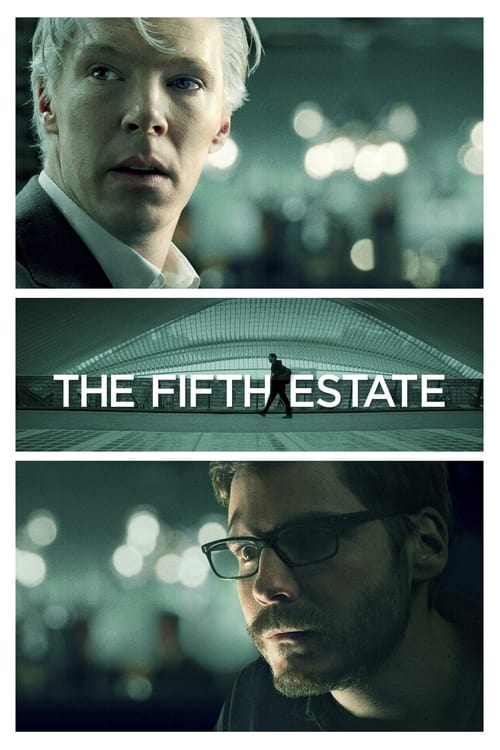





























Popular
What motivates Julian Assange to create WikiLeaks?
How does Daniel Domscheit-Berg's relationship with Julian Assange evolve throughout the film?
What role does the release of the Collateral Murder video play in the story?
How does the film portray the conflict between Julian Assange and the U.S. government?
What is the significance of the character of Sarah Harrison in the film?
Should I watch it?
Ask Your Own Question

What is the plot?
Sorry, we aren't able to watch and write up a full detailed plot yet. Check back in a few days.


What is the ending?
In the ending of "The Fifth Estate," Julian Assange's relationship with Daniel Domscheit-Berg deteriorates as they confront the consequences of their actions. After the release of sensitive documents, Assange becomes increasingly isolated and paranoid, while Domscheit-Berg decides to leave WikiLeaks. The film concludes with Assange's continued evasion from authorities and Domscheit-Berg's realization of the moral complexities surrounding their work.
As the film approaches its climax, the tension between Julian Assange and Daniel Domscheit-Berg escalates. The scene opens with a stark contrast between the two men. Assange, portrayed as increasingly erratic and secretive, is holed up in a safe house, surrounded by the chaos of the world outside. The weight of the information they have released hangs heavily in the air, and the consequences are beginning to unfold.
Domscheit-Berg, who has been a loyal ally to Assange, starts to feel the strain of their partnership. He witnesses Assange's growing paranoia and obsession with secrecy, which leads to a rift between them. In a pivotal scene, Domscheit-Berg confronts Assange about the ethical implications of their work and the potential harm it could cause to innocent people. Assange, however, remains steadfast in his belief that transparency is paramount, dismissing Domscheit-Berg's concerns as naive.
As the fallout from the leaked documents intensifies, the film depicts a series of news reports showcasing the global impact of WikiLeaks. Governments are in turmoil, and the public is divided. The emotional weight of their actions begins to take a toll on Domscheit-Berg, who grapples with the moral dilemmas of their mission. He feels increasingly alienated from Assange, who is consumed by his own vision of truth and justice.
In a climactic moment, Domscheit-Berg makes the difficult decision to leave WikiLeaks. He confronts Assange one last time, expressing his disillusionment with their path. Assange, in a moment of vulnerability, tries to persuade Domscheit-Berg to stay, but the bond between them has irrevocably fractured. Domscheit-Berg walks away, symbolizing a break not only from Assange but from the ideals they once shared.
The film then shifts to Assange's fate. He is shown in a series of isolated scenes, evading authorities and living in a state of constant fear. The weight of his choices becomes evident as he is depicted as a man increasingly alone, surrounded by the consequences of his actions. The final moments of the film highlight his solitude, with Assange reflecting on the cost of his pursuit of truth.
Meanwhile, Domscheit-Berg's journey takes a different turn. He is seen moving on with his life, attempting to reconcile his past while grappling with the implications of their work. The film closes with a sense of ambiguity, leaving the audience to ponder the complexities of truth, freedom, and the personal sacrifices made in the name of a cause.
In summary, the ending of "The Fifth Estate" encapsulates the unraveling of a partnership marked by ambition and idealism, ultimately leading to isolation and reflection for both Assange and Domscheit-Berg.
Is there a post-credit scene?
The movie "The Fifth Estate," produced in 2013, does not have a post-credit scene. The film concludes with its final scenes, focusing on the aftermath of the events surrounding WikiLeaks and its founder, Julian Assange. The narrative wraps up without any additional content or scenes after the credits roll. The film ends on a reflective note, emphasizing the impact of transparency and the ethical dilemmas surrounding information dissemination in the digital age.
What motivates Julian Assange to create WikiLeaks?
Julian Assange is driven by a deep-seated belief in transparency and the public's right to know. His experiences with government secrecy and corruption fuel his passion for exposing hidden truths. He sees WikiLeaks as a tool to challenge power structures and hold those in authority accountable, which becomes a central theme in his character's journey.
How does Daniel Domscheit-Berg's relationship with Julian Assange evolve throughout the film?
Daniel Domscheit-Berg starts as an enthusiastic supporter of Assange and the WikiLeaks mission, drawn in by the idealism of exposing corruption. However, as Assange's methods become increasingly secretive and authoritarian, Daniel's admiration turns to disillusionment. This emotional conflict culminates in a rift between them, highlighting Daniel's struggle between loyalty to a friend and his moral compass.
What role does the release of the Collateral Murder video play in the story?
The release of the Collateral Murder video is a pivotal moment for WikiLeaks, showcasing the brutal reality of war and the consequences of military actions. It serves as a catalyst for the organization's rise to prominence, drawing international attention and support. This event also intensifies the ethical dilemmas faced by Assange and his team, as they grapple with the impact of their revelations on individuals and governments.
How does the film portray the conflict between Julian Assange and the U.S. government?
The film depicts a tense and escalating conflict between Julian Assange and the U.S. government, illustrating the lengths to which authorities will go to protect classified information. As WikiLeaks publishes sensitive documents, the government responds with threats and investigations, portraying Assange as a dangerous figure. This cat-and-mouse dynamic highlights the broader implications of freedom of information versus national security.
What is the significance of the character of Sarah Harrison in the film?
Sarah Harrison serves as a crucial ally to Julian Assange and a key member of the WikiLeaks team. Her character embodies the ethical complexities of the organization, as she navigates the challenges of protecting whistleblowers and managing the fallout from their revelations. Sarah's commitment to the cause and her interactions with Assange reveal the personal stakes involved in their mission, adding depth to the narrative.
Is this family friendly?
The Fifth Estate, produced in 2013, is not considered family-friendly due to several potentially objectionable or upsetting scenes and themes. Here are some aspects that may be concerning for children or sensitive viewers:
-
Graphic Content: The film includes depictions of war and violence, particularly in relation to the leaks of sensitive information that expose human rights abuses.
-
Mature Themes: The narrative explores complex themes such as privacy, government surveillance, and the ethical implications of whistleblowing, which may be difficult for younger audiences to fully grasp.
-
Strong Language: There are instances of strong language throughout the film, which may not be suitable for children.
-
Emotional Turmoil: Characters experience significant emotional distress, betrayal, and moral dilemmas, which could be upsetting for sensitive viewers.
-
Depictions of Conflict: The film portrays the impact of leaked information on real-world events, including the consequences for individuals involved, which can be intense and distressing.
These elements contribute to a mature viewing experience, making it more appropriate for older teens and adults.







