






Popular
What transformations do the characters undergo in Metamorphoses?
How does the character of Orpheus change throughout the film?
What role does the character of Eurydice play in the story?
What is the significance of King Midas's story in Metamorphoses?
How do the visual elements enhance the storytelling in Metamorphoses?
Should I watch it?
Ask Your Own Question

What is the plot?
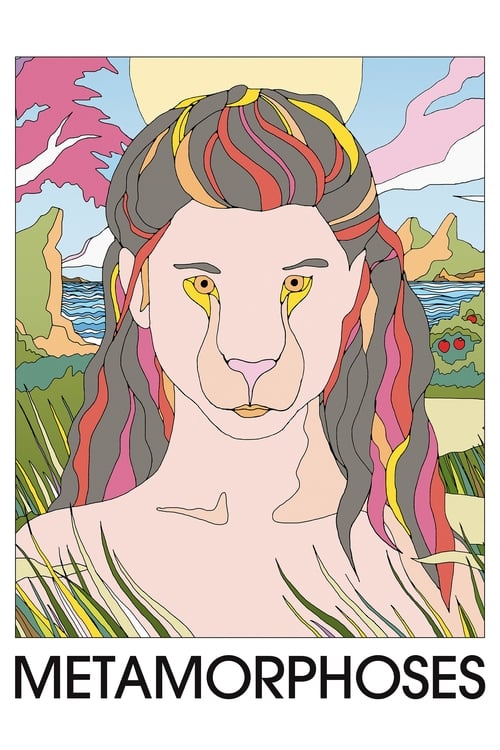
In the dim, whispering shadows of a lush forest, young hunter Actéon (Matthis Lebrun) crashes through the underbrush, his breath ragged, eyes wide with the thrill of the chase. Sweat beads on his brow as he pursues an elusive prey, his boots pounding the earth. Suddenly, he bursts into a sun-dappled clearing and freezes. There, bathing nude in a crystalline stream, stands a flame-haired figure of ethereal beauty--Diane (Samantha Avrillaud), her body a mesmerizing blend of masculine strength and feminine grace, transgender and unashamed, her skin glistening like polished marble under the dappled light. Actéon stares, transfixed, his voyeuristic gaze lingering too long on her exposed form. Diane's eyes flash with divine fury. "You dare spy on me, mortal?" she hisses, her voice a silken threat echoing through the trees. With a flick of her wrist, she sprinkles shimmering pixie dust over him--glittering particles that swirl like fireflies in the air. Actéon's body convulses; fur sprouts from his skin, antlers twist from his skull, hooves replace his feet. He bellows in horror as he transforms into a majestic stag, the hunter now forever the hunted, bounding terrified into the woods as Diane's laughter fades behind him.
The screen fades to the mundane clamor of a high school exterior on a sunlit afternoon, where Europa (Amira Akili), a wide-eyed high school girl with tousled hair and an air of restless innocence, skips class. She lounges against a chain-link fence, kicking pebbles, her uniform slightly askew, dreaming of escape from the drudgery of algebra and adolescent monotony. A massive eight-wheel truck rumbles to a stop nearby, its engine growling like a beast from myth. Out steps Jupiter (Sébastien Hirel), a magnetic young truck driver with chiseled features, tousled dark hair, and eyes that smolder with otherworldly charisma. He's no ordinary man--his presence radiates power, a seducer cloaked in modern denim and leather. "Hey, you look like someone who needs an adventure," he calls, his voice smooth as honeyed wine. Europa glances up, her cheeks flushing. "What kind of adventure?" she asks, intrigued despite herself.
Jupiter leans against the truck, launching into a tale that hooks her instantly. "Once, there was a god who fell madly in love with a mortal girl, just like you. He swept her away to realms where the impossible happens--where humans turn into swans, trees, stars." His words paint vivid pictures of divine lust and transformation, drawing from Ovid's ancient verses but twisted into playful, erotic modern vignettes. Europa, gullible and fascinated, bites her lip. "Take me with you," she whispers, climbing into the cab without a backward glance. The truck roars to life, carrying her from the threshold of her ordinary life into the unknown--a symbolic abduction, her innocence the perfect prey for the god's predatory charm.
As the eight-wheel beast barrels down winding roads through contemporary France, Jupiter's storytelling weaves a spell inside the cab. Sunlight streams through the windows, casting golden halos on their faces. He speaks of gods who crave mortals, their loves fluid and fierce. Europa listens rapt, her hand brushing his thigh accidentally--or not--as tension simmers. "Why do gods bother with us?" she murmurs. Jupiter grins wolfishly. "Because you're wild, untamed. We shape you, and you change us." Their flirtation builds, charged with unspoken desire, the truck's rumble underscoring the growing momentum of her awakening. They arrive at idyllic nature settings--verdant forests bordering turquoise river banks, where water babbles like a siren's song, evoking the fluidity of sexuality and metamorphosis. These ordinary landscapes shimmer with heavenly significance, ordinary turned immortal under the gods' gaze.
In one such riverside haven, Jupiter introduces Europa to his companions, the first being Bacchus (Damien Chapelle), a lithe, intoxicating figure with wild eyes and a body adorned in loose fabrics that hint at ritual revelry. Bacchus lounges by the water, surrounded by a cadre of young acolytes--nude, diverse bodies frolicking in the shallows, their skin slick and sun-kissed. "Welcome to our world, little Europa," Bacchus purrs, offering her a goblet of dark wine that tastes of forbidden fruits. Here, amid tug-and-pull rituals of love, Europa watches a mesmerizing courtship unfold. Vimala Pons, a circus-trained beauty with feral grace, dances on the river bank in a physical, animalistic seduction--bodies twisting like vines, hands grasping and releasing in a rhythm of pursuit and evasion. The air thickens with erotic tension; laughter mixes with gasps as lovers chase and yield, water splashing like applause. Europa's pulse quickens, her innocence cracking as she feels the pull of this amoral beauty.
Jupiter pulls her aside to a secluded spot by the turquoise waters, where mist rises like steam from hidden desires. "Watch closely," he whispers, his breath hot on her neck. He recounts the myth of Io (Coralie Rouet), transforming before her eyes in a nested story: Io, a mortal maiden, caught in Jupiter's gaze, her body shifting into a cow under Junon (Mélodie Richard)'s jealous wrath--horns sprouting, hide thickening, a low moo escaping her lips as she grazes helplessly by the river. Europa gasps, touching the apparition, feeling the warmth of transformed flesh. "It's real," she breathes, horror mingling with awe. Jupiter nods, his hand sliding to her waist. "Gods like us can change you in a blink--plant, animal, lover." Their lips meet in a hungry kiss, the first spark of her sexual awakening igniting amid the water's murmur.
Tension mounts as they venture deeper into mythical lands, dreamlike realms where forests bleed into endless horizons, inhabited by gods who toy with mortals like playthings. Mercure (Nadir Sönmez) flits about, a quicksilver messenger delivering cryptic warnings, while Argus (Vincent Massimino) lurks with his hundred eyes, ever-watchful. Europa, now enraptured, sheds her schoolgirl inhibitions, stripping to join nude christenings in the rivers--bodies submerging, emerging reborn, water cascading over breasts and hips in slow, vivid rivulets. Emotional currents swirl: joy in the dances, dread in the transformations. Jupiter's seduction deepens; he becomes her Pygmalion, sculpting her spirit with touches and tales, their bodies entwining on mossy banks under starlit skies. "You're mine now," he growls during one fervent coupling, her cries echoing as pleasure builds like a storm.
Bacchus takes center stage in a revelrous confrontation, illustrating the perils of impiety. Gathered around a bonfire on a forested riverbank at dusk, shadows dancing like demons, he preaches to a growing throng of youths. "Believe in the myths, or suffer!" he thunders, eyes blazing. He demonstrates with a hapless skeptic--a young man who scoffs at the gods. Bacchus hurls pixie dust akin to Diane's, twisting the doubter into a writhing vine that roots into the earth, leaves unfurling in agony. The crowd gasps; Europa recoils, heart pounding, as the vine's tendrils grasp futilely at the air. "See? Denial brings stasis," Bacchus declares, pulling Europa into a frenzied dance. Their bodies grind in ritual ecstasy, her spiritual awakening accelerating amid sweat-slicked skin and pounding drums. No death here, but the confrontation etches fear into her soul--gods as vengeful predators, mortals as fragile prey.
Momentum surges as Orpheus (George Babluani) enters the fray, a brooding prophet with a voice like velvet thunder. In a misty glade near a thundering waterfall, he strums a guitar, singing prophecies of love's transience and humanity's doom. His words mesmerize: "We are all prey in the gods' hunt--hunter one moment, stag the next." A sect forms around him organically--disillusioned youths, drawn from Europa's world of schools and streets, clustering like moths to flame. Europa follows, entranced, as Orpheus teaches in nested tales. He reveals the story of Narcissus (Arthur Jacquin), a skateboarding youth with sun-bleached hair and cocky swagger. On an urban riverside at twilight, Narcissus balances on his board, gazing into the rippling water. "Who's that beauty?" he mutters, entranced by his reflection. Love-sickness consumes him; he abandons friends, skating obsessively toward watery mirrors. In a self-destructive climax, he plummets from a high ledge into the churning depths below--arms flailing, board splintering, body swallowed by the current in a frothy demise. No killer but his own obsession; the water claims him, bubbles rising like final sighs. Europa weeps, clutching Orpheus. "Why does beauty destroy?" Orpheus replies softly, "Because it reveals our fragility."
Revelations cascade: Europa learns the gods' true natures--Jupiter the abductor-initiator, Bacchus the enforcer of myth, Orpheus the doomed proselytizer. Character secrets unfold in intimate confessions by the fire: Jupiter admits his endless hunger for mortals like her, sparking a heated confrontation. "You're just using me!" Europa accuses, shoving him. He grabs her wrists, eyes fierce. "I'm awakening you!" Their tussle turns passionate, bodies slamming against the truck in a raw clash of wills, ending in breathless surrender. Bacchus reveals the dialectic of hunter-prey: "We chase, you flee--then roles reverse." Orpheus prophesies his own end, whispering to Europa alone under moonlight, "My words will kill me, but they'll free you."
Tension peaks in escalating god-mortal confrontations. The sect swells, youths clashing with skeptical outsiders in forest clearings--fists fly, chants rise, blood spatters leaves. Orpheus proselytizes fiercely: "Reject the mundane! Embrace transformation!" Impiety boils over; a mob forms from enraged locals and rival believers, storming the mythical lands at midnight under a blood moon. Torches flicker, faces twisted in rage. "Blasphemer!" they roar, converging on Orpheus in a rocky riverside amphitheater. Europa watches from the shadows, heart hammering, as the prophet stands defiant. "Love conquers all!" he cries. The mob descends--sticks crack bone, stones thud flesh, kicks rain down. Orpheus crumples, blood pooling in the dirt, his final gasp a haunting melody. Orpheus dies violently at the hands of the mob, his body broken and abandoned by the water's edge, eyes staring at the stars.
The climax erupts in chaos: Jupiter and Bacchus intervene, hurling dust and invocations, transforming attackers into deer and birds that scatter in panic. Europa, amidst the fray, confronts Jupiter fully. "Is this love or cruelty?" she screams over the din, tears streaming. He pulls her close amid fleeing shapes. "Both. That's life." Bacchus laughs maniacally, reveling in the reversal--hunters fleeing as prey. No more deaths, but the air crackles with unresolved fury, Europa's world shattered and remade.
As dawn breaks over the turquoise waters, the frenzy ebbs. Europa stands transformed--not physically, but spiritually sexually awakened. She has witnessed every death: Actéon's eternal hunt as a deer by Diane's dust; Narcissus's drowning obsession; Orpheus's mob slaughter. Revelations settle: gods' powers are amoral whims, myths necessities for survival, humanity's place in eternal flux. She parts from Jupiter with a lingering kiss by the truck, no tidy resolution--his seduction complete, her journey hers alone. Bacchus toasts her from afar, "Believe, or become the vine."
The scene loops back to dreamy poetry: youths dance nude by the river, bodies intertwining in feral courtships, water symbolizing endless change. Ovid's words frame the close, cherry-picked myths juiced for modern reverie. Europa walks into the forest, stronger, eyes alight with mythic fire--innocence lost, wisdom gained. The screen fades on her silhouette against the dawn, the hunter-prey dialectic eternal, transformations whispering on the wind.
(Word count: 3472)



What is the ending?
In the ending of "Metamorphoses," the characters face the consequences of their desires and transformations. The story culminates in a series of poignant moments that reflect the themes of love, loss, and the inevitability of change. The fates of the main characters intertwine as they confront their choices, leading to a bittersweet resolution.
As the narrative unfolds, we see the characters grappling with their transformations. The story reaches a climax when the character of Orpheus, who has been deeply affected by the loss of his beloved Eurydice, attempts to retrieve her from the underworld. His journey is fraught with emotional turmoil, as he must confront the depths of his grief and the power of love that drives him forward.
In a heart-wrenching moment, Orpheus finally reaches Eurydice, but the conditions of their reunion are fraught with tension. He is warned not to look back at her until they have both returned to the surface. However, in a moment of desperation and longing, he turns to gaze upon her, breaking the promise he made. This act of looking back results in Eurydice being pulled back into the shadows of the underworld, leaving Orpheus devastated and alone.
The film closes with Orpheus mourning his loss, surrounded by the remnants of his love and the haunting echoes of his music. The emotional weight of his journey is palpable, as he reflects on the nature of love and the transformations it brings. The final scenes depict the characters in their transformed states, emphasizing the theme of metamorphosis that runs throughout the film. Each character has undergone significant changes, both physically and emotionally, illustrating the profound impact of their experiences.
In summary, the ending of "Metamorphoses" encapsulates the essence of the characters' journeys, highlighting their struggles with love, loss, and the transformative power of their choices. The fates of Orpheus and Eurydice serve as a poignant reminder of the fragility of human connections and the inevitability of change.
Is there a post-credit scene?
The movie "Metamorphoses," produced in 2014 and directed by Christophe Honoré, does not feature a post-credit scene. The film is an adaptation of Ovid's "Metamorphoses," weaving together various myths and stories from the ancient text. It concludes with a poignant and reflective ending that encapsulates the themes of transformation and the cyclical nature of life, leaving the audience with a sense of closure rather than an additional scene after the credits. The focus remains on the emotional and narrative arcs of the characters throughout the film, rather than extending the story further in a post-credit sequence.
What transformations do the characters undergo in Metamorphoses?
In 'Metamorphoses', characters experience various physical and emotional transformations that reflect their desires and fates. For instance, the story of King Midas showcases his greed as he is granted the ability to turn everything he touches into gold, leading to his ultimate despair when he cannot even eat or touch his loved ones without causing them harm. Similarly, the tale of Orpheus and Eurydice explores themes of love and loss, where Orpheus's journey to the underworld to retrieve Eurydice symbolizes his deep emotional transformation as he grapples with grief and the consequences of his actions.
How does the character of Orpheus change throughout the film?
Orpheus begins as a passionate and talented musician deeply in love with Eurydice. His character is marked by a sense of hope and determination as he ventures into the underworld to reclaim her after her untimely death. However, as he faces the trials of the underworld, his emotional state shifts from hopeful to desperate, culminating in a moment of doubt when he looks back at Eurydice, leading to her permanent loss. This act signifies a profound transformation from a hopeful lover to a man burdened by regret and sorrow.
What role does the character of Eurydice play in the story?
Eurydice serves as the catalyst for Orpheus's journey and transformation. Initially depicted as a vibrant and loving partner, her untimely death thrusts Orpheus into a quest filled with emotional turmoil. Her presence in the underworld represents both the ideal of love and the harsh reality of loss. Eurydice's character embodies the fragility of life and love, and her interactions with Orpheus highlight the themes of longing and the consequences of choices made in moments of weakness.
What is the significance of King Midas's story in Metamorphoses?
King Midas's story is significant as it illustrates the dangers of greed and the consequences of one's desires. Initially, Midas is granted the wish to turn everything he touches into gold, which he believes will bring him happiness and wealth. However, as he experiences the isolation and despair that come with his gift--unable to enjoy food, touch, or love--his character undergoes a painful transformation. This narrative serves as a cautionary tale about the perils of unchecked ambition and the realization that true wealth lies in relationships and experiences rather than material possessions.
How do the visual elements enhance the storytelling in Metamorphoses?
The visual elements in 'Metamorphoses' play a crucial role in enhancing the storytelling by creating a dreamlike atmosphere that reflects the themes of transformation and myth. The use of vibrant colors, fluid cinematography, and striking imagery captures the essence of each character's journey. For example, the scenes in the underworld are depicted with dark, haunting visuals that contrast sharply with the bright, lively scenes of the mortal world. This visual dichotomy not only emphasizes the emotional states of the characters but also immerses the audience in the mythological world, making the transformations feel more profound and impactful.
Is this family friendly?
"Metamorphoses," produced in 2014, is an adaptation of Ovid's classic tales, and while it is visually stunning and artistically rich, it contains several elements that may not be suitable for children or sensitive viewers.
-
Nudity: The film features scenes with nudity, as it explores themes of love and transformation, which may be uncomfortable for younger audiences.
-
Violence: There are moments of violence and conflict, including scenes that depict emotional turmoil and physical confrontations, which could be distressing.
-
Themes of Loss and Betrayal: The narrative delves into complex emotional themes such as betrayal, loss, and the darker aspects of love, which may be challenging for younger viewers to process.
-
Mythological Elements: Some mythological stories involve tragic outcomes, such as death or transformation into animals, which could be unsettling.
-
Intense Emotional Scenes: The film portrays intense emotional experiences, including heartbreak and despair, that may resonate deeply and evoke strong feelings.
Overall, while "Metamorphoses" is a visually captivating film, its mature themes and content may not be appropriate for all audiences, particularly children.








