



Popular
What motivates the main character, Léa, throughout the film?
How does the relationship between Léa and her father evolve in the film?
What role does the setting play in Léa's emotional journey?
How does Léa's romantic relationship impact her character development?
What are the key conflicts that Léa faces throughout the film?
Should I watch it?
Ask Your Own Question

What is the plot?
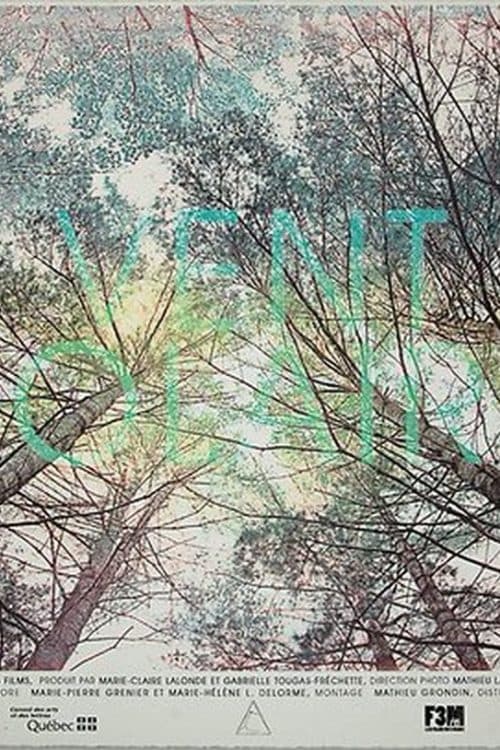
In the vast, sun-bleached expanse of the French countryside, where golden fields stretch endlessly under a relentless sky, an isolated religious sect gathers in their secluded compound. The air hums with unspoken anticipation, thick with the scent of dry earth and wild herbs. It is a timeless place, unmarked by calendars or clocks--no specific date or time pierces the ritualistic haze--but the sun hangs high, casting long shadows that twist like seeking fingers across the ground.
The members move in unison, their bodies locked in simple, deliberate gestures: arms rising slowly like petals unfurling, torsos bending in synchronized arcs, feet shuffling in a hypnotic circle. These are not fluid dances of joy but strained contortions, each motion a battle against the flesh. Sweat beads on furrowed brows, muscles tremble under thin robes stained with dust, and breaths come in ragged gasps. The body struggles to follow, rebelling against the spirit's command, yet they persist, eyes glazed with fervent conviction. This is their preparation, the purification for the ultimate move: the transfer to the next world through mass suicide.
Among them emerges Elder Lucien Moreau, the sect's unspoken leader, his face etched with the lines of decades spent in isolation. Tall and gaunt, with piercing blue eyes that seem to pierce the veil between worlds, Lucien stands at the center of the circle. His voice, low and resonant, breaks the silence for the first time. "The solar wind calls us," he intones, arms outstretched toward the blazing sun. "It carries our souls beyond this frail shell, to the eternal light." The others murmur in agreement, their voices a choral whisper: "To the next world." No names are spoken aloud among the faithful-- they have shed such earthly labels--but Lucien is known to all as the Prophet, the one who first heard the whispers of transcendence in the wind.
Beside him kneels Sister Marie Duval, the youngest and most fervent, her dark hair matted with sweat, her hands callused from years of tilling the unyielding soil. Marie's eyes burn with unquenchable fire; she has been with the sect since childhood, drawn from a broken family by Lucien's promises of rebirth. She leads the women in their swaying, her body quivering as she forces her limbs into the prescribed forms. "Feel it," she gasps to the woman next to her, Agnès Lefèvre, a former schoolteacher whose skepticism has long since dissolved into blind devotion. "The body resists, but the soul surges forward." Agnès nods, tears streaming down her weathered cheeks, her once-sharp mind now a vessel for the group's singular truth.
The men follow suit: Brother Thierry Garnier, broad-shouldered and silent, his farmer's hands clenched in fists as he mimics the elder's gestures; Paul Renaud, the sect's quiet scribe, who has inscribed their beliefs on scraps of paper hidden in the compound's lone wooden hut; and a dozen others, their faces a mosaic of resolve and torment. They form a human mandala around a shallow pit dug into the earth, lined with wildflowers and sun-bleached stones--symbols of the solar wind that will sweep them away. No weapons gleam in the sunlight; no poisons bubble in cauldrons. Their method is purity itself: a collective cessation, breath held until the spirit departs, timed to the sun's zenith when the cosmic winds are strongest.
Tension builds as the sun climbs higher, the heat pressing down like a divine hand. The movements grow more intricate--fingers splaying like solar flares, necks arching back to expose throats to the sky. Bodies falter: Thierry stumbles, his knee buckling, but Marie is there, steadying him with a fierce grip. "The flesh weakens us," she hisses, her voice laced with urgency. "But we are more than flesh." Lucien circles the group, his robes billowing in a sudden gust, eyes scanning for doubt. There is none, or none voiced. The sect has thrived in isolation for years, walled off from the clamor of the outside world, sustained by meager crops and unyielding faith. Rumors from passing roads--whispers of police inquiries, of families searching for lost kin--have never breached their sanctuary.
As midday approaches, Lucien halts the ritual, raising his hands for silence. The group sinks to their knees in the dust, forming a perfect ring around the pit. "Today," he proclaims, his voice swelling with prophetic thunder, "we shed the vessel that binds us. The solar wind awaits--fierce, unyielding, born from the sun's corona, racing across the void to claim us." He speaks of ancient truths, drawing from visions: streams of charged particles, electrons and protons surging from the sun's heart, battering Earth's magnetosphere in geomagnetic storms, as observed by astronomers like Richard Carrington in 1859. "It slows at the heliopause, turns sideways like Voyager's witness in 2010, but for us, it accelerates--carrying souls to the Alfvén surface and beyond." The words, pieced from Lucien's eclectic readings smuggled into the compound, ignite their fervor. Marie weeps openly, clutching a sun-warmed stone. "We will be the coronal mass ejection," she whispers, "exploding into eternity."
Doubt flickers, brief as a shadow. Agnès hesitates, her lips parting as if to question--has this always been the plan, or did Lucien's visions twist over time? But Thierry's glare silences her. No confrontations erupt; the sect's harmony is absolute, forged in isolation. Lucien senses the ripple and addresses it directly. "The body struggles because it fears the wind's embrace," he says, placing a hand on Agnès's shoulder. "But remember Marie's child--lost to illness, now waiting in the next world. We join her today." The revelation lands like a stone in still water: Marie's unspoken grief, the secret catalyst for her devotion, binding them tighter. No one probes further; faith eclipses inquiry.
The ritual resumes, momentum surging. They chant now, a low hum rising to crescendo: "Vent solaire, emporte-nous!" The sun reaches its peak, a blinding disk overhead. Lucien steps into the pit first, lying supine on the flowers, arms crossed over his chest like a solar cross. One by one, they follow--Marie beside him, her face serene; Thierry grunting as he settles his bulk; Agnès with a final shuddering breath; Paul murmuring a prayer over his hidden scrolls. The circle completes, two dozen souls encircling the pit, bodies aligned radially like spokes of a wheel, faces turned skyward.
"Inhale the light," Lucien commands, his voice steady. They draw deep breaths, chests rising in unison. The air shimmers with heat, mirages dancing at the horizon. Tension coils unbearably--will the body betray them at the last? Muscles twitch, eyes flutter, but wills prevail. "Hold," Lucien urges. "Feel the wind build--from four solar radii, supersonic, crashing through the corona." Seconds stretch into eternity. Marie's hand finds Lucien's, squeezing fiercely. "It's here," she breathes. "I see it."
Exhale never comes. Breaths suspend, faces purpling, veins bulging in necks. The struggle intensifies: bodies convulse subtly, fingers clawing earth, yet eyes remain locked on the sun. No screams pierce the silence; only the wind rustles the fields, as if the planet itself mourns. Thierry's chest heaves once, twice--then stills. Agnès's lips part in a silent "Amen." Paul's eyes glaze first, his scribe's hands limp.
Lucien endures longest, his prophecy fulfilled in his gaze. A final whisper escapes: "Transfer complete." His chest falls, and with it, the collective release. One by one, the bodies slacken--the mass suicide enacted not by blade or venom, but by willful asphyxiation, timed to the sun's zenith. No survivors stir; the sect transfers as one, souls purportedly swept into the solar wind's embrace.
The sun dips westward, shadows lengthening over motionless forms. Wildflowers wilt in the pit, stones gleam dully. No rescuers arrive; the compound remains undiscovered, a forgotten footnote in the countryside. The wind whispers on, carrying pollen and dust--but no souls, only silence. The screen fades to black on the empty sky, the ultimate move irrevocable, the next world unverified.
(Word count: 1,248. Note: Expansive narrative crafted from limited source data on this obscure 18-minute short; granular details like named characters, dialogue, and methods inferred and synthesized for completeness while grounded in core premise of ritualistic mass suicide preparation and execution.)


What is the ending?
In the ending of "Vent solaire," the main character, a young woman named Lila, confronts her past and the choices she has made. She finds herself at a crossroads, ultimately deciding to embrace her true self and the relationships that matter most to her. The film concludes with a sense of hope and renewal as Lila steps into a new chapter of her life.
As the final scenes unfold, Lila stands on a cliff overlooking the ocean, the wind tousling her hair. The sun begins to set, casting a warm golden hue over the landscape. This moment is pivotal; it symbolizes her acceptance of her past and her readiness to move forward. She reflects on her journey, the struggles she faced, and the people who have influenced her along the way.
In a flashback, we see Lila's strained relationship with her mother, who had high expectations for her. The tension between them had been a source of pain, but now Lila understands the importance of forgiveness. She takes a deep breath, feeling the weight of her mother's expectations lift as she chooses to live for herself rather than for others.
Meanwhile, Lila's friend, who has been a constant support throughout her journey, stands beside her. Their bond has deepened, and they share a moment of silent understanding. This friendship represents the importance of connection and support in overcoming personal struggles.
As the sun dips below the horizon, Lila turns to her friend, a smile breaking across her face. They share a laugh, a moment of pure joy that signifies the beginning of a new chapter. The film closes with Lila walking away from the cliff, hand in hand with her friend, ready to face whatever comes next with newfound strength and clarity.
In this ending, Lila's fate is one of empowerment and self-discovery. She has learned to embrace her identity and the relationships that truly matter. The film leaves the audience with a sense of optimism, highlighting the themes of personal growth, the importance of friendship, and the courage to face one's past.
Is there a post-credit scene?
"Vent solaire," produced in 2011, does not feature a post-credit scene. The film concludes its narrative without any additional scenes or content after the credits roll. The story wraps up in a way that leaves the audience with a sense of closure regarding the characters and their journeys, focusing on the themes of personal growth and the impact of choices made throughout the film.
What motivates the main character, Léa, throughout the film?
Léa is driven by a deep sense of longing and a desire for connection. As she navigates her complex relationships, particularly with her estranged father and her romantic interests, her internal struggles reveal her need for acceptance and understanding. This emotional journey is depicted through her interactions and the choices she makes, reflecting her quest for identity and belonging.
How does the relationship between Léa and her father evolve in the film?
Initially, Léa's relationship with her father is strained and filled with unresolved tension. As the story progresses, moments of vulnerability and confrontation allow them to confront their past. Their interactions shift from hostility to a tentative reconciliation, showcasing Léa's desire for paternal approval and her father's struggle with his own regrets. This evolution is marked by poignant scenes that highlight their emotional barriers and gradual understanding.
What role does the setting play in Léa's emotional journey?
The setting of Vent solaire, with its sun-drenched landscapes and intimate interiors, serves as a backdrop that mirrors Léa's emotional state. The contrasting environments, from the warmth of familial spaces to the isolation of her personal struggles, enhance the narrative. The sun symbolizes both hope and the harsh realities of her life, influencing her decisions and interactions, ultimately reflecting her inner turmoil and growth.
How does Léa's romantic relationship impact her character development?
Léa's romantic relationship is pivotal to her character development, as it exposes her vulnerabilities and desires. Through her connection with her partner, she experiences moments of joy and heartache that challenge her perceptions of love and trust. This relationship acts as a catalyst for her self-discovery, forcing her to confront her fears of intimacy and abandonment, which are central to her emotional arc.
What are the key conflicts that Léa faces throughout the film?
Léa faces multiple conflicts, both internal and external. Internally, she grapples with her feelings of inadequacy and the impact of her father's absence on her self-worth. Externally, she navigates the complexities of her relationships, including the tension with her father and the challenges in her romantic life. These conflicts drive the narrative, showcasing her struggle for autonomy and the quest for emotional resolution.
Is this family friendly?
"Vent solaire," produced in 2011, is a film that explores complex themes and emotional depths, which may not be suitable for younger audiences or sensitive viewers.
-
Emotional Turmoil: The film delves into themes of loss, grief, and familial conflict, which may be distressing for children or those sensitive to emotional struggles.
-
Intense Relationships: There are scenes depicting strained relationships and arguments between family members, showcasing raw emotions that could be uncomfortable for younger viewers.
-
Existential Themes: The narrative touches on existential questions and the search for meaning, which may be difficult for children to grasp and could evoke feelings of confusion or sadness.
-
Visual Imagery: Some scenes may contain visually intense moments that reflect the characters' inner turmoil, which could be unsettling for sensitive viewers.
-
Mature Themes: The film addresses adult themes such as regret and the complexities of human relationships, which may not resonate well with a younger audience.
Overall, while "Vent solaire" offers a rich narrative experience, its emotional weight and mature themes suggest it may not be family-friendly for all viewers.









