
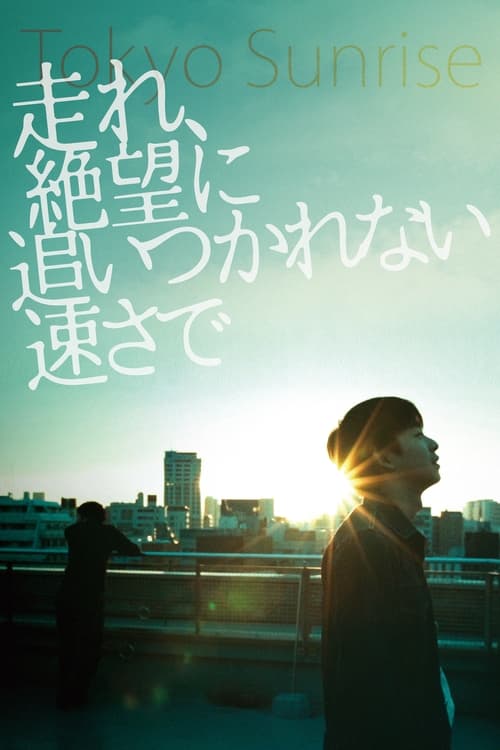









Popular
What motivates the main character, Haruto, to return to Tokyo after years away?
How does Aiko's life change during Haruto's absence?
What role does the city of Tokyo play in the characters' journeys?
What is the significance of the recurring motif of sunrise in the film?
How do Haruto and Aiko's interactions evolve throughout the film?
Should I watch it?
Ask Your Own Question

What is the plot?
Sorry, we aren't able to watch and write up a full detailed plot yet. Check back in a few days.








What is the ending?
In the ending of "Tokyo Sunrise," the main character, Haruto, confronts his past and the choices he has made. He reconciles with his estranged father, leading to a moment of emotional catharsis. Meanwhile, his love interest, Aiko, finds her own path, choosing to pursue her dreams rather than remain tied to Haruto. The film concludes with Haruto standing on a rooftop, watching the sunrise over Tokyo, symbolizing hope and new beginnings.
As the film approaches its conclusion, the atmosphere is charged with tension and unresolved emotions. Haruto, having navigated through a series of personal challenges, finds himself standing at a crossroads. The scene opens with him in a dimly lit room, the weight of his past decisions heavy on his shoulders. He reflects on his strained relationship with his father, a man he has long held resentment towards. The camera captures the flickering light from a nearby window, casting shadows that mirror Haruto's internal struggle.
In the next scene, Haruto makes the decision to confront his father. The setting shifts to a small, modest apartment where his father lives. The air is thick with unspoken words as Haruto knocks on the door. When his father answers, there is a palpable tension; both men are hesitant, unsure of how to bridge the chasm that has formed between them over the years. Haruto's heart races as he steps inside, the cramped space filled with memories of a childhood he wishes to reclaim.
As they sit across from each other, the conversation begins awkwardly. Haruto's father, a man worn by time and regret, struggles to express his feelings. Haruto, fueled by a mix of anger and longing, finally voices his pain, revealing how his father's absence has affected him. The dialogue is raw and emotional, with close-ups capturing the tears welling in both men's eyes. This moment of vulnerability leads to a breakthrough; they embrace, a gesture that signifies forgiveness and the possibility of rebuilding their relationship.
Meanwhile, Aiko, who has been a constant presence in Haruto's life, faces her own turning point. In a parallel scene, she stands in front of a mirror, contemplating her future. The reflection shows a young woman torn between her love for Haruto and her aspirations as an artist. The camera lingers on her face, revealing the conflict within her. Ultimately, she decides to pursue her dreams, realizing that she cannot sacrifice her own identity for the sake of a relationship. This decision is both empowering and heartbreaking, as she understands that love sometimes means letting go.
The final scenes unfold on a rooftop overlooking the sprawling city of Tokyo. Haruto stands alone, the sun beginning to rise on the horizon, casting a warm glow over the skyline. The vibrant colors of dawn symbolize hope and renewal. As he gazes out, a sense of peace washes over him. He reflects on the journey he has taken, the relationships he has mended, and the future that lies ahead. The camera captures the beauty of the sunrise, a visual metaphor for new beginnings.
In the closing moments, Haruto takes a deep breath, feeling the cool morning air fill his lungs. He smiles softly, a mixture of sadness and hope in his expression. The film ends with a wide shot of the city, the sun fully emerging, illuminating the path forward for Haruto and Aiko, each embarking on their own journeys, forever changed by their experiences.
Is there a post-credit scene?
In the movie "Tokyo Sunrise," there is indeed a post-credit scene that adds a poignant layer to the film's themes of hope and renewal.
As the credits roll, the screen fades to black before transitioning to a serene view of Tokyo at dawn. The city is bathed in soft, golden light, symbolizing new beginnings. The camera pans over the skyline, capturing the iconic Tokyo Tower and the bustling streets slowly coming to life.
In this scene, we see the protagonist, Haruto, standing on a rooftop, gazing out at the horizon. His expression is a mix of contemplation and determination, reflecting his journey throughout the film. He clutches a small, hand-painted figurine of a sunrise that he had found earlier in the story, a symbol of his personal growth and the connections he has forged.
As the sun rises higher, casting vibrant colors across the sky, Haruto takes a deep breath, a sense of peace washing over him. The scene conveys a feeling of optimism, suggesting that despite the challenges he faced, there is always a chance for a fresh start. The camera lingers on his face, capturing a subtle smile as he turns away from the view, ready to embrace whatever comes next.
This post-credit moment encapsulates the film's message about resilience and the beauty of new beginnings, leaving the audience with a sense of hope as they exit the theater.
What motivates the main character, Haruto, to return to Tokyo after years away?
Haruto returns to Tokyo driven by a mix of nostalgia and unresolved feelings about his past, particularly his relationship with his childhood friend, Aiko. He is haunted by memories of their time together and feels a deep sense of longing to reconnect with her and confront the choices he made that led him away from his hometown.
How does Aiko's life change during Haruto's absence?
During Haruto's absence, Aiko has grown into a successful artist, but she struggles with the emotional scars left by their separation. She has tried to move on, but the memories of her friendship with Haruto linger, influencing her art and her relationships. Her character embodies a blend of resilience and vulnerability, showcasing her internal conflict between pursuing her dreams and the pain of lost love.
What role does the city of Tokyo play in the characters' journeys?
Tokyo serves as a vibrant backdrop that reflects the characters' emotional states. The bustling streets and neon lights symbolize Haruto's chaotic past and the life he left behind, while the quieter, more intimate settings highlight Aiko's introspection and growth. As Haruto navigates the city, he confronts both the physical and emotional landscapes that shaped his identity.
What is the significance of the recurring motif of sunrise in the film?
The motif of sunrise represents hope and new beginnings for both Haruto and Aiko. Each time the sun rises, it symbolizes a chance for renewal and the possibility of reconciliation. The characters often find themselves at pivotal moments during dawn, reflecting their internal struggles and the potential for change in their lives.
How do Haruto and Aiko's interactions evolve throughout the film?
Initially, their interactions are filled with tension and unspoken feelings, as both characters grapple with their past. As the story progresses, they begin to open up to each other, sharing their fears and dreams. This evolution is marked by moments of vulnerability, laughter, and ultimately, a deeper understanding of one another, culminating in a poignant realization of their enduring connection.
Is this family friendly?
"Tokyo Sunrise," produced in 2015, is a film that explores themes of loss, redemption, and the complexities of human relationships. While it contains moments of beauty and emotional depth, there are several aspects that may be considered objectionable or upsetting for children or sensitive viewers.
-
Themes of Grief and Loss: The film delves into the emotional turmoil of characters dealing with the death of loved ones, which may be heavy for younger audiences.
-
Depictions of Loneliness: Characters experience profound loneliness and isolation, which could resonate negatively with sensitive viewers.
-
Mature Emotional Conflicts: There are intense emotional confrontations and conflicts between characters that may be difficult for children to understand or process.
-
Visuals of Urban Despair: The setting of Tokyo is portrayed with a mix of beauty and stark realities, including scenes that depict urban loneliness and despair.
-
Subtle References to Adult Relationships: While not explicit, there are undertones of adult relationships and emotional complexities that may not be suitable for younger viewers.
Overall, while "Tokyo Sunrise" offers a poignant narrative, its exploration of deep emotional themes may not be appropriate for all children or sensitive individuals.








