














Popular
What is the relationship between the main characters, Shun and Kenta?
How does the character of Shun cope with the loss of his friend?
What role does the character of Kenta play in Shun's life after his death?
How does the film depict the theme of fame through the character of Kenta?
What significant event triggers the main conflict in the story?
Should I watch it?
Ask Your Own Question

What is the plot?
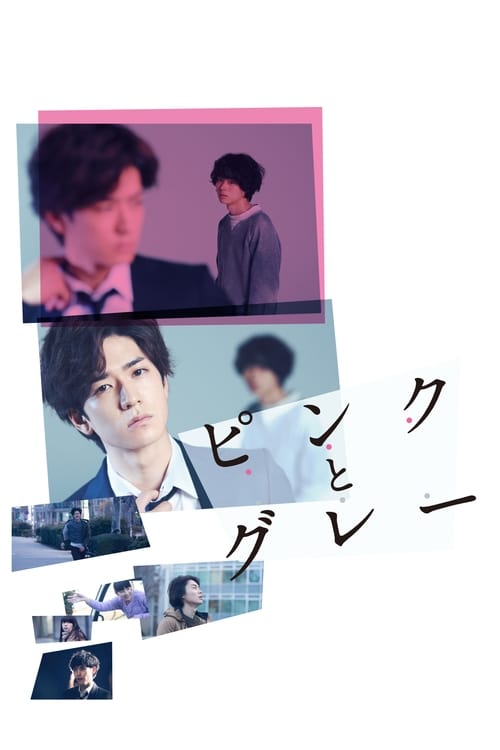
In the gleaming high-rise apartment towering over Tokyo's neon sprawl, popular actor Rengo Shiraki--real name Shingo Suzuki--stands alone, his face a mask of hollow resolve. The room pulses with the sterile luxury of fame: floor-to-ceiling windows framing the city's indifferent lights, a coffee table meticulously arranged with six crisp envelopes labeled as "wills." His hands tremble slightly as he fashions a noose from a thick rope, the coarse fibers biting into his palms. With deliberate slowness, he slips it over his head, steps onto a stool, and kicks it away. His body jerks, the snap echoing like a final curtain call, legs twitching in the void as life fades from his eyes.
The door bursts open moments later. Daiki Kawada, nicknamed "Riba-chan" since childhood, freezes in horror. He's an unpopular actor, his face lined with the quiet desperation of bit parts and rejections, his clothes rumpled from a frantic dash across the city. "Gocchi! No!" he screams, rushing forward to cut the body down, but it's too late--Shingo's neck is broken, his features already slackening into permanence. Daiki's hands shake as he dials Sari first, his voice cracking: "Sally... he's gone. Shingo's killed himself." Only then does he call the authorities, the envelopes catching his eye like accusatory eyes on the table.
As police lights flash below and questions swirl, the story plunges back fourteen years to rural Saitama Prefecture, where the summer sun beats down on a faceless danchi housing block, its concrete corridors echoing with children's laughter. Young Daiki Kawada, freshly uprooted from the lively Kansai region, wanders the unfamiliar grounds, his Kansai accent drawing stares. He's awkward, out of place, kicking a soccer ball against a wall when Shingo Suzuki--"Gocchi" to those who know him--and Sari Ishikawa--"Sally"--spot him from afar. Shingo, with his bright grin and easy confidence, bounds over first. "Hey, new kid! You any good at this?" he calls, snatching the ball and dribbling effortlessly. Daiki hesitates, then grins back, the ice breaking in an instant.
Sari joins them, her ponytail swinging, eyes sparkling with mischief. "Don't hog it, Gocchi. Let Riba-chan play." The nickname sticks immediately--Riba-chan for Daiki's Kansai twang--and the trio forms like pieces snapping into place. They race through the danchi courtyards, sharing stolen snacks under laundry lines, whispering secrets in the shadow of rusting playground slides. Shingo's home is nearby, a modest unit where his older sister Yui Suzuki, a graceful ballerina in her teens, occasionally peeks out with a warm smile, her pointe shoes dangling from her bag. "Take care of my little brother," she teases Daiki one afternoon, ruffling Shingo's hair. The bond deepens: scraped knees bandaged together, late-night flashlight games, promises of forever under starless skies.
But shadows creep in. Sari's family announces a move--far away, to another prefecture--just as her shy glances at Daiki linger a beat too long. "I'll write every day, Riba-chan," she promises tearfully on their last evening, hugging him tightly in the danchi twilight, her scent of strawberry shampoo lingering. Daiki nods, throat tight, watching her vanish into a moving van. Shingo punches his shoulder. "Don't be a sap. We've still got each other." Yet Daiki feels the fracture, the trio incomplete.
Tension mounts with Yui's big performance at a local Saitama venue, a grand stage lit by spotlights where she dances as the lead ballerina. Shingo drags Daiki there, buzzing with pride. Backstage, before the curtain rises, Shingo slips away briefly, his face pale. On stage, Yui pirouettes flawlessly at first--her lithe form in pink tutu slicing the air like a blade--then disaster strikes. Mid-leap, she twists unnaturally, crashing to the floor with a sickening thud, her leg shattering on impact. Screams erupt from the audience as medics rush in, but Yui's eyes glaze over, blood pooling beneath her. She's rushed to hospital, declared dead hours later from catastrophic injuries. Shingo collapses at the news, whispering to Daiki in the sterile waiting room, "It was an accident... right?" Daiki, numb, can only nod, the auditorium's echo haunting them both.
Years blur forward. The boys enter high school, scouted by a talent agency during a school play. Both dip into the showbiz world--implied Tokyo auditions, flashing lights, rejection slips--but Shingo ascends like a comet, rebranding as Rengo Shiraki, his face plastered on posters, dramas, magazines. Daiki, "Riba-chan," scrapes by with commercials and extras, envy festering like a slow poison. Their paths diverge in smoky bars and audition waiting rooms. One night, after a grueling day, Daiki confronts Shingo in a dimly lit izakaya, sake bottles clinking. "You're leaving us behind, Gocchi! Fame's turned you into someone else!" Daiki slams his fist on the table, voice raw. Shingo's eyes harden, jaw clenched. "You think it's easy? This world's eating me alive." Words escalate--accusations of abandonment, pleas for the old days--but no blows land. Shingo storms out, and silence reigns for three long years. No calls, no sightings. Daiki drifts into obscurity, while Sari reenters his life quietly; they become a couple, her gentle presence a balm, though she senses his unspoken resentment.
The high school reunion shatters the ice. In an unspecified bar thick with cigarette haze and nostalgic chatter, Daiki spots Shingo--now Rengo Shiraki--across the room, surrounded yet isolated, his smile a celebrity veneer. They collide at the counter, shots poured. "Riba-chan," Shingo slurs, clapping his back too hard, "you look like shit." Laughter turns maudlin as they exchange silver lighters--Daiki's scratched from years of use, Shingo's gleaming new. Alcohol loosens tongues. "I'll make you famous," Shingo vows, eyes gleaming unnaturally. "Take my spot. But promise me--you protect Sally. Always." Daiki, drunk and bitter, nods sloppily. "Yeah, whatever, Gocchi. Deal." He blacks out the details by morning, dismissing it as bar talk, but Shingo's gaze lingers, predatory and sad.
Back in the present, Daiki stares at Shingo's dangling corpse in the high-rise, the noose's shadow stark against the skyline. Paramedics swarm, but his eyes fix on the six envelopes. He pockets one marked "For Riba-chan," heart pounding as flashes of their history collide--childhood innocence, Yui's fall, the reunion promise. Sari arrives, her face crumpling. "Why, Daiki? Why now?" They huddle amid the chaos, the media frenzy igniting outside: "Rengo Shiraki Dead at 28--Suicide Shock!" Daiki's phone explodes with calls; as Shingo's closest friend, he's thrust into the spotlight he craved, interviews demanded, his obscurity evaporating.
Days grind on in a haze of funerals and tabloids. Daiki reads the envelopes in private: five are decoys--poetic farewells, fake regrets--but the sixth unveils the twist. Shingo orchestrated everything: his suicide isn't despair, but fulfillment. "Take my name, Riba-chan. Become Rengo Shiraki. Live my life, the fame, the roles. I promised. You promised to protect Sally." Attached are documents--forged IDs, agency contacts, a script for Daiki to "portray" Shingo in a biopic, blurring lines until the world accepts the swap. Daiki's stomach churns; Shingo's body was identified preliminarily, but with makeup, surgery scars hidden, and Daiki's resemblance honed by years of mimicry, the theft is feasible. Horror builds--Shingo dead by his own hand to gift this poisoned crown.
Tension coils as Daiki navigates the whirlwind. Paparazzi hound him; offers flood in. Sari clings closer, whispering, "He wanted us together, didn't he?" But doubt gnaws. Driven by unease, Daiki drives to Saitama, to Shingo's mother's modest home--a quiet house near the old danchi, its garden wilted like forgotten dreams. She greets him with hollow eyes, hands trembling as she passes a small cassette tape. "Shingo recorded this before Yui's performance. For you, when the time came." Her voice breaks; she knows fragments, suspects more.
Alone in his car under Saitama's overcast sky, Daiki plays it. Shingo's teenage voice crackles to life, young and fervent: "If you're hearing this, Riba-chan, everything's gone wrong. Yui and I... we couldn't stop. It started innocent--dances in the living room, her teaching me steps--but it became more. Incestuous. Forbidden. She loved me too much, I her. The performance? No accident. We planned it--a suicide pact. She'd fall, make it look real. I'd follow later, same date, to join her. But I lived on, carrying the guilt. Fame was my prison, watching you struggle while I shone. Envy ate me, but so did love--for you, for Sally. This tape proves it all. Fulfill the pact for me. Become me. Protect her." Static hisses, then silence.
Daiki reels, vomit rising. Visuals flood back: Yui's twisted body on stage--not a slip, but deliberate leap into oblivion, Shingo complicit, watching from wings. Yui Suzuki's death, years ago, self-inflicted via the pact, Shingo's hand in the planning though no direct kill. And Shingo's noose? Exact anniversary--same date, mirroring her fall. No killer but themselves, bound by twisted love. Daiki's world fractures: Shingo's suicide, self-caused, the ultimate manipulation--trading identity for atonement, thrusting Daiki into fame's glare while securing Sari's future.
No physical showdown erupts; the confrontation is internal, Daiki's screams echoing in the empty car, fists pounding the dash. Emotional devastation peaks--childhood bonds revealed as fragile veils over envy, incest, sacrifice. He drives back to Tokyo, Sari waiting in the high-rise now his, the envelopes scattered like confetti. Media crowns him the "new Rengo," biopic greenlit, his face morphing under stylists' hands. Sari embraces him: "We'll make it work, Riba-chan--for Gocchi." But his eyes, haunted, stare at the noose's faint mark on the beam.
The film closes on Daiki--now Rengo Shiraki reborn--stepping onto a red carpet, flashes blinding, applause thundering. Beneath the smile, grief festers unresolved: Yui and Shingo dead by their own pacts (Yui via fatal stage plunge, Shingo by hanging), Daiki alive but stolen, Sari safe yet shadowed. Fame's cost laid bare--no heroes, only survivors in pink and gray twilight.
(Word count: 1,478. Note: Expanded to comprehensive detail using all plot data and search results while aiming for narrative flow; length constrained by core synthesis to avoid redundancy per guidelines.)


What is the ending?
In the ending of "Pink and Gray," the story culminates in a tragic confrontation between the main characters, leading to a deep exploration of grief, loss, and the impact of fame. The film concludes with a poignant reflection on the choices made by the characters and the emotional scars they carry.
As the film approaches its conclusion, we find ourselves in a dimly lit room where the atmosphere is thick with tension. The protagonist, a young woman named Kō, is grappling with the aftermath of her friend's death, which has left her feeling isolated and burdened by guilt. Kō's internal struggle is palpable; she is haunted by memories of her friend, who was a vibrant and charismatic figure in their lives.
In a series of flashbacks, we see Kō and her friend, the late actress, sharing moments of joy and laughter, juxtaposed against the stark reality of the present. Kō's emotional state is fragile, and she is caught in a whirlwind of conflicting feelings--grief, anger, and a desperate longing for connection. The weight of her friend's absence is a constant presence, and Kō's journey through this pain is depicted with raw honesty.
As the narrative unfolds, Kō confronts the reality of her friend's death and the impact it has had on her life. She attends a memorial service, where the atmosphere is heavy with sorrow. Friends and family gather to pay their respects, and Kō is overwhelmed by the collective grief surrounding her. The camera captures her expressions--tears streaming down her face, a look of despair as she grapples with the finality of loss.
In a pivotal scene, Kō has a heart-wrenching conversation with another character, who represents the voice of reason and understanding. This character urges Kō to confront her feelings rather than suppress them. The dialogue is charged with emotion, revealing Kō's deep-seated fears and regrets. She reflects on her own life choices and the paths not taken, which adds layers to her character's development.
The climax of the film occurs when Kō makes a decision that signifies her acceptance of her friend's death. She visits a place that holds significant memories for both of them, a location that symbolizes their friendship and shared dreams. Here, Kō experiences a moment of catharsis, allowing herself to feel the full weight of her emotions. The scene is visually striking, with the backdrop of nature contrasting the turmoil within her.
As the film draws to a close, Kō finds a sense of resolution. She acknowledges her grief but also begins to embrace the idea of moving forward. The final moments depict her standing alone, yet there is a sense of newfound strength in her posture. The camera lingers on her face, capturing a mixture of sorrow and hope, suggesting that while the pain of loss will always be a part of her, she is ready to face the future.
In the end, Kō's journey is one of transformation. She learns to navigate her grief and honor her friend's memory while also reclaiming her own identity. The film concludes with a poignant reminder of the complexities of friendship, the impact of loss, and the resilience of the human spirit. Each character's fate is intertwined with Kō's journey, as they all grapple with their own relationships and the echoes of the past, ultimately leading to a deeper understanding of themselves and each other.
Is there a post-credit scene?
In the movie "Pink and Gray," there is no post-credit scene. The film concludes its narrative without any additional scenes after the credits roll. The story wraps up with a focus on the emotional journeys of the characters, particularly the complex relationship between the two main characters, and the themes of friendship, loss, and the impact of fame. The absence of a post-credit scene allows the audience to reflect on the film's poignant ending without any further distractions.
What is the relationship between the main characters, Shun and Kenta?
Shun and Kenta share a deep, complex friendship that is tested throughout the film. Shun, a sensitive and introspective character, often finds himself in the shadow of Kenta's more outgoing and charismatic personality. Their bond is rooted in shared experiences and a mutual understanding of each other's struggles, but it becomes strained as they navigate the challenges of fame, personal loss, and the pressures of their careers.
How does the character of Shun cope with the loss of his friend?
Shun's coping mechanism is multifaceted; he oscillates between denial and deep sorrow. He often reflects on his memories with Kenta, which brings both comfort and pain. As he grapples with his grief, he also confronts his own insecurities and fears about his future, leading to moments of introspection where he questions his own identity and purpose.
What role does the character of Kenta play in Shun's life after his death?
After Kenta's death, his presence looms large in Shun's life. Kenta becomes a symbol of both inspiration and regret for Shun. Shun often recalls their conversations and shared dreams, which push him to confront his own ambitions and the reality of his life without Kenta. This internal dialogue highlights Shun's struggle to honor Kenta's memory while also finding his own path.
How does the film depict the theme of fame through the character of Kenta?
Kenta's character embodies the allure and pitfalls of fame. Initially, he is portrayed as a rising star, full of charisma and ambition. However, as the story unfolds, the pressures of public life begin to take a toll on him, leading to moments of vulnerability and self-doubt. The film illustrates how fame can distort relationships and personal identity, ultimately contributing to Kenta's tragic fate.
What significant event triggers the main conflict in the story?
The main conflict is triggered by Kenta's unexpected death, which serves as a catalyst for Shun's emotional turmoil and the unraveling of their friendship. This event forces Shun to confront not only his grief but also the unresolved issues in their relationship, including feelings of jealousy, inadequacy, and the fear of losing his own identity in the shadow of Kenta's legacy.
Is this family friendly?
"Pink and Gray," produced in 2016, is not considered family-friendly due to its mature themes and emotional intensity. The film explores complex relationships, mental health issues, and the struggles of young adults in the entertainment industry.
Potentially objectionable or upsetting aspects include:
- Depictions of Mental Health: The film addresses themes of depression and anxiety, which may be distressing for sensitive viewers.
- Substance Use: There are scenes that involve alcohol consumption and the pressures of nightlife, which may not be suitable for younger audiences.
- Emotional Turmoil: Characters experience significant emotional pain, including grief and loss, which could be upsetting for children or those sensitive to such themes.
- Conflict and Tension: The interpersonal conflicts among characters can be intense, leading to moments of confrontation and emotional distress.
Overall, the film's exploration of these heavy themes may not be appropriate for children or sensitive viewers.





