






















Loading additional questions...
Popular
What is Chris's relationship with her father like throughout the film?
How does Chris's relationship with her mother influence her character development?
What role does the Scottish landscape play in Chris's life and choices?
How does Chris's relationship with Will impact her decisions throughout the film?
What are the significant events that lead to Chris's transformation by the end of the film?
Should I watch it?
Ask Your Own Question

What is the plot?
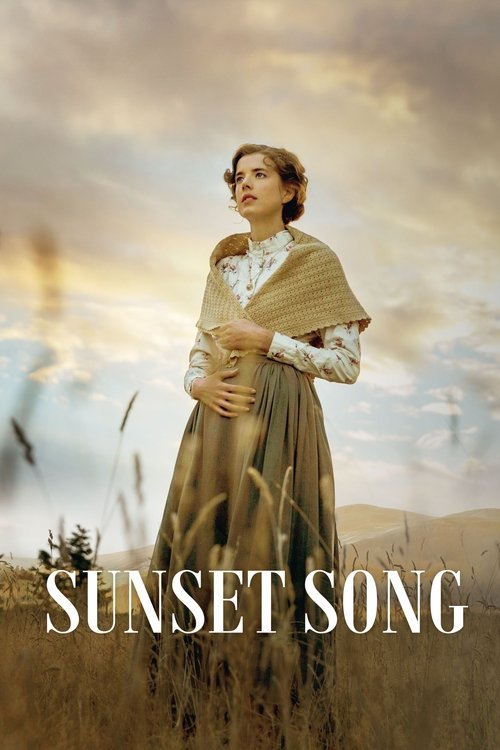
Sunset Song begins in the early 1900s in rural Aberdeenshire, Scotland, where the land is beautiful but hard, and every field seems to carry the weight of hunger, labor, and obedience. Chris Guthrie, the eldest daughter of the Guthrie family, is first seen as a bright, sensitive girl whose gifts at school, especially in languages, set her apart from the rough farm world around her. The film opens her life in contrast: at school, she answers with poise and intelligence, while at home she must live under John Guthrie, her father, a stern, tyrannical Presbyterian whose temper dominates the household and turns even ordinary life into a place of fear. Jean Guthrie, Chris's mother, stands beside him in quiet suffering, warm and loving toward her children but trapped in a marriage ruled by violence and sexual coercion. Chris's brother Will Guthrie and the younger children are also part of this tightly bound household, but the family is never shown as stable; it feels already fraying at the edges, held together only by habit and necessity.
The early scenes establish the rhythm of the farm and the emotional weather of the home. Chris's intelligence offers a small opening to another life, and the film makes that possibility feel precious and fragile. She reads, learns, and dreams of becoming a teacher, and for a brief stretch her future appears to extend beyond the fields of Kindraddie and the expectations of marriage, labor, and submission. But the farm itself is never just a backdrop; it is a pressure chamber. Work is relentless, the land is unforgiving, and John Guthrie's authority makes every room feel occupied by threat. His brutality is not only physical but spiritual, enforced through scripture, shame, and the certainty that his word is law. The film shows how the children have learned the texture of fear so thoroughly that it shapes even their silences.
The first great rupture comes when John rapes Jean, and the violence of that act is one of the film's central revelations. The assault results in the birth of twins, and the shame and devastation that follow deepen the family's collapse. The move to the larger farm at Kindraddie is tied to this crisis, as if relocation might somehow reset the family's life, though in reality it simply carries the same pain into a new setting. Kindraddie becomes the key site of the story's middle movement, the place where Chris's childhood begins to give way to adulthood, where her ambitions are tested, and where the family's fractures become impossible to ignore. At college, Chris finds a brief refuge. She studies to become a teacher, and the classroom stands in stark contrast to the farm: there, language, books, and discipline open rather than close the world. Yet even this escape is temporary, because what has been done at home remains inescapable.
Jean's warning to Chris becomes one of the film's darkest and most important moments. She tells her daughter about the horror of rape, speaking from a knowledge that is both intimate and unbearable, and the warning lands with the force of prophecy. Soon after, Jean takes her own life by poisoning herself and the infant twins. The death is brutal in its finality, and the film treats it not as melodrama but as the desperate act of a woman who sees no exit from the life imposed on her. Poison is the means, and the children she kills are the living proof of her husband's violence. The household is shattered by this act. Chris's hopes of education are abandoned, and she quits her studies to return to the farm and help her father and brother keep it running. The younger children are sent to live with their childless aunt and uncle, another sign that the Guthrie family is no longer functioning as a unit but as scattered remnants of survival.
After Jean's death, the film grows colder and harsher. Chris remains on the farm, but the emotional center of the home has vanished, and John Guthrie becomes even more monstrous in his helplessness. He eventually suffers a debilitating stroke, and the body that once controlled everyone around him is reduced to weakness and frustration. Yet his incapacity does not redeem him; instead, it leaves Chris trapped in a new kind of burden, because the farm's survival now depends more and more on her labor and resolve. Around this time she learns that Will has married and sailed for Argentina with his new bride, effectively leaving her behind with the father and land he has escaped. Depending on the account of the film's movement, Will has already drifted away from home, and this later departure confirms the extent to which the male support structure of the family has dissolved. Chris is left standing in the ruins of filial duty, expected to carry what others abandon.
The romance with Ewan Tavendale opens the film outward again. Ewan enters as a working man on the land, and his presence offers Chris the possibility of love that is not defined by fear. Their bond grows into one of the film's few sustained spaces of tenderness. They marry, and for a moment the story allows warmth, desire, and companionship to brighten the hard rural landscape. The wedding does not erase the world around them, but it creates a new household in which Chris can imagine a life of her own. She gives birth to their son, Ewan Jr., around the beginning of World War I, binding the private story of the marriage to the larger historical catastrophe about to engulf Europe. The birth is intimate and hopeful, but the timing is ominous. The world beyond Scotland is turning toward war, and the film steadily tightens the pressure between domestic life and national upheaval.
Ewan initially resists enlistment, not out of cowardice but out of attachment to home and family. That resistance cannot last. Conscription approaches, and the war machine closes in with bureaucratic inevitability. He eventually goes to war, leaving Chris, the baby, and the farm behind. The film emphasizes the emotional cost of this departure: the land remains, but the home feels emptied of the person who had made it bearable. Letters and wartime communication become thin lifelines, carrying news across a gulf that cannot truly be bridged. Chris is left to manage the practical burdens of survival while also enduring the private ache of separation. The war, which has already taken so many young men and damaged so many households, becomes another force stripping women into solitude and labor.
When Ewan returns, he is not the same man who left. War has hardened him, and the tenderness of their earlier life has been eroded by violence, trauma, and distance. The reunion is not a homecoming but a confrontation with what war has done to intimacy. He is abrasive, volatile, and unpredictable, and the emotional climax of their marriage arrives when he rapes Chris. The scene ruptures the love story completely. What had once been mutual affection turns into violation, and the marriage collapses under the force of this betrayal. Afterward, the two part on bad terms, and there is no reconciliation to soften the blow. Chris is left not only with the wound of assault but with the knowledge that the man she loved has become another source of the world's cruelty. The film does not treat this as an isolated personal tragedy; it is linked to the larger history of violence that has already defined her life, from her father's abuse to her mother's death and now the war's return of a damaged husband.
The final movement begins with a delayed and devastating revelation. Chris receives mail informing her that Ewan is dead. At first, the message is only absence made official, a line of text that confirms the end of hope. Then her friend Chae tells her the fuller truth: Ewan was executed as a deserter because he tried to return home to see Chris, desperate to kiss her goodbye one last time. The revelation reorders everything that came before it. His death is not simply a battlefield loss but a punishment for attempted return, a cruel intersection of military law, failed timing, and human longing. The detail that he never got to kiss her goodbye makes the loss especially painful, because it transforms his final act into one last attempt at tenderness that is cut off by the state. The war, which had already destroyed the relationship through distance and violence, now claims his life entirely.
The ending leaves Chris alive, but not untouched. She has survived her father's tyranny, her mother's suicide, her husband's assault, and the crushing logic of war, and she remains tied to the farm that has taken so much from her. The land is both inheritance and sentence. It is the place where she has been wounded, educated, abandoned, and hardened, and it is also the only stable thing left standing when family and marriage have collapsed. In the final emotional register of the film, Chris stands as the last keeper of memory and labor, the one who must endure what others flee or are destroyed by. The story closes on that sense of survival without comfort: the farm remains, the losses remain, and Chris carries both the burden and identity of the place into the future, alone with the knowledge of everything that has been broken around her.







What is the ending?
Is there a post-credit scene?
What is Chris's relationship with her father like throughout the film?
Chris's relationship with her father, John Guthrie, is complex and tumultuous. Initially, Chris admires her father, who is a strict and often harsh man, embodying the traditional patriarchal figure. As the story progresses, their relationship becomes strained due to John's abusive nature, particularly towards Chris's mother, and his oppressive control over the family. Chris feels a mix of fear, resentment, and a longing for his approval, which ultimately leads to a pivotal moment when she decides to stand up to him, showcasing her growth and desire for independence.
How does Chris's relationship with her mother influence her character development?
Chris's relationship with her mother, Margaret, is marked by a deep emotional bond, yet it is also fraught with tension due to Margaret's submissive nature in the face of John's tyranny. Chris witnesses her mother's struggles and sacrifices, which instills in her a sense of empathy and a desire to escape the cycle of abuse. Margaret's eventual death leaves Chris devastated, pushing her to confront her own identity and aspirations, ultimately shaping her into a resilient and determined woman who seeks to forge her own path.
What role does the Scottish landscape play in Chris's life and choices?
The Scottish landscape serves as a powerful backdrop to Chris's life, reflecting her inner turmoil and aspirations. The vast, rolling hills and the beauty of the countryside symbolize both freedom and confinement. As Chris navigates her tumultuous family life, the landscape becomes a sanctuary for her dreams and a place of solace. The changing seasons mirror her emotional journey, from the innocence of her youth to the harsh realities of adulthood, ultimately influencing her choices and her connection to her heritage.
How does Chris's relationship with Will impact her decisions throughout the film?
Chris's relationship with Will, a local farmer, is a source of both joy and conflict in her life. Their romance blossoms amidst the backdrop of the harsh realities of rural life, providing Chris with a sense of hope and love. However, Will's own struggles and the societal expectations of the time create tension in their relationship. Chris's decisions regarding her future are heavily influenced by her feelings for Will, as she grapples with the desire for personal happiness versus the responsibilities and expectations placed upon her by her family and society.
What are the significant events that lead to Chris's transformation by the end of the film?
Several significant events lead to Chris's transformation throughout the film. The death of her mother serves as a catalyst, forcing Chris to confront her father's abusive behavior and her own desires. The loss of her childhood innocence is marked by her experiences of love and heartbreak with Will, as well as the harsh realities of war that affect her community. Each of these events contributes to her growing sense of independence and strength, culminating in her decision to embrace her own identity and future, despite the challenges she faces.