
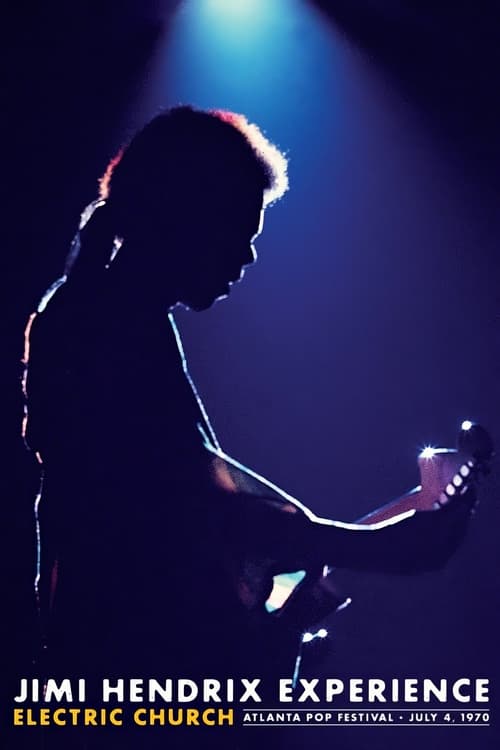




Popular
What was the significance of the Atlanta Pop Festival in Jimi Hendrix's career as depicted in the film?
How does the film depict Jimi Hendrix's relationship with his bandmates during the festival?
What role does the audience play in the film's portrayal of Hendrix's performance?
How does the film address Jimi Hendrix's struggles with fame and personal demons?
What visual and musical elements are used to enhance the storytelling in the film?
Should I watch it?
Ask Your Own Question

What is the plot?
Sorry, we aren't able to watch and write up a full detailed plot yet. Check back in a few days.
More Movies Like This
Browse All Movies →



What is the ending?
In the ending of "Jimi Hendrix: Electric Church," the film culminates with Jimi Hendrix's powerful performance at the Atlanta Pop Festival in 1970. The concert showcases his musical genius and the emotional connection he has with the audience. As the film concludes, it reflects on Hendrix's legacy and the impact he had on music and culture, leaving viewers with a sense of both celebration and melancholy regarding his untimely death.
Expanding on the ending in a chronological and narrative fashion:
As the film approaches its climax, the scene shifts to the Atlanta Pop Festival in July 1970. The atmosphere is electric, filled with anticipation as thousands of fans gather in the sweltering heat, eager to witness Jimi Hendrix perform. The camera captures the vibrant crowd, a sea of faces reflecting excitement, joy, and a sense of unity that music brings.
Jimi, dressed in his iconic attire, steps onto the stage, and the moment he grips his guitar, the audience erupts in cheers. The film captures the raw energy of his performance, showcasing his unparalleled guitar skills and the emotional depth of his music. Each note he plays resonates with the crowd, creating a palpable connection that transcends the barriers of language and culture.
As he plays, the film intersperses clips of fans dancing, swaying, and losing themselves in the music, highlighting the communal experience of the festival. Jimi's face reflects a mix of concentration and joy, revealing his passion for performing and the deep connection he feels with his audience. The camera zooms in on his fingers as they dance across the guitar strings, producing sounds that seem to echo the very spirit of the era.
The performance reaches its zenith with the iconic rendition of "The Star-Spangled Banner." Jimi's interpretation is both haunting and powerful, a reflection of the tumultuous social climate of the time. The film captures the audience's reaction, a mix of awe and introspection, as they witness not just a performance but a statement about identity, freedom, and the struggles of the era.
As the concert concludes, the crowd's cheers and applause fill the air, a testament to the impact Jimi has made. The camera pans over the audience, capturing their expressions of elation and gratitude. Jimi stands on stage, soaking in the moment, a smile breaking across his face as he acknowledges the love from his fans.
The film then transitions to a reflective tone, showing glimpses of Jimi's life beyond the stage. It touches on the challenges he faced, the pressures of fame, and the personal struggles that ultimately led to his tragic demise. The final scenes evoke a sense of bittersweet nostalgia, celebrating his contributions to music while acknowledging the loss felt by those who admired him.
As the credits roll, the film leaves viewers with a lasting impression of Jimi Hendrix as a revolutionary artist whose legacy continues to inspire generations. The emotional weight of his story lingers, reminding us of the fleeting nature of life and the enduring power of music to connect us all.
Is there a post-credit scene?
The movie "Jimi Hendrix: Electric Church," produced in 2015, does not contain a post-credit scene. The film concludes after the main content, which focuses on Jimi Hendrix's iconic performance at the Atlanta Pop Festival in 1970, showcasing his musical genius and the cultural impact of his work. The film wraps up with reflections on Hendrix's legacy and the significance of the festival, leaving viewers with a sense of the artist's enduring influence rather than a narrative continuation or additional scene.
What was the significance of the Atlanta Pop Festival in Jimi Hendrix's career as depicted in the film?
The Atlanta Pop Festival, held in July 1970, is portrayed as a pivotal moment in Jimi Hendrix's career. The film captures the excitement and energy of the festival, showcasing Hendrix's performance as a culmination of his artistic journey. It highlights his desire to connect with a diverse audience and his commitment to pushing musical boundaries. The festival serves as a backdrop for Hendrix's emotional state, reflecting both his triumphs and the pressures he faced as a leading figure in rock music.
How does the film depict Jimi Hendrix's relationship with his bandmates during the festival?
The film illustrates the dynamic between Jimi Hendrix and his bandmates, particularly with Billy Cox and Mitch Mitchell. It shows moments of camaraderie and creative collaboration, emphasizing their shared passion for music. However, it also hints at underlying tensions, as Hendrix's innovative vision sometimes clashes with the expectations of his band. The emotional weight of their performances is palpable, as they navigate the challenges of live shows and the pressures of fame together.
What role does the audience play in the film's portrayal of Hendrix's performance?
The audience is depicted as a vital element of Hendrix's performance at the Atlanta Pop Festival. The film captures the diverse crowd, showcasing their enthusiasm and emotional reactions to Hendrix's music. Close-up shots of audience members reveal their awe and connection to the performance, highlighting the communal experience of live music. This interaction fuels Hendrix's energy on stage, illustrating how the audience's response influences his performance and emotional state.
How does the film address Jimi Hendrix's struggles with fame and personal demons?
The film delves into Jimi Hendrix's internal struggles with fame and personal demons, portraying him as a complex figure grappling with the pressures of stardom. Through archival footage and interviews, it reveals moments of vulnerability, such as his feelings of isolation and the toll of constant public scrutiny. These struggles are juxtaposed with his electrifying performances, creating a poignant contrast between his public persona and private turmoil.
What visual and musical elements are used to enhance the storytelling in the film?
The film employs a rich tapestry of visual and musical elements to enhance its storytelling. It features vibrant concert footage, capturing the energy of Hendrix's performances with dynamic camera angles and close-ups of his guitar work. The use of color and lighting during performances evokes the psychedelic era of the late 1960s and early 1970s. Additionally, the soundtrack, filled with Hendrix's iconic music, serves to immerse the audience in his world, reinforcing the emotional highs and lows of his journey.
Is this family friendly?
"Jimi Hendrix: Electric Church" is a documentary that explores the life and music of Jimi Hendrix, particularly focusing on his performance at the Atlanta Pop Festival in 1970. While the film is primarily a celebration of Hendrix's artistry, there are several aspects that may be considered objectionable or upsetting for children or sensitive viewers.
-
Substance Use: The film includes references to drug use, which was prevalent in the music scene during Hendrix's time. This may be concerning for younger audiences or those sensitive to discussions about substance abuse.
-
Candid Discussions of Struggles: There are moments where the film touches on Hendrix's personal struggles, including his battles with fame, mental health, and the pressures of the music industry. These themes may be heavy for younger viewers.
-
Historical Context of Racism: The documentary addresses the racial tensions of the era, including the challenges faced by African American artists. This may lead to discussions about racism that could be uncomfortable for some viewers.
-
Emotional Intensity: The film captures the emotional highs and lows of Hendrix's life, including his passion for music and the pain of his untimely death. The portrayal of these emotions may be intense for sensitive viewers.
-
Performance Footage: While the concert footage is electrifying, some scenes may depict the chaotic atmosphere of live performances, which could be overwhelming for younger audiences.
Overall, while the film is a tribute to Hendrix's legacy, its themes and content may not be suitable for all children or sensitive viewers.








