





Popular
What is the significance of the setting in the film?
What are the main differences between the two timelines in Right Now, Wrong Then?
How does Ham-chul's character evolve throughout the film?
What role does Yoon-hee's character play in Ham-chul's journey?
How does the film explore the theme of chance encounters?
Should I watch it?
Ask Your Own Question

What is the plot?
Sorry, we aren't able to watch and write up a full detailed plot yet. Check back in a few days.



What is the ending?
In the ending of "Right Now, Wrong Then," the film concludes with a sense of ambiguity and unresolved tension. The main character, Ham, has a final encounter with the artist, Yoon-hee, after a day filled with miscommunication and emotional turmoil. The film leaves their relationship in a state of uncertainty, reflecting on the choices made and the paths taken.
Expanding on the ending in a chronological and narrative fashion:
As the day draws to a close, Ham and Yoon-hee find themselves at a crossroads. They have spent the day together, initially filled with excitement and connection, but as the hours pass, misunderstandings and emotional barriers begin to surface. The sun sets, casting a warm glow over the landscape, but the atmosphere between them grows increasingly tense.
In the final scenes, Ham, who is a filmmaker, is seen grappling with his feelings. He reflects on the earlier moments of their day, where they shared laughter and intimate conversations. However, the weight of his earlier mistakes looms large. He recalls how he misjudged Yoon-hee's reactions and how his own insecurities led to a rift between them. The camera captures his internal struggle, his expressions shifting from hope to regret.
Yoon-hee, on the other hand, is portrayed with a mix of vulnerability and strength. She has been open about her feelings, yet she also feels the sting of Ham's insensitivity. As they sit together, the silence is palpable, filled with unspoken words and unresolved emotions. The tension is thick, and the viewer can sense her disappointment and confusion.
In a pivotal moment, Ham attempts to bridge the gap between them. He reaches out, trying to express his feelings, but his words falter. Yoon-hee listens, her eyes reflecting a blend of hope and skepticism. The scene is charged with emotion, as both characters are at the mercy of their past interactions and the choices they have made throughout the day.
As the film nears its conclusion, the camera lingers on their faces, capturing the nuances of their expressions. The moment feels suspended in time, as if the outcome of their relationship hangs in the balance. The viewer is left to ponder whether they will find a way to connect or if the misunderstandings will drive them apart.
Ultimately, the film ends without a clear resolution. Ham and Yoon-hee part ways, leaving their future uncertain. The final shot captures Ham walking away, a solitary figure against the backdrop of the fading light, while Yoon-hee watches him go, her expression a mixture of longing and resignation. The screen fades to black, leaving the audience to reflect on the complexities of human relationships and the choices that define them.
In summary, Ham's fate is one of introspection and potential growth, while Yoon-hee's fate remains ambiguous, embodying the emotional weight of their encounter. The film closes on a note of unresolved tension, emphasizing the intricacies of connection and the impact of choices made in the moment.
Is there a post-credit scene?
The movie "Right Now, Wrong Then," directed by Hong Sang-soo, does not have a post-credit scene. The film concludes its narrative without any additional scenes after the credits roll. The story itself is a nuanced exploration of relationships, choices, and the passage of time, focusing on the interactions between the main characters, filmmaker Ham Cheon-soo and artist Yoon Hee-jung. The film's structure, which presents two different versions of the same day, emphasizes the themes of chance and the impact of small decisions, leaving the audience to reflect on the events that transpired rather than providing a traditional post-credit moment.
What is the significance of the setting in the film?
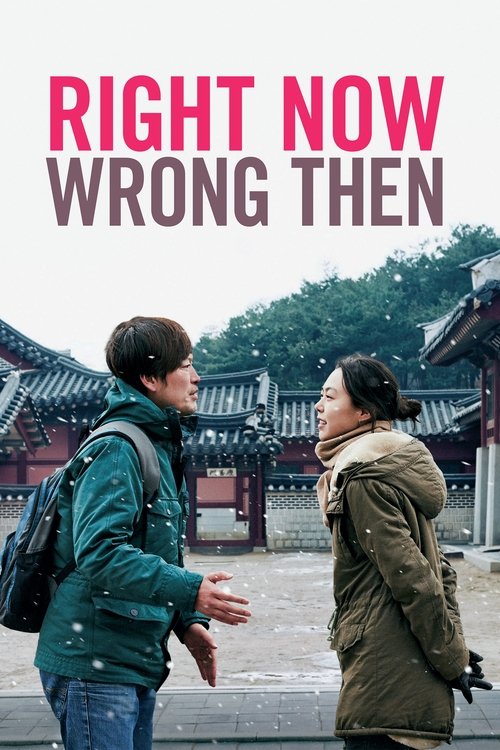
The film is set against the backdrop of a picturesque temple and its surrounding landscapes, which serve as a metaphor for the characters' emotional states. The serene environment contrasts with the internal chaos of Ham-chul and Yoon-hee's interactions. The temple symbolizes a space for reflection and connection, where the characters can explore their feelings away from the distractions of urban life. The changing light and weather throughout the film also mirror the shifts in their relationship, enhancing the emotional depth of their encounters.
What are the main differences between the two timelines in Right Now, Wrong Then?
In 'Right Now, Wrong Then', the film presents two parallel narratives that diverge at a crucial moment. In the first timeline, the protagonist, Ham-chul, a filmmaker, meets a young woman named Yoon-hee at a temple. Their interaction is marked by awkwardness and misunderstandings, leading to a series of missteps that culminate in a tense and unresolved ending. In the second timeline, after a brief reset, Ham-chul approaches Yoon-hee with a more confident demeanor, leading to a more genuine connection. This version explores deeper emotional layers, showcasing their chemistry and the potential for a romantic relationship, contrasting sharply with the first timeline's miscommunication and emotional distance.
How does Ham-chul's character evolve throughout the film?
Ham-chul begins as a somewhat self-absorbed filmmaker, whose initial encounter with Yoon-hee is characterized by clumsiness and a lack of awareness of her feelings. As the film progresses, particularly in the second timeline, he becomes more introspective and considerate. His evolution is marked by a growing understanding of Yoon-hee's perspective, leading him to engage more authentically and empathetically. This shift highlights his internal struggle between his artistic ambitions and his desire for genuine human connection.
What role does Yoon-hee's character play in Ham-chul's journey?
Yoon-hee serves as both a catalyst and a mirror for Ham-chul's character development. In the first timeline, her reactions to Ham-chul's awkwardness reveal his shortcomings in social interactions and emotional intelligence. In the second timeline, Yoon-hee's warmth and openness allow Ham-chul to express himself more freely, leading to a more profound connection. Her character embodies the potential for understanding and intimacy, challenging Ham-chul to confront his own vulnerabilities and desires.
How does the film explore the theme of chance encounters?
The film intricately weaves the theme of chance encounters through the serendipitous meeting of Ham-chul and Yoon-hee. Their initial interaction is filled with missed opportunities and misunderstandings, emphasizing how a single moment can alter the course of their lives. The second timeline reimagines this encounter, suggesting that with a different approach, the same circumstances can lead to vastly different outcomes. This exploration highlights the fragility of human connections and the impact of timing and perception on relationships.
Is this family friendly?
"Right Now, Wrong Then" is a South Korean film that explores themes of love, regret, and the complexity of human relationships. While it is not explicitly a family film, it does not contain overtly graphic content. However, there are a few aspects that may be considered objectionable or upsetting for children or sensitive viewers:
-
Mature Themes: The film delves into adult relationships, including romantic tension and emotional conflict, which may be difficult for younger audiences to understand.
-
Alcohol Consumption: Characters are shown drinking alcohol, which is a part of social interactions in the film. This may not be suitable for younger viewers.
-
Emotional Turmoil: The characters experience significant emotional distress, including feelings of regret and disappointment, which could be upsetting for sensitive viewers.
-
Conflict and Misunderstandings: There are scenes of interpersonal conflict and misunderstandings that may be intense or uncomfortable for some viewers.
Overall, while the film does not contain explicit content, its themes and emotional depth may not be appropriate for children or those who are particularly sensitive to complex emotional narratives.