


































Popular
What is the relationship between A.A. Milne and his son Christopher Robin in the film?
How does Christopher Robin's character change throughout the film?
What role does Daphne Milne play in the family dynamics?
What impact does World War I have on A.A. Milne's character?
How does the film depict the creation of Winnie-the-Pooh?
Should I watch it?
Ask Your Own Question

What is the plot?
Sorry, we aren't able to watch and write up a full detailed plot yet. Check back in a few days.


What is the ending?
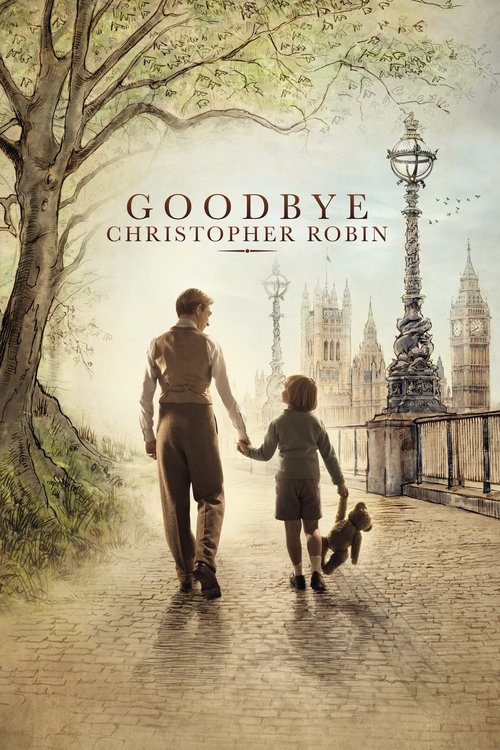
In the ending of "Goodbye Christopher Robin," Christopher Robin Milne, now a young man, struggles with the legacy of his father's creation, Winnie the Pooh. He feels burdened by the fame and expectations that come with it. After a confrontation with his father, A.A. Milne, Christopher decides to distance himself from the world of Pooh and the public's adoration. The film concludes with Christopher finding a sense of peace as he embraces his own identity, separate from the character that made him famous.
As the film approaches its conclusion, we see Christopher Robin Milne, now a young adult, grappling with the weight of his childhood fame. The scene opens with Christopher walking through the streets of London, his expression a mix of frustration and sadness. He is haunted by the constant reminders of Winnie the Pooh, a character that has overshadowed his own identity. The public adoration for the stories written by his father, A.A. Milne, feels like a heavy burden rather than a source of pride.
In a pivotal scene, Christopher confronts his father, A.A. Milne, in their home. The atmosphere is tense, filled with unspoken emotions. Christopher expresses his resentment towards the fame that has come from the stories, feeling that he has been reduced to a mere symbol of his father's success. A.A. Milne, played by Domhnall Gleeson, is initially defensive, struggling to understand his son's perspective. He believes that the stories were meant to bring joy and comfort, but Christopher feels trapped by the expectations that come with being the son of the beloved author.
As the argument escalates, Christopher reveals his desire to forge his own path, away from the shadow of Pooh. He declares that he wants to be known for who he is, not just as the child who inspired a character. This moment is pivotal for both characters, as it highlights the conflict between parental expectations and the quest for individual identity.
Following this confrontation, Christopher decides to leave his family home. He walks away, symbolizing his need for independence and self-discovery. The scene shifts to a quieter moment where Christopher reflects on his childhood, the joy and pain intertwined in his memories. He visits the places that inspired his father's stories, but instead of feeling nostalgia, he experiences a sense of liberation.
In the final scenes, we see Christopher embracing adulthood. He is shown engaging in activities that reflect his own interests, separate from the world of Winnie the Pooh. The film closes with a poignant moment where Christopher stands alone, looking out at the horizon, a sense of peace washing over him. He has come to terms with his past and is ready to move forward, no longer defined by his father's legacy.
A.A. Milne, on the other hand, is left to grapple with the consequences of his success. He watches as his son walks away, a mixture of pride and sorrow on his face. The film suggests that while the stories brought joy to many, they also created a rift between father and son, highlighting the complexities of familial relationships.
The ending encapsulates the central themes of identity, legacy, and the struggle for personal autonomy. Christopher's journey towards self-acceptance and independence serves as a powerful conclusion to the narrative, emphasizing the importance of finding one's own path amidst the shadows of familial expectations.
Is there a post-credit scene?
Goodbye Christopher Robin does not have a post-credit scene. The film concludes with a poignant ending that encapsulates the emotional journey of A.A. Milne and his son, Christopher Robin. The final moments reflect on the impact of the beloved children's stories and the complexities of their relationship, leaving the audience with a sense of closure rather than additional scenes or content after the credits.
What is the relationship between A.A. Milne and his son Christopher Robin in the film?
In 'Goodbye Christopher Robin', the relationship between A.A. Milne and his son Christopher Robin is complex and evolves throughout the film. Initially, A.A. Milne, portrayed by Domhnall Gleeson, is a distant father, preoccupied with his writing and the aftermath of World War I. He struggles with his own trauma and the pressures of fame. As the story progresses, he becomes more engaged with Christopher, played by Will Tilston, especially as the boy becomes the inspiration for the beloved character in the Winnie-the-Pooh stories. However, their bond is tested by the fame that follows the books, leading to emotional distance and conflict as A.A. grapples with the impact of his success on his family.
How does Christopher Robin's character change throughout the film?
Christopher Robin's character undergoes significant changes throughout 'Goodbye Christopher Robin'. At the beginning of the film, he is a carefree child, full of imagination and joy, enjoying adventures with his father and his toys. However, as the success of the Winnie-the-Pooh stories grows, Christopher feels the weight of his father's fame and the expectations that come with it. He struggles with the loss of his childhood innocence and the pressure of being the real-life inspiration for a beloved character. This culminates in feelings of isolation and resentment towards his father, as he grapples with his identity and the public's perception of him.
What role does Daphne Milne play in the family dynamics?
Daphne Milne, portrayed by Margot Robbie, plays a crucial role in the family dynamics in 'Goodbye Christopher Robin'. She is A.A. Milne's wife and Christopher Robin's mother, and her character embodies both support and conflict within the family. Initially, she is portrayed as a loving mother who is protective of her son and concerned about the impact of fame on their lives. However, as the story unfolds, Daphne becomes increasingly frustrated with A.A.'s obsession with his work and the toll it takes on their family. Her emotional struggles highlight the challenges of balancing personal aspirations with family responsibilities, ultimately leading to tension between her and A.A.
What impact does World War I have on A.A. Milne's character?
World War I has a profound impact on A.A. Milne's character in 'Goodbye Christopher Robin'. The film opens with A.A. returning from the war, visibly traumatized by his experiences. This trauma shapes his worldview and influences his writing, as he seeks solace in creating a world of innocence and joy through the stories of Winnie-the-Pooh. The war's aftermath leaves him grappling with feelings of disconnection and a desire to escape the harsh realities of life. His struggles with PTSD and the burden of his past inform his relationship with his family, particularly with Christopher, as he attempts to navigate the complexities of fatherhood while dealing with his own emotional scars.
How does the film depict the creation of Winnie-the-Pooh?
The film 'Goodbye Christopher Robin' depicts the creation of Winnie-the-Pooh as a deeply personal and emotional journey for A.A. Milne. It shows the initial inspiration drawn from Christopher Robin's childhood adventures and his toys, particularly the stuffed bear that becomes the iconic character. The creative process is portrayed as both joyful and challenging, with A.A. struggling to capture the essence of childhood innocence while dealing with his own inner turmoil. The film illustrates the collaborative efforts between A.A. and his illustrator, E.H. Shepard, as they bring the stories to life. However, as the books gain popularity, the film also highlights the unintended consequences of fame on A.A.'s family, particularly the strain it places on his relationship with Christopher.
Is this family friendly?
"Goodbye Christopher Robin" is a biographical drama that explores the life of A.A. Milne and the creation of Winnie the Pooh, focusing on the impact of fame on his family. While the film is generally suitable for older children and families, there are several potentially objectionable or upsetting aspects that may affect younger viewers or sensitive individuals:
-
Emotional Struggles: The film delves into themes of depression and post-traumatic stress disorder (PTSD) stemming from A.A. Milne's experiences in World War I. These themes may be heavy for younger audiences to fully understand.
-
Family Tension: There are scenes depicting strained relationships within the Milne family, particularly between A.A. Milne and his wife, Daphne, as well as the emotional distance between Milne and his son, Christopher Robin. This tension can be uncomfortable to watch.
-
Loss and Grief: The film touches on the impact of fame and the loss of childhood innocence, which may evoke feelings of sadness or nostalgia.
-
Childhood Pressure: Christopher Robin faces pressure and expectations due to his father's literary success, leading to moments of distress that may resonate with children who feel similar pressures in their own lives.
-
War References: There are references to the effects of war, including flashbacks and discussions about the trauma experienced by soldiers, which may be distressing for some viewers.
Overall, while the film contains valuable lessons about family and creativity, its emotional depth and mature themes may require parental guidance for younger audiences.









