


Popular
What role do the supporting characters play in the protagonist's journey?
What is the significance of the Escher-like landscapes in the film?
How does the protagonist's journey through the different dimensions affect their character development?
How does the film explore the concept of time through its plot structure?
What is the relationship between the protagonist and the antagonist, and how does it evolve throughout the film?
Should I watch it?
Ask Your Own Question

What is the plot?
Sorry, we aren't able to watch and write up a full detailed plot yet. Check back in a few days.
More Movies Like This
Browse All Movies →





What is the ending?
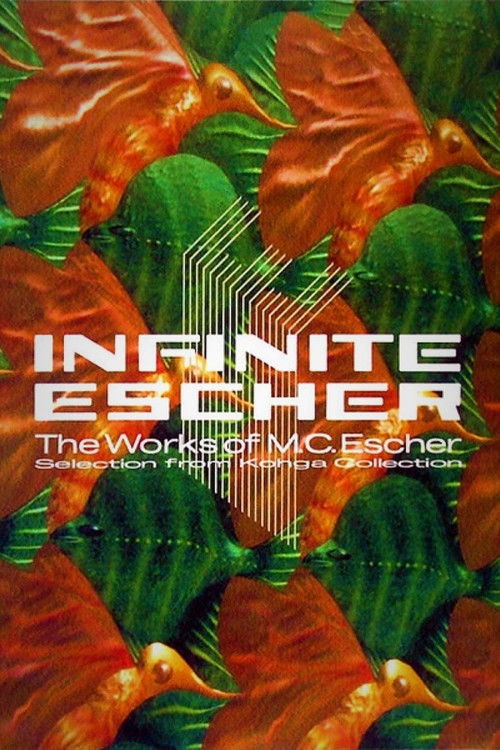
The ending of "Infinite Escher" sees the protagonist, a struggling artist named David, finally confront the surreal world he has been trapped in. After a series of mind-bending experiences that challenge his perception of reality, he discovers the key to escaping this labyrinth of illusions lies within his own creativity. In a climactic moment, David uses his artistic skills to reshape the environment around him, ultimately breaking free from the confines of the Escher-like world. The film concludes with David stepping into a new reality, filled with hope and possibility, while the other characters remain trapped in their own cycles of despair.
As the film approaches its conclusion, the atmosphere is thick with tension and uncertainty. David, having navigated through a series of increasingly complex and disorienting landscapes, finds himself in a vast, spiraling hall that seems to defy the laws of physics. The walls are adorned with impossible structures reminiscent of M.C. Escher's artwork, creating a sense of claustrophobia and wonder. David's heart races as he realizes that this is the final challenge he must face.
In this hall, he encounters his former mentor, a once-great artist named Victor, who has succumbed to the madness of the Escher world. Victor, now a shadow of his former self, warns David that escape is impossible and that he must accept his fate. The desperation in Victor's voice echoes through the hall, revealing the depths of his despair. David, however, feels a flicker of determination igniting within him. He remembers the joy of creation and the power of his imagination.
As David begins to sketch on the walls of the hall, the environment around him starts to shift. The spirals and impossible angles begin to morph into a more coherent landscape, reflecting his inner strength and resolve. Each stroke of his pencil brings forth vibrant colors and forms, transforming the oppressive space into a canvas of hope. The walls pulse with life, and David feels a surge of energy as he realizes that he is not just a passive observer but an active participant in shaping his reality.
Victor, witnessing this transformation, is torn between hope and despair. He reaches out to David, pleading for him to help him escape as well. David, however, understands that Victor must confront his own demons to find freedom. With a heavy heart, he tells Victor that he must believe in himself and embrace his own creativity. Victor's face reflects a mix of fear and longing, but he ultimately chooses to remain, trapped in his own cycle of regret.
As David completes his masterpiece, the hall begins to dissolve around him, revealing a bright light that beckons him forward. He steps into the light, feeling a sense of liberation wash over him. The oppressive weight of the Escher world lifts, and he finds himself in a new reality--one filled with vibrant colors, open skies, and endless possibilities. The camera pans out, showing David standing on a hill overlooking a beautiful landscape, a stark contrast to the dark, twisted world he has just escaped.
In the final moments, the film cuts back to the hall, where Victor remains, surrounded by the remnants of his own failed creations. The shadows of despair cling to him, but a glimmer of hope flickers in his eyes as he contemplates David's words. The screen fades to black, leaving the audience with a sense of unresolved tension regarding Victor's fate, while David's journey concludes on a note of optimism and renewal.
Is there a post-credit scene?
Infinite Escher, produced in 1990, does not contain a post-credit scene. The film concludes its narrative without any additional scenes or content after the credits roll. The story wraps up in a way that leaves the audience with a sense of closure regarding the characters and their journeys, focusing on the themes of perception and reality that are central to the film.
What role do the supporting characters play in the protagonist's journey?
The supporting characters in 'Infinite Escher' are crucial to the protagonist's journey, each representing different facets of the protagonist's psyche. They challenge, support, and sometimes hinder the protagonist's progress, reflecting the internal conflicts the protagonist faces. Their interactions provide depth to the narrative, illustrating how relationships can influence personal growth and self-discovery.
What is the significance of the Escher-like landscapes in the film?
The Escher-like landscapes in 'Infinite Escher' serve as a visual metaphor for the characters' psychological states and the complexities of their relationships. These surreal environments reflect the characters' struggles with their identities and the nonlinear nature of their experiences, creating a sense of disorientation that parallels their emotional turmoil.
How does the protagonist's journey through the different dimensions affect their character development?
The protagonist's journey through various dimensions is pivotal for their character development. Each dimension presents unique challenges and revelations that force the protagonist to confront their fears, desires, and past mistakes. This journey not only enhances their understanding of themselves but also leads to significant growth, as they learn to navigate the complexities of their own psyche.
How does the film explore the concept of time through its plot structure?
The film explores the concept of time through its non-linear plot structure, where events unfold in a fragmented manner. This approach allows the audience to experience the protagonist's memories and future possibilities simultaneously, creating a sense of timelessness. The manipulation of time emphasizes the characters' struggles with their past and the choices that shape their present and future.
What is the relationship between the protagonist and the antagonist, and how does it evolve throughout the film?
The relationship between the protagonist and the antagonist is complex and evolves significantly throughout the film. Initially, the antagonist represents an external threat, embodying the protagonist's fears and insecurities. As the story progresses, their dynamic shifts, revealing deeper connections and shared motivations. This evolution highlights the protagonist's internal conflict and ultimately leads to a confrontation that is as much about self-acceptance as it is about overcoming external challenges.
Is this family friendly?
"Infinite Escher," produced in 1990, is a film that explores complex themes and visual concepts inspired by the works of M.C. Escher. While it is not overtly violent or graphic, there are several aspects that may be considered potentially objectionable or upsetting for children or sensitive viewers.
-
Surreal Imagery: The film features mind-bending visual sequences that may be disorienting or unsettling for younger audiences. The manipulation of space and perspective can evoke feelings of confusion or anxiety.
-
Existential Themes: The narrative delves into philosophical questions about reality, identity, and perception, which may be difficult for children to grasp and could provoke feelings of unease.
-
Emotional Turmoil: Characters experience moments of deep introspection and emotional struggle, which may resonate with sensitive viewers. Themes of isolation and existential dread are present.
-
Abstract Concepts: The film's exploration of abstract ideas may lead to moments of frustration or discomfort for those who prefer straightforward narratives.
-
Visual Distortions: Certain scenes may include visual distortions or rapid changes in imagery that could be overwhelming or provoke discomfort in sensitive viewers.
Overall, while "Infinite Escher" is not explicitly inappropriate, its complex themes and surreal visuals may not be suitable for all children or sensitive individuals.







