





















Popular
What is the significance of the heart transplant in the story?
How does Jack Moony's character evolve throughout the film?
What role does the character of Max DeLeon play in Jack Moony's transformation?
How does the relationship between Jack Moony and Max DeLeon's family develop?
What is the significance of the visions Jack experiences after the transplant?
Should I watch it?
Ask Your Own Question

What is the plot?
Sorry, we aren't able to watch and write up a full detailed plot yet. Check back in a few days.




What is the ending?
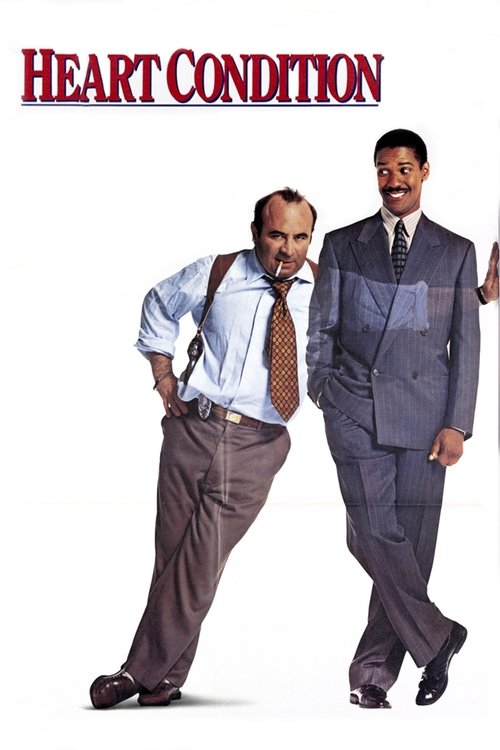
In the ending of "Heart Condition," the main character, a racist cop named Jack Moony, learns to confront his prejudices after being forced to share his body with the spirit of a deceased African American lawyer, Napoleon Stone. The two men, who initially clash due to their differences, ultimately find common ground. The film concludes with Moony embracing a more open-minded perspective, while Stone's spirit moves on, having helped Moony grow as a person.
As the final scenes unfold, we see Jack Moony, played by Bob Hoskins, in a state of turmoil. He is grappling with the reality of sharing his body with the spirit of Napoleon Stone, portrayed by Denzel Washington. The tension between them has reached a peak, as Moony's initial disdain for Stone's character has transformed into a reluctant partnership.
In a pivotal scene, Moony is confronted by his own prejudices when he realizes that he must rely on Stone's knowledge and experience to navigate a dangerous situation. The two men, once adversaries, now work together to solve the mystery surrounding Stone's death. This collaboration is fraught with tension, as Moony struggles to accept the help of someone he once viewed with contempt.
As they delve deeper into the investigation, Moony begins to experience moments of introspection. He reflects on his past actions and the biases that have shaped his worldview. The emotional weight of these realizations is palpable, as he grapples with guilt and shame. The audience can see the internal conflict etched on his face, a mixture of anger, confusion, and a burgeoning sense of empathy.
In the climax of the film, Moony and Stone confront the antagonist responsible for Stone's death. This confrontation is not just a physical battle but also a symbolic one, representing Moony's fight against his own ingrained racism. With Stone's spirit guiding him, Moony finds the courage to stand up for what is right, showcasing a significant transformation in his character.
As the dust settles, the film reaches its emotional resolution. Stone's spirit, having fulfilled his purpose, prepares to move on. In a poignant farewell, he expresses gratitude to Moony for allowing him to help him grow. Moony, now a changed man, acknowledges the impact Stone has had on his life. The weight of their shared experiences hangs in the air, a testament to the bond they have formed despite their differences.
In the final moments, Moony stands alone, reflecting on the journey he has undergone. He is no longer the same man who harbored deep-seated prejudices; instead, he has emerged with a newfound understanding of humanity. The film closes with Moony looking out into the horizon, symbolizing hope and the possibility of redemption.
The fates of the main characters are intertwined in this conclusion. Jack Moony, having faced his demons, is left with the opportunity to live a more compassionate life. Napoleon Stone, having helped Moony confront his biases, is freed to move on, leaving behind a legacy of change. Their journey together serves as a powerful reminder of the importance of empathy and understanding in overcoming prejudice.
Is there a post-credit scene?
The movie "Heart Condition," released in 1990, does not have a post-credit scene. The film concludes its narrative without any additional scenes or content after the credits roll. The story wraps up with the resolution of the main plot, focusing on the relationship between the characters and the themes of redemption and understanding. As the credits begin, viewers are left with the final emotional beats of the film, reflecting on the journey of the characters rather than any further developments.
What is the significance of the heart transplant in the story?
The heart transplant is a pivotal plot element that symbolizes the connection between the two main characters, a racist cop named Jack Moony and a deceased black lawyer named Max DeLeon. After Max's heart is transplanted into Jack, Jack begins to experience visions and feelings associated with Max's life, leading him to confront his own prejudices and ultimately change his perspective.
How does Jack Moony's character evolve throughout the film?
Jack Moony starts as a bigoted and cynical cop, deeply entrenched in his prejudices. After receiving Max's heart, he begins to experience emotional turmoil and visions that force him to confront his biases. This journey leads him to develop a deeper understanding of Max's life and struggles, ultimately transforming him into a more empathetic and open-minded individual.
What role does the character of Max DeLeon play in Jack Moony's transformation?
Max DeLeon, though deceased, plays a crucial role in Jack Moony's transformation. Through the heart transplant, Max's memories and emotions influence Jack, pushing him to reflect on his own life choices and prejudices. Max's character serves as a moral compass, guiding Jack towards redemption and a more inclusive worldview.
How does the relationship between Jack Moony and Max DeLeon's family develop?
Initially, Jack Moony's relationship with Max DeLeon's family is strained due to his past prejudices and the circumstances surrounding Max's death. However, as Jack begins to understand Max's life and the impact of his actions, he seeks to make amends. This leads to a gradual acceptance from Max's family, as they see Jack's genuine efforts to change and honor Max's legacy.
What is the significance of the visions Jack experiences after the transplant?
The visions Jack experiences after the heart transplant serve as a narrative device that illustrates his internal struggle and growth. These visions, which include memories and emotions from Max's life, force Jack to confront his own biases and the consequences of his actions. They act as a catalyst for his transformation, pushing him to seek redemption and understand the importance of empathy and connection.
Is this family friendly?
"Heart Condition," produced in 1990, contains several elements that may not be suitable for children or sensitive viewers. Here are some potentially objectionable aspects:
-
Violence and Crime: The film includes scenes depicting crime, including a murder, which may be unsettling for younger audiences.
-
Racial Themes: The movie explores themes of racism and prejudice, which are central to the plot. Some discussions and interactions may be uncomfortable or challenging for sensitive viewers.
-
Language: There is the use of strong language throughout the film, which may not be appropriate for children.
-
Death and Grief: The film deals with themes of death and the emotional aftermath, which could be distressing for some viewers.
-
Romantic Content: There are romantic and sexual situations that may not be suitable for younger audiences.
These elements contribute to a tone that may be more appropriate for mature viewers rather than a family-friendly environment.








