


















Popular
What motivates the character David Raybourne to become involved in the political turmoil in Italy?
How does the character of Sofia influence David's actions throughout the film?
What role does the Italian political landscape play in shaping the characters' decisions?
How does the relationship between David and Sofia evolve throughout the film?
What are the consequences of David's choices as he becomes more involved in the revolutionary activities?
Should I watch it?
Ask Your Own Question

What is the plot?
Sorry, we aren't able to watch and write up a full detailed plot yet. Check back in a few days.



What is the ending?
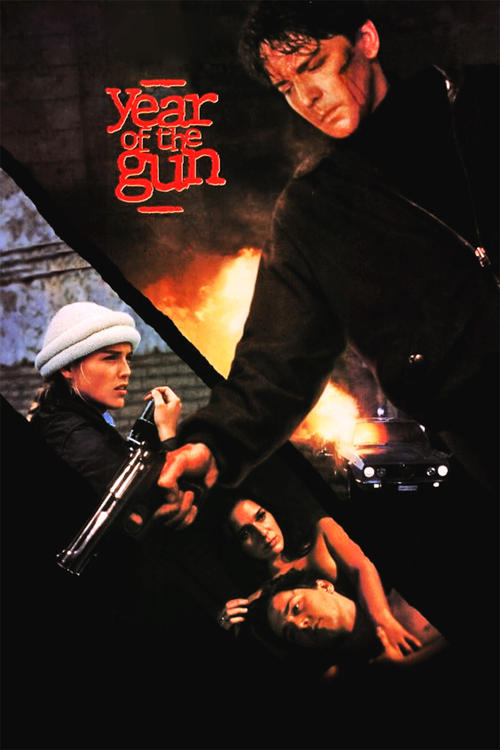
In the ending of "Year of the Gun," the protagonist, David Raybourne, finds himself deeply entangled in the violent political turmoil of Italy. After a series of harrowing events, he ultimately decides to leave the country, realizing the futility of his involvement. The film concludes with a sense of loss and disillusionment, as the characters face the consequences of their choices amidst the chaos of revolution.
As the film approaches its climax, David Raybourne, played by Andrew McCarthy, is increasingly aware of the dangers surrounding him. The tension escalates as he witnesses the brutal realities of the political conflict in Italy. The once-idealistic journalist is now grappling with the moral complexities of his situation. He has become a reluctant participant in the violent struggle, having been drawn into the world of radical activists and the consequences of their actions.
In a pivotal scene, David confronts his love interest, the passionate and determined Italian woman, who is deeply involved in the revolutionary cause. Their relationship, once filled with hope and romance, is now strained by the harsh realities of their circumstances. David's internal conflict is palpable; he is torn between his feelings for her and the growing realization that he cannot support the violent methods of the revolutionaries. This moment is charged with emotion, as both characters grapple with their ideals and the stark truth of their situation.
As the revolution intensifies, David witnesses the fallout of the conflict. Friends and allies are lost, and the violence escalates around him. The once-vibrant streets of Italy are now filled with chaos and despair. David's sense of helplessness deepens as he realizes that the fight for change is not as noble as he once believed. The weight of his decisions begins to crush him, and he feels the burden of the lives affected by the turmoil.
In the final scenes, David makes the heart-wrenching decision to leave Italy. He understands that staying would only lead to further destruction and loss. As he prepares to depart, he shares a poignant farewell with his love interest, who remains committed to the cause. Their parting is filled with unspoken words and a deep sense of sorrow, as both characters recognize the chasm that has formed between their paths. David's departure symbolizes a retreat from the idealism that once drove him, and he is left with a profound sense of disillusionment.
The film concludes with David walking away from the chaos, a solitary figure against the backdrop of a country in turmoil. The camera lingers on his face, capturing the weight of his choices and the emotional toll of his experiences. The fate of the other characters is left ambiguous; the audience is left to ponder the consequences of their actions in a world where ideals clash violently with reality. The ending encapsulates the film's exploration of the complexities of political struggle, personal sacrifice, and the often-painful journey of self-discovery amidst chaos.
Is there a post-credit scene?
The movie "Year of the Gun," produced in 1991, does not have a post-credit scene. The film concludes with its final scenes, leaving the audience with the resolution of the main plot without any additional content or scenes after the credits. The focus remains on the intense narrative surrounding the political turmoil in Italy during the 1970s and the personal struggles of the characters involved.
What motivates the character David Raybourne to become involved in the political turmoil in Italy?
David Raybourne, played by Andrew McCarthy, is a cynical American journalist who initially seeks to cover the political unrest in Italy for a magazine. His motivations are complex; he is drawn to the chaos and danger of the situation, which contrasts sharply with his mundane life back in the United States. As he becomes more entangled in the events, his desire for a meaningful story evolves into a deeper involvement with the local activists and their struggles, reflecting his internal conflict between professional detachment and personal engagement.
How does the character of Sofia influence David's actions throughout the film?
Sofia, portrayed by Anne Heche, is a passionate and idealistic young woman deeply involved in the revolutionary movement. Her influence on David is profound; she embodies the fervor and commitment that he initially lacks. As their relationship develops, David finds himself increasingly drawn to her cause, which challenges his journalistic objectivity. Sofia's unwavering dedication to the revolution ignites a sense of purpose in David, pushing him to take risks and ultimately leading him to make choices that put both their lives in jeopardy.
What role does the Italian political landscape play in shaping the characters' decisions?
The Italian political landscape is a volatile backdrop that significantly shapes the characters' decisions and actions. The rise of radical groups and the threat of violence create an atmosphere of tension and urgency. David's journalistic instincts are heightened as he navigates this dangerous environment, while Sofia's commitment to the cause reflects the desperation and hope of those fighting for change. The characters are constantly forced to confront their beliefs and the consequences of their choices against this chaotic political backdrop, which serves as both a catalyst and a prison for their aspirations.
How does the relationship between David and Sofia evolve throughout the film?
The relationship between David and Sofia evolves from a professional curiosity to a deep emotional connection. Initially, David is intrigued by Sofia's passion and idealism, viewing her as a subject for his story. However, as they face the dangers of the political unrest together, their bond deepens. David's growing admiration for Sofia's courage leads him to question his own values and priorities. Their relationship is marked by moments of tenderness and conflict, ultimately culminating in a shared commitment to the revolutionary cause, even as it threatens their safety and future.
What are the consequences of David's choices as he becomes more involved in the revolutionary activities?
As David becomes more involved in the revolutionary activities, the consequences of his choices become increasingly dire. His initial decision to report on the events transforms into active participation, which alienates him from his journalistic integrity and puts him at odds with both the authorities and the radicals. His relationship with Sofia intensifies, but it also exposes them to greater danger. David's choices lead to a series of escalating conflicts, culminating in violent confrontations that not only threaten their lives but also force him to confront the moral implications of his actions and the cost of his newfound commitment.
Is this family friendly?
"Year of the Gun," produced in 1991, is not considered family-friendly due to its mature themes and content. The film contains several potentially objectionable or upsetting aspects, including:
-
Violence: The film features scenes of political violence, including shootings and confrontations that may be graphic and intense.
-
Sexual Content: There are instances of sexual situations and nudity that may not be appropriate for younger viewers.
-
Political Themes: The narrative revolves around terrorism and political unrest, which may be complex and distressing for children or sensitive individuals.
-
Emotional Turmoil: Characters experience significant emotional distress, betrayal, and moral dilemmas, which could be unsettling.
-
Language: The film includes strong language that may not be suitable for all audiences.
These elements contribute to a mature viewing experience, making it more appropriate for adult audiences.







