





























Popular
What is the significance of the talking freeway sign in L.A. Story?
How does Harris's relationship with his girlfriend, Sara, evolve throughout the film?
What role does the character of SanDeE* play in Harris's transformation?
How does the film portray the concept of love in the context of Los Angeles?
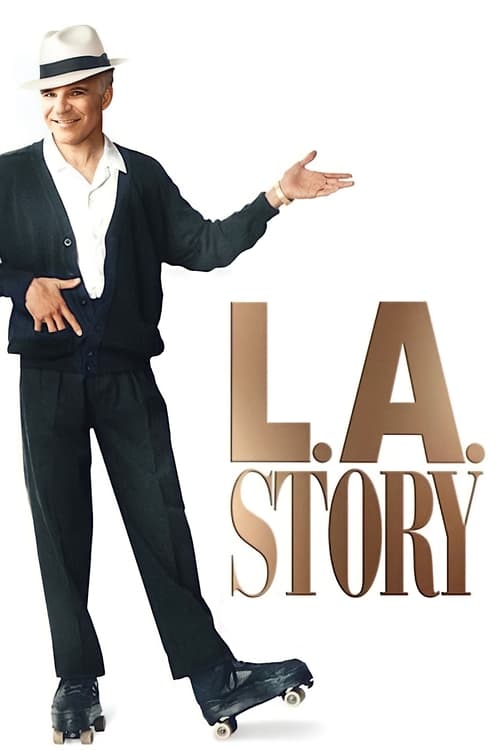
What is the significance of the character played by Steve Martin, Harris K. Telemacher, in the context of the film's narrative?
Should I watch it?
Ask Your Own Question

What is the plot?
Sorry, we aren't able to watch and write up a full detailed plot yet. Check back in a few days.






What is the ending?
In the ending of "L.A. Story," the protagonist, Harris K. Telemacher, realizes his love for Sara, and they share a romantic moment together. The film concludes with a whimsical and surreal celebration of love and life in Los Angeles, as Harris embraces his newfound happiness.
As the film approaches its conclusion, we find Harris K. Telemacher, played by Steve Martin, in a state of emotional turmoil. After a series of comedic and poignant encounters throughout Los Angeles, he has come to a significant realization about his feelings for Sara, portrayed by Victoria Tennant. The narrative builds towards a climactic moment where Harris must confront his true desires.
In the penultimate scenes, Harris attends a party at the home of his friend, where he is surrounded by the eccentricities of Los Angeles life. The atmosphere is vibrant, filled with laughter and the sounds of a lively gathering. However, Harris feels a sense of disconnection, as he reflects on his past relationships and the superficiality that often accompanies them. He is haunted by the memory of his ex-wife, who has moved on, and he grapples with the emptiness of his previous pursuits.
As the party continues, Harris is drawn to Sara, who is also present. Their interactions are charged with unspoken feelings, and the tension between them builds. Harris's internal conflict is palpable; he is torn between the comfort of his past and the potential for a deeper connection with Sara. The whimsical nature of the film is accentuated by the surreal elements that have been woven throughout the story, including the presence of a talking freeway sign that offers Harris guidance.
In a pivotal moment, Harris decides to take a leap of faith. He rushes to find Sara, who has left the party. The scene shifts to a picturesque Los Angeles backdrop, where the sun sets, casting a warm glow over the city. Harris's determination is evident as he navigates the streets, his heart racing with anticipation and hope.
Finally, he finds Sara at a beautiful outdoor location, where they share a heartfelt conversation. Harris expresses his feelings, revealing the depth of his affection for her. Sara, who has also been grappling with her own emotions, reciprocates his feelings. The moment is tender and filled with the promise of a new beginning. They embrace, and the camera captures their connection against the stunning Los Angeles skyline, symbolizing the merging of their lives.
As the film concludes, the whimsical elements return, with a montage of various characters from the film celebrating love and life in Los Angeles. The final scenes are filled with laughter, joy, and a sense of community, reinforcing the idea that love can be found in unexpected places. Harris and Sara's relationship blossoms, suggesting a hopeful future together.
In summary, Harris K. Telemacher finds love with Sara, leaving behind his past and embracing the possibilities of a new relationship. The film ends on a note of optimism, celebrating the quirks and joys of life in Los Angeles, while highlighting the importance of genuine connections.
Is there a post-credit scene?
L.A. Story, produced in 1991, does not have a post-credit scene. The film concludes with a whimsical and romantic ending, where the main character, Harris K. Telemacher, played by Steve Martin, finds love and a sense of connection in the chaotic landscape of Los Angeles. The final moments focus on the resolution of his journey, emphasizing themes of love, fate, and the absurdity of life in L.A. After the credits roll, there are no additional scenes or content that extend the story or provide further commentary. The film wraps up its narrative without any post-credit material.
What is the significance of the talking freeway sign in L.A. Story?
The talking freeway sign serves as a whimsical and surreal element that guides the protagonist, Harris K. Telemacher, through his journey of self-discovery and love. It provides humorous commentary on the absurdities of life in Los Angeles, often reflecting Harris's internal struggles and desires.
How does Harris's relationship with his girlfriend, Sara, evolve throughout the film?
Harris's relationship with Sara begins as a comfortable but unfulfilling romance. As he encounters various characters and experiences, he realizes that he is not truly in love with her. This culminates in a pivotal moment where he confronts his feelings and ultimately seeks a deeper connection with another character, SanDeE*.
What role does the character of SanDeE* play in Harris's transformation?
SanDeE* represents spontaneity and the possibility of true love for Harris. Her free-spirited nature and zest for life challenge Harris's complacency. As he becomes infatuated with her, she inspires him to break free from his mundane existence and pursue a more authentic life.
How does the film portray the concept of love in the context of Los Angeles?
The film portrays love as both elusive and transformative, set against the backdrop of the superficiality often associated with Los Angeles. Through Harris's interactions with various characters, the film explores different facets of love, from the superficial to the profound, ultimately suggesting that true love requires vulnerability and authenticity.
What is the significance of the character played by Steve Martin, Harris K. Telemacher, in the context of the film's narrative?
Harris K. Telemacher is a weatherman who embodies the disillusionment many feel in the fast-paced, superficial world of Los Angeles. His journey reflects a quest for meaning and connection, as he navigates through a series of comedic and poignant encounters that lead him to reevaluate his life choices and relationships.
Is this family friendly?
"L.A. Story," produced in 1991, is generally considered a family-friendly film, but it does contain some elements that may be objectionable or upsetting for children or sensitive viewers. Here are a few aspects to consider:
-
Mature Themes: The film explores themes of love, relationships, and existential musings, which may be complex for younger audiences to fully grasp.
-
Language: There are instances of mild profanity and suggestive language that may not be suitable for all children.
-
Romantic Situations: The film includes scenes that depict romantic relationships, including some innuendo and discussions about intimacy that may be inappropriate for younger viewers.
-
Cultural References: Some humor and cultural references may be lost on younger audiences, potentially leading to confusion or misunderstanding.
-
Emotional Moments: There are scenes that delve into feelings of loneliness and existential questioning, which might be heavy for sensitive viewers.
Overall, while "L.A. Story" is light-hearted and comedic, parents may want to consider these elements when deciding if it is appropriate for their children.








