


Popular
What motivates Dorothy to leave Kansas and travel to Oz?
How does the Scarecrow express his desire for a brain?
What internal conflict does the Tin Man face regarding his heart?
What is the Cowardly Lion's struggle with courage?
How does the Wicked Witch of the West's desire for the ruby slippers drive her actions?
Should I watch it?
Ask Your Own Question

What is the plot?
Sorry, we aren't able to watch and write up a full detailed plot yet. Check back in a few days.
What is the ending?
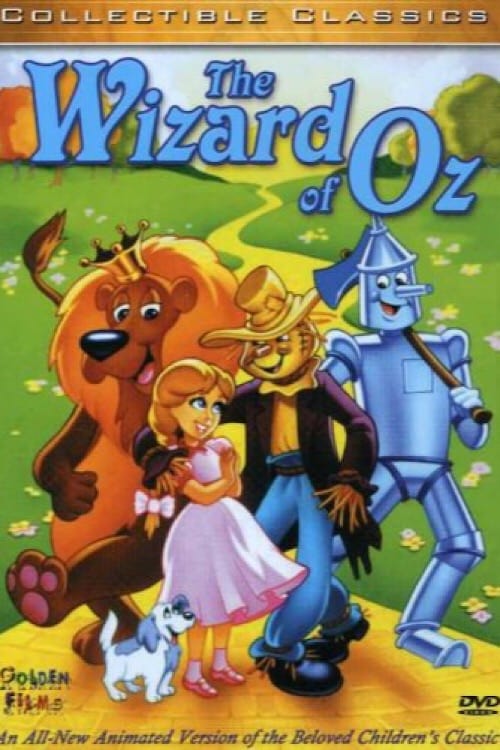
In the 1991 adaptation of The Wizard of Oz, Dorothy returns home to Kansas after her adventures in Oz, realizing that her journey has taught her the importance of home and the love of her family. She wakes up in her bed surrounded by her loved ones, who are relieved to see her safe and sound.
As the story unfolds towards its conclusion, Dorothy, played by Fairuza Balk, finds herself in the Emerald City, where she has been on a quest to meet the Wizard, hoping he can help her return to Kansas. After a series of trials and encounters with various characters, including the Scarecrow, Tin Man, and Cowardly Lion, she learns that the Wizard is not the powerful figure he appears to be. Instead, he is an ordinary man who has been using tricks to maintain his facade of greatness.
In a pivotal scene, Dorothy confronts the Wizard, who ultimately reveals that he cannot grant her wish to return home. However, Glinda, the Good Witch of the South, appears and tells Dorothy that she has always had the power to return home by clicking her heels together three times and saying, "There's no place like home." This moment is filled with emotional weight as Dorothy realizes that the strength she sought externally was within her all along.
As she clicks her heels and repeats the phrase, the vibrant colors of Oz begin to fade, and she is transported back to her bedroom in Kansas. The transition is marked by a swirl of light and a sense of longing, as she leaves behind her friends in Oz. Upon waking, she finds herself surrounded by her Aunt Em and Uncle Henry, who are overjoyed to see her safe. Dorothy expresses her love for them, and the warmth of family envelops her, signifying her newfound appreciation for home.
The fate of the main characters is as follows: the Scarecrow, who desired a brain, learns that he was wise all along; the Tin Man, who sought a heart, discovers that he has always been compassionate; and the Cowardly Lion, who wished for courage, realizes that he has shown bravery throughout their journey. Each character returns to their respective lives in Oz, transformed by their experiences and the friendships they forged.
In the final moments, Dorothy's journey concludes with a sense of closure and fulfillment. She understands that while adventures may be exciting, the love and comfort of home are irreplaceable. The film ends on a note of hope and belonging, as Dorothy embraces her family, symbolizing the importance of love and the bonds that tie us to our roots.
Is there a post-credit scene?
The 1991 adaptation of "The Wizard of Oz" does not include a post-credit scene. The film concludes with Dorothy returning home to Kansas after her adventures in Oz, emphasizing the themes of home and belonging. The story wraps up with her realization that "there's no place like home," and the film ends on a heartfelt note without any additional scenes following the credits.
What motivates Dorothy to leave Kansas and travel to Oz?
Dorothy is motivated by her desire to escape the mundane and often harsh realities of her life in Kansas. She feels misunderstood and trapped, particularly by her Aunt Em and Uncle Henry, who do not understand her dreams and aspirations. The tornado that sweeps her away to Oz symbolizes her longing for adventure and a place where she truly belongs.
How does the Scarecrow express his desire for a brain?
The Scarecrow expresses his desire for a brain through his conversations with Dorothy. He feels inadequate and believes that if he had a brain, he could think and solve problems. His emotional state is one of longing and self-doubt, as he yearns for intelligence to validate his worth and help him achieve his dreams.
What internal conflict does the Tin Man face regarding his heart?
The Tin Man grapples with the internal conflict of feeling incomplete without a heart. He believes that having a heart would allow him to feel love and compassion, which he perceives as essential to being fully human. His emotional state is one of sadness and yearning, as he reflects on the love he wishes to give and receive.
What is the Cowardly Lion's struggle with courage?
The Cowardly Lion struggles with his self-image as a coward, despite being a lion, which is typically seen as a symbol of bravery. He constantly doubts his own strength and ability to be courageous, feeling ashamed of his fears. His emotional journey involves seeking validation and overcoming his insecurities, as he learns that true courage comes from facing his fears.
How does the Wicked Witch of the West's desire for the ruby slippers drive her actions?
The Wicked Witch of the West's desire for the ruby slippers drives her actions as she believes they hold immense power that can help her regain control over Oz. Her motivations are rooted in jealousy and a need for dominance, leading her to pursue Dorothy relentlessly. This obsession reveals her emotional instability and desperation, as she resorts to manipulation and intimidation to achieve her goals.
Is this family friendly?
The 1991 adaptation of "The Wizard of Oz" is generally considered family-friendly, but there are a few scenes that might be potentially objectionable or upsetting for children or sensitive viewers.
-
Tornado Scene: The film opens with a dramatic tornado that threatens Dorothy's home, creating a sense of chaos and fear. The visual effects and sound can be intense, which might be frightening for younger viewers.
-
Wicked Witch of the West: The character of the Wicked Witch is portrayed as menacing and vengeful. Her cackling laughter and threatening demeanor, especially when she confronts Dorothy and her friends, can be unsettling.
-
Flying Monkeys: The flying monkeys serve the Wicked Witch and can be quite frightening with their aggressive behavior and eerie appearance. Their scenes may evoke fear in younger audiences.
-
Dark Forest: As Dorothy and her friends journey through the dark forest, the atmosphere becomes tense and foreboding, which may evoke feelings of anxiety.
-
Emotional Moments: There are scenes that explore themes of loneliness, fear, and longing, particularly Dorothy's feelings of being lost and her desire to return home. These emotional undertones may resonate deeply with sensitive viewers.
Overall, while the film contains whimsical elements and a hopeful message, these moments could be distressing for some children or sensitive individuals.








