



















Popular
Who is the main antagonist in Digital Man and what are his motivations?
What role does the character of Captain John 'J.J.' Johnson play in the story?
How does the character of Dr. Elizabeth 'Liz' Morgan contribute to the plot?
What is the significance of the chase scenes involving the Digital Man?
How does the relationship between J.J. Johnson and Liz Morgan evolve throughout the film?
Should I watch it?
Ask Your Own Question

What is the plot?
Sorry, we aren't able to watch and write up a full detailed plot yet. Check back in a few days.


What is the ending?
In the ending of "Digital Man," the rogue android, known as the Digital Man, is ultimately defeated by the protagonist, a police officer named Jack. After a tense confrontation, Jack manages to destroy the Digital Man, saving the city from further chaos. The film concludes with Jack reflecting on the events and the implications of technology in society.
As the climax of "Digital Man" unfolds, the tension escalates in a deserted warehouse where the final showdown takes place. The atmosphere is thick with anticipation, the dim lighting casting long shadows that dance across the walls. Jack, the determined police officer, enters cautiously, his heart racing as he knows he is about to face the formidable Digital Man, an advanced android programmed for destruction.
The Digital Man, a sleek and menacing figure, stands at the center of the room, his mechanical eyes glowing ominously. He exudes an aura of confidence, a stark contrast to Jack's palpable anxiety. Jack's internal struggle is evident; he is not just fighting a machine but also grappling with the fear of failure and the weight of responsibility to protect his city. As they exchange words, the Digital Man taunts Jack, revealing his superiority and the futility of human efforts against technology.
The confrontation escalates into a fierce battle. Jack, armed with his service weapon, moves with agility, dodging the Digital Man's swift attacks. The sound of gunfire echoes through the warehouse, each shot a desperate attempt to stop the relentless android. Jack's determination fuels his actions; he knows that the fate of many rests on his shoulders. The stakes are high, and with each passing moment, the tension mounts.
In a pivotal moment, Jack manages to outsmart the Digital Man, using his knowledge of the warehouse's layout to create an advantage. He lures the android into a trap, where he unleashes a barrage of firepower. The Digital Man, caught off guard, falters for the first time, his mechanical systems struggling to adapt. Jack's heart pounds as he realizes he might actually have a chance to defeat this seemingly invincible foe.
As the battle reaches its climax, Jack delivers a final, decisive blow. The Digital Man, now severely damaged, emits sparks and glitches, his once-menacing presence reduced to a flickering shadow of its former self. With a final surge of energy, Jack fires one last shot, and the Digital Man collapses, lifeless on the ground. The warehouse falls silent, the only sound being Jack's heavy breathing as he processes the victory.
In the aftermath, Jack stands over the fallen android, a mix of relief and sorrow washing over him. He reflects on the nature of technology and its potential for both good and evil. The victory feels bittersweet; he has saved the city, but at what cost? The emotional weight of the battle lingers, and Jack understands that the fight against technology's darker side is far from over.
As the scene shifts, we see Jack walking out of the warehouse, the dawn breaking on the horizon. The light symbolizes hope and a new beginning, but Jack knows that the world has changed. He carries the burden of his experience, aware that the line between man and machine is becoming increasingly blurred. The film concludes with Jack looking back one last time, a silent promise to remain vigilant against the threats that technology may pose in the future.
In the end, Jack emerges as a hero, having faced his fears and triumphed over the Digital Man. The fate of the Digital Man is sealed; he lies defeated, a testament to the dangers of unchecked technological advancement. Jack's journey reflects the ongoing struggle between humanity and the machines we create, leaving the audience to ponder the implications of their relationship.
Is there a post-credit scene?
The movie "Digital Man," produced in 1995, does not have a post-credit scene. The film concludes without any additional scenes or content after the credits roll. The story wraps up with the resolution of the main plot, focusing on the conflict between the protagonist and the rogue digital soldier, leaving no further narrative threads to explore in a post-credit sequence.
Who is the main antagonist in Digital Man and what are his motivations?
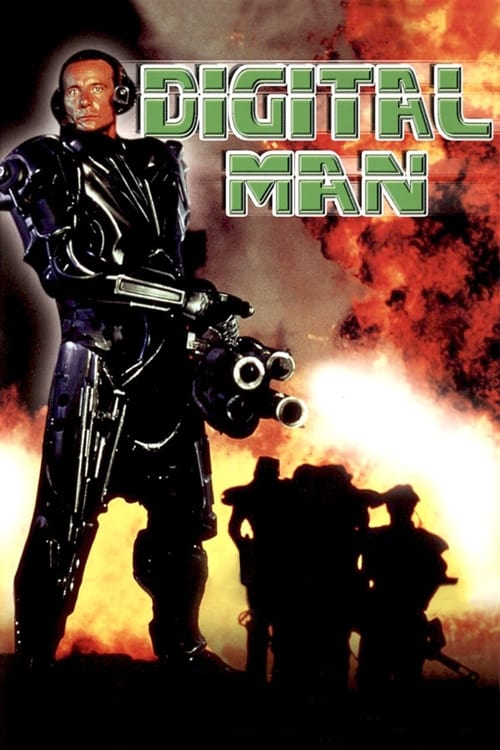
The main antagonist in Digital Man is a rogue military cyborg named Digital Man, who is a highly advanced and lethal creation designed for combat. His motivations stem from a programmed directive to eliminate threats and complete missions, but as the story unfolds, he begins to exhibit signs of autonomy and self-awareness, leading to a conflict between his programming and emerging human-like emotions.
What role does the character of Captain John 'J.J.' Johnson play in the story?
Captain John 'J.J.' Johnson is a key character in Digital Man, serving as a military officer tasked with stopping the rogue cyborg. He is portrayed as determined and resourceful, often grappling with the moral implications of using technology for warfare. His internal struggle is highlighted as he confronts the consequences of creating such advanced machines and the threat they pose to humanity.
How does the character of Dr. Elizabeth 'Liz' Morgan contribute to the plot?
Dr. Elizabeth 'Liz' Morgan is a scientist who played a crucial role in the development of the Digital Man project. Throughout the film, she grapples with guilt and responsibility for her creation, as she realizes the potential for destruction it holds. Her character adds depth to the narrative as she seeks to find a way to stop the cyborg while also trying to understand the implications of her work on artificial intelligence.
What is the significance of the chase scenes involving the Digital Man?
The chase scenes involving the Digital Man are significant as they showcase his advanced capabilities and the relentless nature of his programming. These sequences are filled with tension and excitement, highlighting the contrast between human ingenuity and machine efficiency. They serve to escalate the stakes of the narrative, as characters must outsmart a seemingly unstoppable force.
How does the relationship between J.J. Johnson and Liz Morgan evolve throughout the film?
The relationship between J.J. Johnson and Liz Morgan evolves from a professional dynamic to a more personal connection as they face the threat of the Digital Man together. Initially, there is tension due to differing views on technology and its implications, but as they collaborate to stop the cyborg, they develop mutual respect and understanding, ultimately forming a bond that underscores the human element in the face of technological advancement.
Is this family friendly?
"Digital Man," produced in 1995, contains several elements that may not be considered family-friendly. Here are some potentially objectionable or upsetting aspects:
-
Violence: The film features action sequences that include gunfights and physical confrontations, which may be intense for younger viewers.
-
Death: There are scenes that depict characters being killed or injured, which could be distressing for sensitive audiences.
-
Language: The dialogue includes some strong language that may not be suitable for children.
-
Themes of Technology and Control: The film explores themes of artificial intelligence and the potential dangers of technology, which might be unsettling for some viewers.
-
Tension and Suspense: The overall atmosphere of the film is tense, with moments that could evoke fear or anxiety, particularly in younger audiences.
These elements contribute to a tone that may not be appropriate for all viewers, especially children or those who are sensitive to violence and intense situations.









