

















Popular
What is the significance of the character Bobby Earl in the story?
How does Paul Armstrong's character evolve throughout the film?
What role does the setting of Florida play in the film?
What is the relationship between Paul Armstrong and his wife, and how does it affect the plot?
How does the character of the detective, played by Ed Harris, influence the story?
Should I watch it?
Ask Your Own Question

What is the plot?
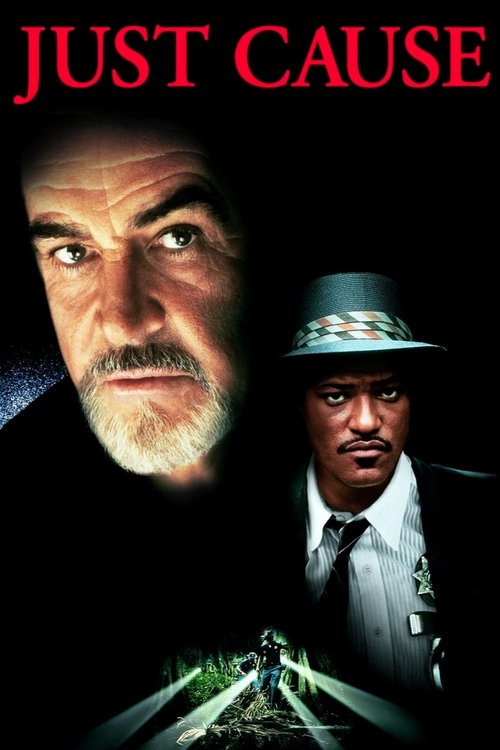
The story opens in 1986 in rural Ochopee, Florida, where eleven-year-old Joanie Shriver is kidnapped, raped, and murdered, and the violence is framed from the start as something the town is desperate to close up and bury. In the grim glare of the police station, Bobby Earl Ferguson--a young black man with no real chance in a hostile town--is seized by detectives Tanny Brown and J. T. Wilcox, beaten, and tortured for 22 hours until he breaks and signs a confession they have forced out of him. The confession, the official case, and the town's certainty all harden around that abuse, and Bobby is put on trial with only a weak defense from McNair, whose failure leaves him convicted and condemned to die in the electric chair. From the first moments, the film makes clear that the original verdict is not built on certainty but on fear, coercion, and the convenience of blaming the man the town already wants to hate.
Eight years later, the film jumps to the present day, where Paul Armstrong is introduced as a respected Harvard law professor, a former lawyer who has not practiced in twenty-five years, and a public opponent of capital punishment who has made his position into books and speeches. In Cambridge, he is in the middle of a public debate on the death penalty against a pompous opponent, and he wins the exchange with calm, polished authority, though the argument itself has more the feel of an academic performance than a true moral reckoning. The debate ends, and into that polished world steps Evangeline Ferguson, Bobby Earl's elderly grandmother, who presses a letter into Armstrong's hands and begs him to look into her grandson's case before the state kills him. Her plea is urgent, fierce, and deeply personal; she tells him in effect that if he does not act, no one will. When Armstrong goes home, his wife Laurie Armstrong reads the letter and reinforces what Evangeline has already planted: whatever his instincts about staying out of litigation, he cannot ignore the possibility that an innocent man is about to be executed. Their daughter Katie is present in the domestic scene, and the contrast between the safe warmth of the family home and the brutality waiting in Florida sharpens the stakes. Armstrong finally agrees, not because he is certain, but because the case has begun to look like the kind of injustice he has spent his public life condemning.
He travels to Florida and enters the prison where Bobby Earl Ferguson sits on death row, waiting for the electric chair. The prison is oppressive and joyless, and Bobby's fear is not theatrical; he is a man who has spent years under the weight of a conviction that he insists is false. When Armstrong meets him, Bobby tells him that the confession was not confession at all but the end result of torture, that he was physically and psychologically broken by the detectives until he said whatever they wanted. Armstrong begins as a skeptic, but the more he looks, the more the state's case starts to look thin, even desperate. There is "little hard evidence," as one review notes, and what exists appears to have been read through the lens of local prejudice and a community that wanted a solution more than it wanted the truth. The town itself is immediately hostile to Armstrong. Sheriff Tanny Brown, now one of the key guardians of the old story, bristles at the outsider from Harvard and makes plain that the conviction is not something he wants reopened. Armstrong pushes anyway, interviewing locals, revisiting the original investigation, and tracing the chain of events back to the night Joanie Shriver died.
As he digs deeper, the film slowly reveals the shape of the original injustice. Bobby Earl was not simply found guilty; he was railroaded, made a convenient suspect in a small-town atmosphere that could not tolerate uncertainty and was happy to let a black man absorb the blame for the murder of a little white girl. Every conversation in town carries the same unspoken message: the case is settled, and Armstrong is unwelcome for asking questions. Sheriff Brown and the local police circle the wagons, and the more Armstrong challenges them, the more they threaten his work and his safety. He moves through the victim's family circles and the town's public spaces, feeling the pressure of a place that remembers the murder not as a mystery but as a stain it wants to hide. Each new detail chips away at the certainty of the conviction, until it becomes obvious that Bobby's trial was less an act of justice than a cleanup operation. The injustice is compounded by the power imbalance at the heart of the case: Bobby's race, the victim's race, and the town's reflexive assumptions all help turn him into the perfect scapegoat.
The investigation changes direction when Armstrong begins to suspect that the real killer may not be in town at all but already inside the prison system. He learns that an inmate with a violent and unstable history--a psychotic serial killer played by Ed Harris--may be the true murderer. This revelation shifts the case from a standard wrongful-conviction drama into something much darker and more dangerous, because the person who may have killed Joanie Shriver is not only alive but already caged among the same system that condemned Bobby Earl. Armstrong's inquiries lead him closer to the inmate, and the prison becomes a second arena of menace: not just a place of punishment, but the possible hiding place of the actual crime. In one especially chilling turn, Armstrong learns enough to suspect that the serial killer could have carried out the murder and then hidden behind Bobby's coerced confession, allowing the state to close the case while the real predator remained free to kill again.
The film tightens further when Bobby Earl's grandmother continues to serve as the emotional center of the fight. Her determination is part grief, part fury, and part faith in Armstrong's conscience. She has already risked everything by bringing the letter north, and now Armstrong is committed enough to keep pushing even as the town closes ranks around him. Laurie Armstrong's earlier support matters here as well: she helps convert his intellectual opposition to the death penalty into a personal willingness to intervene in a concrete, dangerous case. Armstrong's professional identity as a thinker gives way to something more immediate and physical as the case stops being an argument and becomes a struggle over a man's life. The film builds tension through this shift. He is no longer merely debating the death penalty; he is racing a clock set by the state.
As the evidence piles up, Armstrong's conflict with Tanny Brown grows more personal and more openly hostile. Brown is not just a sheriff protecting procedure; he is a man protecting the lie that built his authority. He and the other local enforcers have every reason to keep Armstrong from digging any further, because if the truth comes out, the original torture, the failure of the defense, and the town's willingness to condemn a likely innocent man all come back into the open. Armstrong keeps moving anyway, assembling enough to challenge the official story and force the possibility of Bobby Earl's innocence into the open. The pressure of the execution date hangs over everything, making every confrontation feel like it may be the last chance to stop the state from making the wrongful conviction irreversible.
The climax comes when the false certainty around Bobby Earl collides with the truth Armstrong has been piecing together. The serial killer inmate emerges as the key to the case, and the story pivots into a violent final confrontation in swampy Florida terrain, near water and the lurking threat of alligators. The ending is not a courtroom exoneration in a neat procedural sense; it is a physical, brutal collision between the forces that have protected the lie and the real killer who has been hiding behind it. Armstrong's assembled evidence finally exposes what really happened, shifting blame away from Bobby Earl and toward the psychotic inmate who appears to have been responsible for Joanie Shriver's murder. In the chaos of the last confrontation, the villain is destroyed, and one review memorably notes that "the alligators have a good dinner," underscoring just how savage and final the ending becomes. The image is grimly appropriate: the swamp seems to swallow the violence that the town once tried to hide in paperwork and police reports.
By the time the final struggle is over, the film has fully revealed the original case as a racist, coerced miscarriage of justice. Bobby Earl Ferguson's confession is exposed as a product of torture rather than truth, and his conviction is effectively discredited by Armstrong's investigation. The serial killer is identified as the likely real murderer, completing the film's central reversal. Joanie Shriver's death remains the first and original tragedy, but now it stands in a wider pattern of violence: first the murder, then the torture of Bobby Earl, then the town's decision to protect its own story at the expense of a condemned man's life. Sheriff Tanny Brown survives as an emblem of the local corruption and hostility that enabled the cover-up, but the narrative makes clear that his world has been shaken, even if not cleanly dismantled. Bobby Earl is left alive, no longer merely a condemned prisoner but a man whose innocence has been defended at the edge of death. Armstrong, who began as an abstract opponent of capital punishment, ends as a man who has walked straight into the machinery of a wrongful execution and forced it to break under the weight of the truth.


What is the ending?
In the ending of "Just Cause," attorney Paul Armstrong uncovers the truth about the murder case he has been working on, leading to a dramatic confrontation. He learns that the real killer is not the man on death row, but rather a police officer involved in a cover-up. The film concludes with a tense showdown, resulting in the death of the true murderer and the exoneration of the innocent man.
As the climax of "Just Cause" unfolds, we find Paul Armstrong, portrayed by Sean Connery, in a state of heightened urgency. After tirelessly investigating the case of Bobby Earl, a man sentenced to death for the brutal murder of a young girl, Paul is driven by a deep sense of justice and the weight of his own moral compass. He has come to believe in Bobby's innocence, despite the overwhelming evidence against him.
The scene shifts to a dimly lit warehouse where Paul confronts the true killer, a police officer named Detective Dwayne G. "D.G." McCauley, played by Ed Harris. Tension fills the air as Paul, armed with the knowledge of the cover-up, faces D.G. The atmosphere is thick with dread and anticipation, as Paul's heart races, knowing that the truth he has sought is within reach. D.G., cornered and desperate, reveals his motivations, showcasing a blend of fear and arrogance. He believes he can manipulate the situation to his advantage, but Paul stands firm, embodying the resolve of a man who has fought for justice.
As the confrontation escalates, D.G. attempts to assert control, but Paul's determination shines through. The emotional stakes are palpable; Paul is not just fighting for Bobby's life but also for his own sense of integrity and the moral fabric of the justice system. The scene is fraught with tension as they exchange heated words, each man representing a different facet of justice and morality.
In a sudden turn, the confrontation becomes violent. D.G. pulls a gun, and in a moment of chaos, Paul is forced to defend himself. The struggle culminates in a tragic yet necessary act of self-defense, resulting in D.G.'s death. The weight of this moment hangs heavily in the air, as Paul grapples with the reality of taking a life, even in the name of justice.
Following this intense climax, the narrative shifts to the aftermath. Paul returns to the courtroom, where the truth about Bobby's innocence is finally revealed. The evidence that had been suppressed comes to light, and the jury is presented with the facts that exonerate Bobby Earl, played by Laurence Fishburne. The emotional release is palpable as Bobby is freed, his face a mixture of relief and disbelief. The audience witnesses the profound impact of the legal system, the fragility of truth, and the resilience of the human spirit.
As the film draws to a close, we see Paul reflecting on the events that transpired. He is a changed man, burdened by the moral complexities of his actions but resolute in his commitment to justice. The final scenes depict him walking away from the courthouse, a man who has faced the darkest corners of humanity and emerged with a renewed sense of purpose.
In summary, the fates of the main characters are starkly defined: Paul Armstrong emerges as a flawed yet determined hero, having confronted the darkness within the justice system; Bobby Earl is freed, symbolizing hope and the possibility of redemption; and D.G. McCauley, the antagonist, meets a tragic end, representing the consequences of corruption and moral failure. The film concludes with a poignant reminder of the complexities of justice, the weight of truth, and the enduring fight for what is right.
Is there a post-credit scene?
The movie "Just Cause," produced in 1995, does not have a post-credit scene. The film concludes with its final scenes, wrapping up the story without any additional content or scenes after the credits. The narrative focuses on the intense legal battle surrounding the character of Bobby Earl, a man on death row, and the efforts of his attorney, Paul Armstrong, to uncover the truth behind the crime for which Earl was convicted. The film ends on a note of resolution regarding the case, leaving no further scenes or hints at future developments.
What is the significance of the character Bobby Earl in the story?
Bobby Earl, played by Sean Connery, is a death row inmate who claims he was wrongfully convicted of murder. His character serves as the catalyst for the film's exploration of justice and morality. As the story unfolds, Bobby's desperation and vulnerability are palpable, revealing his emotional turmoil and fear of execution. His interactions with the protagonist, Paul Armstrong, highlight his complex nature, oscillating between guilt and innocence, which keeps the audience questioning his true involvement in the crime.
How does Paul Armstrong's character evolve throughout the film?
Paul Armstrong, portrayed by Laurence Fishburne, begins as a confident and idealistic law professor who believes in the justice system. However, as he investigates Bobby Earl's case, he becomes increasingly disillusioned. His internal conflict grows as he uncovers evidence that suggests a miscarriage of justice. The emotional weight of his discoveries leads him to question his own beliefs and the integrity of the legal system, ultimately transforming him into a more empathetic and determined advocate for truth.
What role does the setting of Florida play in the film?
The setting of Florida is crucial to the film's atmosphere and narrative. The oppressive heat and humidity serve as a backdrop that amplifies the tension and urgency of the story. The stark contrast between the idyllic landscapes and the grim realities of the prison system highlights the themes of injustice and moral decay. The rural and urban environments of Florida also reflect the socio-economic disparities that influence the characters' lives and decisions, adding depth to the narrative.
What is the relationship between Paul Armstrong and his wife, and how does it affect the plot?
Paul's relationship with his wife, played by Kate Capshaw, is strained due to his obsessive focus on the case. Their interactions reveal the emotional toll that his work takes on their marriage. She expresses concern for his well-being and the potential dangers of his investigation, which adds a layer of personal conflict to the story. As Paul becomes more consumed by the case, the tension between his professional and personal life escalates, ultimately impacting his decisions and the stakes of the narrative.
How does the character of the detective, played by Ed Harris, influence the story?
The detective, played by Ed Harris, is a pivotal character who embodies the moral ambiguity of the law enforcement system. His initial portrayal as a dedicated officer gradually reveals a more complex and darker side as he becomes entangled in the case. His interactions with Paul and Bobby Earl create a tense dynamic, as he represents both the pursuit of justice and the potential for corruption. His motivations and actions drive key plot developments, ultimately challenging Paul's quest for truth and justice.
Is this family friendly?
"Just Cause," produced in 1995, is not considered family-friendly due to several potentially objectionable or upsetting scenes. Here are some aspects that may be concerning for children or sensitive viewers:
-
Violence: The film contains scenes of violence, including prison fights and the depiction of a murder, which may be disturbing.
-
Death and Trauma: The narrative involves themes of death, wrongful imprisonment, and the emotional trauma associated with these events, which can be heavy and unsettling.
-
Racial Tension: The film addresses issues of race and injustice, which may be difficult for younger audiences to fully understand or process.
-
Strong Language: There is the use of strong language throughout the film, which may not be suitable for children.
-
Sexual Content: There are scenes that include sexual themes and suggestive content that may be inappropriate for younger viewers.
-
Psychological Distress: Characters experience significant emotional turmoil, including fear, anger, and despair, which could be distressing for sensitive viewers.
Overall, the film deals with serious and mature themes that may not be appropriate for a younger audience.








