
















Popular
What is the significance of the flashbacks in the film?
What role does the character of the medium play in the story?
What motivates the main character, a young woman named Sarah, to seek revenge after her death?
How does Sarah communicate with the living after her death?
How do the other characters react to Sarah's messages from beyond the grave?
Should I watch it?
Ask Your Own Question

What is the plot?
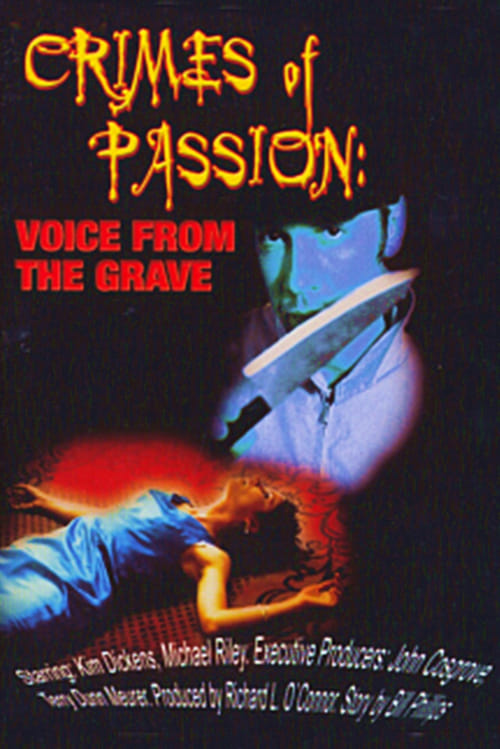
In Chicago, the story begins with Terry Deveroux, a young nurse at Lakeshore Hospital, whose life is abruptly and violently cut short when an unseen man murders her at home in a sadistic attack designed to look like a rape. After killing her, the murderer sets fire to her apartment to hide the evidence and make the crime look as if it has been thoroughly destroyed, but the cover-up only deepens the mystery rather than erasing it. Terry's death is the film's first shock and its central wound: it is brutal, personal, and deliberately staged to mislead the police, who are left with a case that remains unsolved for the moment.
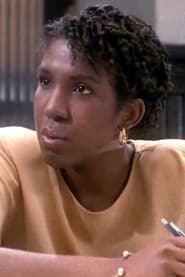
Not long after the murder, the narrative shifts to Renee Perkins, another nurse at Lakeshore Hospital, who has had only one brief contact with Terry a couple of days earlier. Renee is married to Bill Perkins, a resident surgeon at the same hospital, and the couple are already under strain as they try to improve their lives and secure a more stable professional future. The hospital setting matters immediately, because it places the victim, the witness, the husband, and later the suspect inside the same small professional world, where every whispered rumor and every odd look can become dangerous. From the start, the film gives the story a documentary-like tension, as if ordinary professional life is being slowly invaded by something impossible and private.
After Terry's death, Renee begins to experience disturbing visions that are not merely dreams or vague impressions but vivid intrusions of the murder itself. She sees details that the public does not know, and the force of those visions makes her increasingly uneasy, because she realizes she is witnessing facts she should not be able to know. The film presents these moments as both supernatural and psychologically destabilizing: Renee is frightened by what she sees, while everyone around her is forced to decide whether she is sick, traumatized, or telling the truth. Terry's spirit appears to be reaching through Renee, using her as a channel to force the truth into the open and to demand justice for her own death.
The haunting deepens at home, where Renee's visions begin to affect her marriage to Bill Perkins. He is skeptical at first, but he also sees that something is seriously wrong and that Renee is not simply inventing a story for attention. Their relationship becomes one of the film's emotional anchors, because Bill has to choose between the comfort of disbelief and the frightening possibility that his wife is genuinely being touched by the dead. Renee, meanwhile, is trapped between fear and obligation: she knows she is seeing something real, but every time she tries to explain it, she risks sounding unstable and damaging her own credibility. The tension in these scenes comes from that unbearable gap between what Renee knows and what she can prove.
As the visions continue, Renee sees more of the murder night itself. The story gradually reveals that Terry was not sexually assaulted despite the way the body and the apartment were staged to suggest rape. That false staging is one of the killer's most important lies, because it is meant to warp the investigation and make the crime harder to read. Renee does not learn this from ordinary deduction; she learns it because Terry's presence keeps breaking through, showing her the truth in fragments and then in sharper flashes. The emotional effect is grim and intimate: every new vision makes Terry less like an abstract victim and more like a desperate voice trying to be heard from beyond the grave.
The film's mystery then turns on identity. Renee eventually sees the killer's face in one of her visions and realizes that the murderer is Adam Schuster, a man who works at the same hospital as she, Terry, and Bill. That revelation changes everything, because the case is no longer just about supernatural disturbance or unresolved grief; it becomes a confrontation with a living, dangerous man who has been close to the same world all along. When Renee accidentally reveals that she knows who killed Terry, Adam is shocked and immediately tries to turn the situation against her. Instead of admitting anything, he attempts to make Renee seem incompetent and "crazy," hoping that if he discredits her, the truth will never become believable enough to matter. This is one of the film's most pointed conflicts: the killer understands the weakness of Renee's position and uses social pressure, not just fear, as a weapon.
Renee does not back down, and Terry's spirit continues pushing her toward action. Through Renee, Terry conveys a message to Bill that they need to go to the police. Bill is still cautious, but he no longer dismisses his wife outright, and the couple finally decide to involve law enforcement. That decision marks a major turning point, because it moves the story from private haunting into official investigation. Once the case reaches Detective Stachula, the central question becomes whether any police officer can take supernatural testimony seriously enough to build a real case. Stachula is skeptical at first, as any detective would be, but the investigation begins to shift when Renee says something that could only come from direct knowledge of the crime.
The crucial breakthrough comes when Renee reveals that Terry was not sexually assaulted. This detail is important because it had been withheld from the public, which means Renee could not have known it unless she had access to the real facts of the murder. Detective Stachula is forced to pay attention, and once he starts looking into Adam Schuster, the pieces begin to align. He discovers that Adam has a rap sheet and that he lived close to Terry, both of which strengthen the suspicion against him. The investigation becomes less abstract and more concrete: the police now have a plausible suspect with a criminal history, proximity to the victim, and a growing number of incriminating signs. Renee's visions are no longer merely eerie; they are functioning like evidence that points the police in the right direction.
The suspense intensifies when Renee provides another important clue later in the story. The available sources do not preserve the exact content of that clue, but they make clear that it is significant enough to push the case toward a result that can hold up long enough to put Adam behind bars. This is the film's procedural pressure point: if the police cannot translate Renee's supernatural knowledge into something usable, Adam may escape justice even after being identified. The movie therefore keeps returning to the question of proof--what can be believed, what can be used, and what can survive in a system that depends on rational evidence. Renee's possession is no longer just a haunting; it is the only thing standing between a murderer and freedom.
Throughout this process, Bill's role also changes. He moves from doubt toward support, and his belief in Renee becomes one of the film's quiet emotional victories. He does not have the same visions, but he can see that her information is too specific and too accurate to dismiss. His support gives Renee the strength to keep going even when Adam tries to undermine her and even when the police hesitate. The marriage, which began as a domestic subplot, becomes part of the larger moral struggle: Bill's trust helps protect Renee from being isolated and discredited. That is important because the killer's strategy depends not only on hiding the crime but on making the witness seem unreliable.
As the investigation advances, Terry's presence is felt less as a terrifying force and more as an urgent plea for closure. The spirit is not portrayed as malicious; it is desperate, persistent, and focused on exposing the truth so that the dead woman can finally have justice. The emotional center of the film shifts accordingly. What started as a murder mystery becomes a story about communication across the boundary between life and death, with Renee as the reluctant medium and Terry as the victim who refuses to remain silenced. Each new vision tightens the noose around Adam, and each new revelation makes it harder for him to control the story.
By the climax, the pressure on Adam Schuster is overwhelming. Renee's knowledge, the hidden fact about the staged sexual assault, and the additional clue she provides together force the police to act in a way that can lead to incarceration. Detective Stachula is the one who must carry the case from strange testimony to practical police work, and the story's final movement depends on whether he can transform Renee's impossible-seeming claims into a prosecutable reality. The sources do not preserve the exact courtroom or arrest sequence in full detail, but they do make clear that Adam is exposed as the killer and that the case is driven toward prison time rather than collapse. The final emotional effect is one of hard-won vindication: the dead woman's truth has finally broken through the lies built around her body and her apartment.
Terry Deveroux is the only death explicitly documented in the available plot sources, and she is killed by Adam Schuster, who also stages the scene to suggest rape and then burns the apartment to conceal what he has done. No other death is clearly established in the provided material, and the story's danger comes less from a body count than from the possibility that the murderer will evade responsibility. That makes the ending feel especially focused: the victory is not about surviving multiple killings but about refusing to let a single brutal murder be buried under lies and skepticism. The haunting resolves only when the truth about Terry's death is finally strong enough to be acted on, and that truth arrives through Renee's visions and Terry's relentless presence.
The final outcome is that the killer is identified, exposed, and pushed toward imprisonment, while Terry's spirit is finally able to rest because her murderer is made to answer for the crime. Renee survives the ordeal, Bill remains at her side, and the marriage that was tested by disbelief and fear comes out on the other side with a deeper bond formed through shared ordeal. The film ends not with spectacle but with resolution: the dead have spoken, the police have listened enough to act, and the man who tried to erase Terry Deveroux is no longer in control of the story.



What is the ending?
In the ending of "Voice from the Grave," the protagonist, a young woman named Sarah, uncovers the truth behind her own murder and the identity of her killer. With the help of a psychic, she communicates from beyond the grave, leading to the revelation of the dark secrets surrounding her death. The film concludes with the killer being brought to justice, and Sarah's spirit finds peace.
As the climax of "Voice from the Grave" unfolds, we find Sarah's spirit lingering in a state of unrest, desperate to reveal the truth of her untimely demise. The scene opens with a dimly lit room where Sarah's friend, a determined and empathetic character, is poring over old newspaper clippings and police reports. The atmosphere is thick with tension, as the friend feels the weight of Sarah's unresolved story pressing down on her.
In the next scene, the psychic, a middle-aged woman with a mysterious aura, enters the narrative. She is introduced in a cluttered, incense-filled space, surrounded by crystals and candles. The psychic senses Sarah's presence and begins to channel her energy, creating a connection that allows Sarah to communicate her last moments. The psychic's voice trembles as she relays Sarah's feelings of betrayal and fear, painting a vivid picture of the night she was murdered.
As the psychic delves deeper, the audience is transported back to the night of Sarah's death. The scene shifts to a dark, secluded area where Sarah confronts her killer, a man she once trusted. The tension escalates as the confrontation reveals the killer's motivations--jealousy and rage. The emotional weight of the moment is palpable, as Sarah's fear and confusion are mirrored in her frantic attempts to escape.
Back in the present, Sarah's friend, armed with the knowledge gained from the psychic, confronts the killer. This scene is charged with emotion, as the friend stands firm, demanding justice for Sarah. The killer, cornered and desperate, tries to manipulate the situation, but the friend remains resolute, fueled by her loyalty to Sarah's memory.
The climax reaches its peak when the police arrive, having been tipped off by the friend. The killer's facade crumbles as he realizes he can no longer evade the consequences of his actions. The scene is intense, filled with the sounds of sirens and the shouts of officers as they apprehend him. The emotional release is palpable, as Sarah's friend watches the man who took her life being led away in handcuffs.
In the final moments of the film, Sarah's spirit is shown in a serene light, her face softening as she witnesses the justice served. The psychic, still connected to Sarah, conveys a sense of closure, telling her that she can now rest. The camera lingers on Sarah's friend, who stands in a quiet moment of reflection, knowing that she has honored her friend's memory and helped bring peace to her restless spirit.
As the credits roll, the audience is left with a sense of resolution. Sarah's fate is one of liberation, as she finally moves on from the pain of her past. The killer faces the consequences of his actions, while Sarah's friend emerges as a symbol of loyalty and courage, having fought for the truth against all odds. The film closes on a note of hope, emphasizing the enduring bond of friendship and the importance of seeking justice.
Is there a post-credit scene?
"Voice from the Grave," produced in 1996, does not contain a post-credit scene. The film concludes its narrative without any additional scenes or content after the credits roll. The story wraps up with the resolution of the main plot, focusing on the themes of justice and the supernatural connection between the living and the dead. The absence of a post-credit scene allows the audience to reflect on the film's emotional and moral implications without any further distractions.
What is the significance of the flashbacks in the film?
The flashbacks serve as a vital narrative device, providing insight into Sarah's life before her death. They reveal her relationships, aspirations, and the events leading up to her murder. These glimpses into her past not only deepen the audience's understanding of her character but also heighten the emotional stakes as viewers witness the stark contrast between her vibrant life and the tragedy that befalls her.
What role does the character of the medium play in the story?
The medium, who initially appears skeptical, becomes a crucial character in the narrative. As she begins to channel Sarah's spirit, she experiences a transformation, grappling with the emotional weight of Sarah's story. The medium's journey reflects her struggle to balance her own beliefs with the haunting truths that Sarah reveals, ultimately leading her to confront her own fears and doubts.
What motivates the main character, a young woman named Sarah, to seek revenge after her death?
Sarah, portrayed as a vibrant and ambitious young woman, is driven by a deep sense of injustice after being brutally murdered. Her desire for revenge stems from the betrayal she feels from those she trusted, particularly her boyfriend, who is involved in her death. This emotional turmoil fuels her determination to communicate from beyond the grave.
How does Sarah communicate with the living after her death?
After her murder, Sarah's spirit becomes restless and seeks to make contact with the living. She uses a medium, who becomes a conduit for her voice, allowing her to relay messages and reveal the truth about her death. This connection is fraught with tension, as Sarah's anger and sorrow manifest in powerful ways, affecting both the medium and those who hear her story.
How do the other characters react to Sarah's messages from beyond the grave?
The reactions of the other characters vary significantly, ranging from disbelief to fear and guilt. Some are initially skeptical, dismissing the medium's claims, while others are deeply affected by the revelations. As Sarah's messages unfold, they confront their own roles in her death, leading to a mix of remorse and a desperate need for redemption, which adds layers of complexity to their character arcs.
Is this family friendly?
"Voice from the Grave," produced in 1996, contains several elements that may not be suitable for children or sensitive viewers. Here are some potentially objectionable or upsetting aspects:
-
Themes of Death and Grief: The film revolves around the aftermath of a murder and the impact it has on the family, which may be distressing for younger audiences.
-
Supernatural Elements: The presence of a ghostly figure and themes of communication from beyond the grave may be unsettling for some viewers, particularly children who might find the concept of spirits frightening.
-
Violence: There are references to murder and violence, which, while not graphically depicted, are central to the plot and may be disturbing.
-
Emotional Turmoil: Characters experience significant emotional distress, including sorrow, anger, and fear, which could be intense for sensitive viewers.
-
Mature Themes: The film explores complex adult themes such as betrayal, revenge, and the quest for justice, which may not resonate with younger audiences.
These elements contribute to a tone that may be more appropriate for older teens and adults rather than a family-friendly viewing experience.








