











Popular
Who is the main character in High Noon and what is his role?
What motivates Will Kane to confront Frank Miller despite the danger?
How does Amy, Will Kane's wife, react to the situation with Frank Miller?
What role do the townspeople play in Will Kane's confrontation with Frank Miller?
What is the significance of the clock in High Noon?
Should I watch it?
Ask Your Own Question

What is the plot?
Sorry, we aren't able to watch and write up a full detailed plot yet. Check back in a few days.



What is the ending?
In the ending of the movie "High Noon" (2000), the protagonist, Will Kane, confronts the outlaws led by Frank Miller in a tense showdown. After a fierce gunfight, Kane manages to defeat the outlaws but is left questioning his future in the town. The film concludes with Kane walking away, leaving behind the town that he once protected.
Now, let's delve into the ending in a more detailed narrative fashion.
As the sun begins to set, casting long shadows over the dusty streets of Hadleyville, Will Kane stands alone in the center of town, his heart pounding in his chest. The tension is palpable; he knows that Frank Miller and his gang are on their way, and the clock is ticking down to their arrival. The townspeople, who had once looked to him for protection, now cower in fear, unwilling to stand by his side. Kane feels the weight of their abandonment, a mix of anger and disappointment swirling within him.
The scene shifts to the arrival of Frank Miller and his gang, their horses thundering down the main street. Kane's resolve hardens as he steps forward, his hand resting on the grip of his revolver. The confrontation is inevitable. The outlaws dismount, their faces twisted with malice, and Miller, with a sneer, taunts Kane, reminding him of the danger he faces alone. Kane's determination is unwavering; he knows he must face them, not just for himself but for the principles he stands for.
The gunfight erupts with a deafening roar. Bullets fly, and the sound of gunfire echoes through the town. Kane moves with a mix of precision and desperation, his instincts honed from years of experience. He takes down one outlaw after another, each shot fired a testament to his skill and resolve. The camera captures the intensity of the moment, the dust swirling around them, the grim expressions on the faces of both Kane and the outlaws.
As the dust settles, Kane stands victorious but battered. He has defeated Miller's gang, but the victory feels hollow. The townspeople emerge from their hiding places, their faces a mix of relief and shame. They had left Kane to fight alone, and now they must confront the reality of their cowardice. Kane, breathing heavily, looks around at the faces of those he once protected. The weight of their inaction hangs heavily in the air.
In the aftermath, Kane walks away from the town, his figure silhouetted against the fading light. He leaves behind the badge that once symbolized his authority and commitment to justice, casting it aside as he steps into an uncertain future. The townspeople watch him go, their expressions filled with regret and realization. They understand that they have lost not just a protector but a part of their own integrity.
The film closes with Kane disappearing into the horizon, a lone figure against the vastness of the landscape, embodying the themes of sacrifice, duty, and the moral complexities of standing up for what is right. Each character's fate is sealed in this moment: Kane, the hero who fought alone; the townspeople, left to grapple with their choices; and Frank Miller, the defeated outlaw, a reminder of the darkness that can arise when courage falters.
Is there a post-credit scene?
The movie "High Noon" produced in 2000 does not have a post-credit scene. The film concludes with the resolution of the central conflict, focusing on the protagonist, Will Kane, as he faces the returning outlaw Frank Miller and his gang. The narrative wraps up with Kane's determination to confront the threat to his town, emphasizing themes of duty, courage, and moral integrity. After the climax, the film ends without any additional scenes or content during or after the credits.
Who is the main character in High Noon and what is his role?
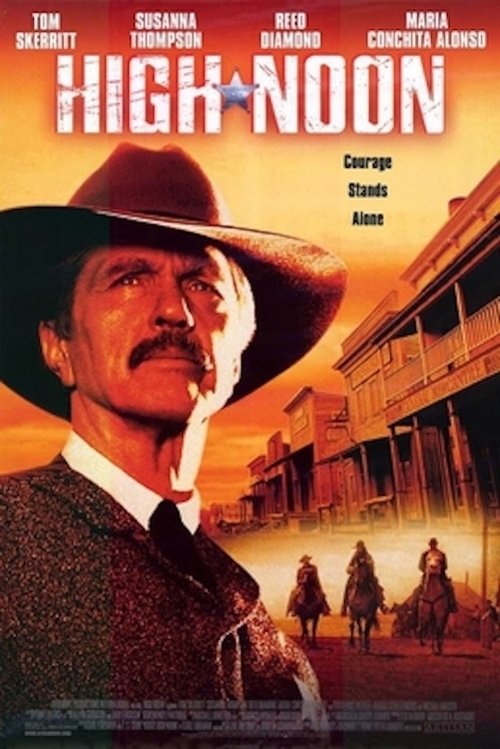
The main character in High Noon is Will Kane, played by Tom Skerritt. He is the town marshal who is about to retire and marry his Quaker bride, Amy, when he learns that a notorious criminal named Frank Miller is returning to town seeking revenge. Kane's role is central as he grapples with his sense of duty and the moral implications of facing Miller alone.
What motivates Will Kane to confront Frank Miller despite the danger?
Will Kane is motivated by a strong sense of duty and responsibility to protect the town he has served as marshal. Despite the fear and the abandonment he faces from the townspeople, his internal struggle revolves around his commitment to justice and the moral obligation to confront evil, even at great personal risk.
How does Amy, Will Kane's wife, react to the situation with Frank Miller?
Amy, portrayed by Elisabeth Shue, initially expresses fear and concern for Will's safety. As a Quaker, she is against violence and urges him to leave town with her instead of confronting Miller. Her emotional state fluctuates between fear for Will's life and her desire for him to uphold his principles, creating tension in their relationship.
What role do the townspeople play in Will Kane's confrontation with Frank Miller?
The townspeople play a significant role in highlighting Will Kane's isolation. As he seeks help and support to face Frank Miller, he is met with cowardice and betrayal from those he once protected. Their refusal to stand by him underscores the themes of abandonment and moral failure, amplifying Kane's internal conflict as he prepares to face Miller alone.
What is the significance of the clock in High Noon?
The clock in High Noon serves as a critical symbol throughout the film, representing the countdown to the inevitable confrontation between Will Kane and Frank Miller. As the clock ticks down, it heightens the tension and urgency of the narrative, reflecting Kane's dwindling time to gather support and prepare for the showdown, while also mirroring his internal struggle against the passage of time and fate.
Is this family friendly?
The movie "High Noon," produced in 2000, is a remake of the classic 1952 film and carries themes and scenes that may not be suitable for all audiences, particularly children or sensitive viewers. Here are some potentially objectionable or upsetting aspects:
-
Violence: The film contains scenes of gunfights and confrontations that may be intense or graphic, showcasing the dangers of lawlessness and conflict.
-
Death: There are moments that depict the consequences of violence, including the death of characters, which could be distressing for younger viewers.
-
Tension and Suspense: The film builds a significant amount of tension as the protagonist faces imminent danger, which may be anxiety-inducing for sensitive audiences.
-
Moral Dilemmas: Characters grapple with difficult choices and ethical conflicts, which may be complex for younger viewers to understand.
-
Emotional Strain: The protagonist experiences feelings of isolation, fear, and desperation, which could resonate deeply and evoke strong emotions.
These elements contribute to a narrative that, while rich in storytelling, may not be appropriate for all family members, especially younger children.








