
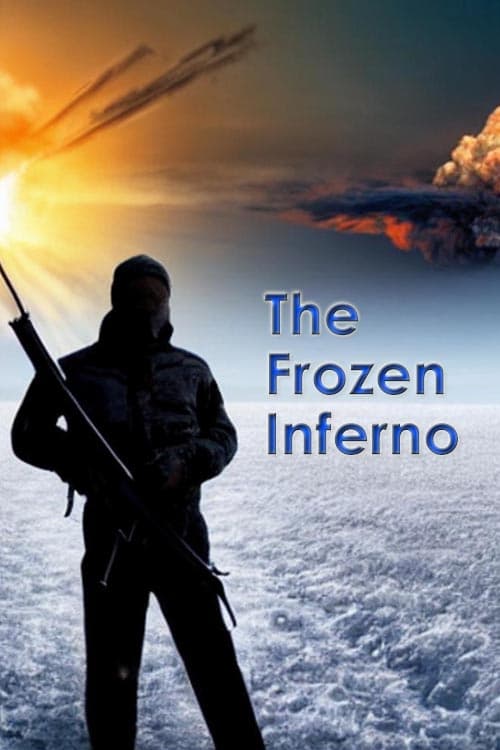




Popular
What motivates the main character to embark on their journey in The Frozen Inferno?
How does the antagonist's backstory influence their actions in The Frozen Inferno?
What pivotal event changes the protagonist's perspective in The Frozen Inferno?
How do the relationships between characters evolve throughout The Frozen Inferno?
What role does the setting play in shaping the events of The Frozen Inferno?
Should I watch it?
Ask Your Own Question

What is the plot?
Joseph Thorne begins the story as a man who already looks half lost to his own sins: a brilliant Denver police detective, sharp enough to solve almost any puzzle and corrupt enough to pocket evidence without a second thought. The first crime scene he walks into is grotesque even by his standards. In a grim Denver location, he finds the body of Jay Cho, a man he recognizes from high school, mutilated in a ritualistic killing that looks almost ceremonial, with chains and flesh arranged in a way that suggests something far more perverse than ordinary murder. Thorne immediately does what defines him throughout the film: instead of treating the scene with integrity, he steals hidden cocaine from the evidence and takes it for himself. Among the disturbing objects at the scene is a strange puzzle box, the Lament Configuration, and a candle containing the severed finger of a child, an image so unnerving that it becomes one of the film's key recurring symbols of innocence violated.
Thorne's partner Tony Nenonen is already positioned as the man who has to help clean up after Thorne's moral collapse, and that dynamic starts almost immediately. Thorne continues digging through the evidence, taking the box with him while fingerprints are analyzed, and he leaves the crime scene with the same casual selfishness that has apparently defined his life for years. At home, the contrast between his professional role and his personal reality becomes sharper: he has a wife, Melanie Thorne, and a young daughter, but he moves through the world as though loyalty is merely another thing he can discard when convenient. Instead of going straight home, he picks up a sex worker named Daphne and takes her to a motel, chasing pleasure and escape rather than truth.
The motel becomes the first true pivot point of the film. Thorne and Daphne drink, use drugs, and sleep together, and Thorne handles the puzzle box in the bathroom, solving it in the midst of his intoxicated detachment. The act of solving it is not presented as a simple mechanical achievement; it feels like a moral threshold being crossed. In the moment he completes the box, the film slips from police procedural into nightmare. He experiences an intense, grotesque vision involving the Cenobite realm, including horrific humanoid figures and the sense that he has invited something inhuman into his life. The box, as the story quickly makes clear, is not merely a clue in a murder case. It is the key to a punishment that has already begun, even if Thorne does not yet understand it.
When he wakes and returns to the precinct, the investigation starts pulling him deeper into a mystery that looks external but gradually turns inward. He learns that the severed finger in the candle belonged to a child of around six or seven who was still alive when it was cut off, which makes the crime not just violent but sadistically theatrical. This detail intensifies Thorne's obsession. The box's fingerprints lead him to Leon Gaultier, a tattoo and piercing specialist, and Thorne confronts him directly. Leon tells him that Jay Cho stole the box from him and that the object belongs to a feared criminal known as the Engineer. This revelation opens the film into what seems, at first, like a wider criminal conspiracy. Thorne begins to believe he is hunting a sadistic mastermind who has been orchestrating the murders.
That belief only grows stronger when Thorne's informant Bernie supplies another thread. Bernie tells him about Daphne and her connection to the Engineer's orbit, including a story about her employer, Terry, who once tried to take a woman he loved away from his boss, only for her to be horrifically murdered. The implication is that the murder network around Thorne is real, tangled, and cruel, and that the child's finger, the puzzle box, and the ritual killings all point toward a hidden underworld of sadism. Thorne throws himself into the case with a mix of obsession and fear, but the more he pursues it, the more the world seems to distort around him. Nightmarish visions begin to intrude into his waking life, and the film keeps forcing the viewer to wonder whether he is unraveling mentally or being deliberately tormented by something beyond his understanding.
The motel thread turns ugly when Thorne and Tony return there. Daphne has been brutalized and is found hanging in the shower, and another child's finger is discovered at the scene, continuing the pattern of the crimes. Tony, despite clearly being disgusted by Thorne's behavior, helps him remove evidence that Thorne was ever there, which reinforces how deeply Thorne's corruption contaminates everyone around him. The murder also hardens the story's tone. The Engineer seems to be stalking Thorne not just through clues, but through an escalating series of personal violations. Every time Thorne thinks he is moving closer to the truth, the case becomes more intimate, more humiliating, and more horrifying.
As the investigation deepens, Thorne's obsession turns into a kind of compulsion. He keeps chasing the Engineer, trying to impose police logic on a mystery that is no longer behaving like a normal case. The film's structure begins to fracture in the same way Thorne's mind does. Hallucinations, sudden flashes of violence, and impossible encounters make the world feel unstable. Thorne sees horrors that seem to come from the very same symbolic universe as the puzzle box, and yet the story also keeps grounding him in concrete evidence, fingerprints, informants, and crime scenes. That tension between the material and the supernatural is what drives the film's dread: Thorne is always one step away from explanation, but never gets there in time to save himself.
The horror becomes unmistakably personal when the investigation turns toward Thorne's own home. At some point in the course of the nightmare, he returns to find Melanie Thorne and their young daughter chained to a flesh pillar in a frozen, hellish state, their bodies exposed to extreme cold. The scene is one of the film's most punishing images, because it destroys any remaining illusion that this is just a crime story. Thorne's family becomes part of the punishment structure. The horror of seeing his wife and daughter suffering in such an inhuman setting strips away the last of his emotional distance. The cruelty is not abstract anymore; it is domestic, intimate, and irreversible. Their deaths are not treated as the result of a conventional killer's gunshot or knife wound, but as the consequence of being trapped in a space of supernatural torment where the cold itself kills them. For Thorne, this is the point where the case stops being something he is solving and becomes something he is trapped inside.
The film continues to collapse his detective narrative into psychological punishment. The Engineer remains the apparent antagonist for much of the middle section, but every clue points in contradictory directions. Instead of a clear human villain, Thorne keeps encountering patterns that suggest he is being herded, not investigated. The child's finger appears again and again as a calling card, and the puzzle box remains the central object around which all these horrors orbit. What began as an evidence item now functions as the key to Thorne's damnation. He keeps moving forward because he thinks there is still a suspect to catch, a truth to expose, and an order to restore. But each answer only reveals a deeper layer of self-incrimination.
When the story reaches its final revelations, the film strips away the detective framework completely. Dr. Paul Gregory, Thorne's psychiatrist figure, is revealed to be Pinhead, the leader of the Cenobites. This is the moment when the movie's entire structure clicks into place: the therapy sessions, the psychiatric framing, the sense that Thorne was being guided or assessed, all become part of a larger apparatus of torture. Pinhead explains that Thorne has not simply been pursuing a murderer. He has been inside the Labyrinth ever since he solved the box. In other words, the world of police work, suspects, informants, and family trauma has been a hellish construct designed to expose the true shape of his soul.
The Engineer is also redefined in that final stretch. He is not merely a human killer moving through the story; he is a personification of Thorne's own cruelty. What Thorne has been chasing externally is actually the embodiment of what he has long been internally: selfish, abusive, exploitative, and morally hollow. That revelation recasts every earlier event. His theft of the cocaine, his infidelity, his use of Daphne, his willingness to bend evidence, and his habitual disregard for the people around him are no longer background character flaws. They are the reason the punishment exists. The child's severed finger becomes one more emblem of the innocence he has destroyed or ignored, and the supposed conspiracy of murders turns into a mirror held up to his own corruption.
The climax arrives when Pinhead fully reveals the trap. Chains and hooks begin to seize Thorne's face and body, making the abstract guilt physically manifest. Pinhead speaks with cold certainty, telling him that this is only the beginning and that he will endure torment again and again, forever. The language of justice here is grotesque and absolute: not trial, not prison, not even death, but repetition without end. Thorne's horror is no longer that he might die; it is that he cannot escape the structure of punishment long enough to understand it as punishment. Every attempt to solve the case has only deepened his sentence.
The final scenes complete the transformation from detective story to metaphysical condemnation. Thorne's investigation, his confrontations with Leon Gaultier and Bernie, his connection to Daphne, and even the fate of his family all fold into the same revelation: he was never hunting the Engineer in any normal sense. He was being shown the architecture of his own damnation. The Cenobites claim him completely, and the film ends not with legal closure or emotional redemption, but with the logic of infernal recurrence. Thorne is left to repeat the same horrors as a consequence of the life he has led, trapped in an eternity of punishment where every clue leads back to himself.
If you want, I can also provide a scene-by-scene chronological version with every major beat broken down in order, while keeping the same full-spoiler approach.


What is the ending?
In the ending of "The Frozen Inferno," the main characters confront the consequences of their actions in a climactic showdown. The protagonist, driven by a desire for redemption, faces off against the antagonist in a battle that tests their resolve. Ultimately, the protagonist emerges victorious but at a great personal cost, leading to a bittersweet resolution where they must come to terms with their past and the sacrifices made along the way.
As the final act unfolds, the scene opens in a desolate, icy landscape, the remnants of a fierce battle still visible. The protagonist, a rugged and determined figure, stands amidst the snow, his breath visible in the frigid air. He is haunted by memories of his past mistakes, which have led him to this moment. The weight of his choices presses heavily on his shoulders, and he knows that this confrontation is not just about survival but also about seeking redemption.
The antagonist, a menacing presence cloaked in shadows, emerges from the swirling snow. Their eyes glint with malice, and a chilling laugh echoes through the icy expanse. The tension is palpable as the two face each other, each representing opposing forces--one seeking redemption, the other reveling in chaos. The protagonist's heart races, fueled by a mix of fear and determination. He knows that he must confront not only the antagonist but also the darkness within himself.
As the battle commences, the protagonist charges forward, adrenaline coursing through his veins. The clash of their wills sends shockwaves through the air, each strike resonating with the weight of their shared history. The protagonist fights not just for his own life but for the lives of those he cares about, and each blow is infused with the hope of a better future. The antagonist, however, is relentless, taunting the protagonist with reminders of his past failures, attempting to break his spirit.
In a pivotal moment, the protagonist finds himself on the brink of defeat, the cold biting at his skin, and despair creeping into his heart. But as he looks around at the desolation, he remembers the people he has lost and the love that once filled his life. This memory ignites a fire within him, a fierce resolve that propels him to rise once more. With renewed strength, he launches a final, desperate attack, channeling all his pain and hope into one decisive blow.
The impact is thunderous, and for a moment, time seems to stand still. The antagonist stumbles back, shock etched across their face, before collapsing into the snow. The protagonist stands over them, breathing heavily, the weight of victory mingling with the sorrow of loss. He realizes that while he has defeated the antagonist, the scars of his past will always remain.
As the scene shifts, the protagonist walks away from the battlefield, the icy winds swirling around him. He is a changed man, carrying the burden of his choices but also the hope of redemption. The camera lingers on his face, capturing the mix of pain and determination as he steps into the unknown, ready to face whatever comes next.
In the final moments, the screen fades to black, leaving the audience with a sense of closure yet an understanding that the journey of healing and redemption is ongoing. The fate of the protagonist is one of survival, but it is also a path filled with reflection and the promise of a new beginning, even in the face of a frozen inferno.
Is there a post-credit scene?
The movie "The Frozen Inferno," produced in 2000, does not feature a post-credit scene. The film concludes its narrative without any additional scenes or content after the credits roll. The story wraps up with a sense of finality, leaving the audience with the emotional weight of the characters' journeys and the resolution of the central conflict.
What motivates the main character to embark on their journey in The Frozen Inferno?
The main character, driven by a deep sense of loss and a quest for redemption, embarks on a perilous journey to confront their past and seek justice for a tragedy that haunts them. This internal conflict propels them forward, as they grapple with feelings of guilt and the desire to make amends.
How does the antagonist's backstory influence their actions in The Frozen Inferno?
The antagonist's backstory reveals a tragic childhood marked by betrayal and abandonment, which fuels their desire for power and control. This emotional turmoil manifests in their ruthless actions throughout the film, as they seek to create a world where they can never be hurt again, leading to a clash with the protagonist.
What pivotal event changes the protagonist's perspective in The Frozen Inferno?
A pivotal event occurs when the protagonist witnesses the destruction of a village by the antagonist's forces, leading to the loss of innocent lives. This moment shatters their previous beliefs about justice and vengeance, forcing them to reevaluate their motivations and the consequences of their actions.
How do the relationships between characters evolve throughout The Frozen Inferno?
The relationships between characters evolve significantly, particularly between the protagonist and their closest ally. Initially marked by distrust, their bond deepens as they face challenges together, revealing vulnerabilities and shared goals. This evolution highlights themes of loyalty and sacrifice, culminating in a powerful moment of solidarity.
What role does the setting play in shaping the events of The Frozen Inferno?
The setting, a harsh and unforgiving frozen landscape, plays a crucial role in shaping the events of the film. It serves as a constant reminder of the characters' struggles and the stakes involved in their quest. The extreme conditions force characters to confront their limitations and fears, ultimately influencing their decisions and relationships.
Is this family friendly?
"The Frozen Inferno," produced in 2000, is not considered family-friendly due to several potentially objectionable or upsetting scenes.
-
Violence and Gore: The film contains graphic depictions of violence, including intense fight scenes and injuries that may be disturbing for younger viewers.
-
Tense Situations: There are moments of high tension and suspense that could be frightening, particularly for sensitive audiences. Characters face life-threatening situations that evoke fear and anxiety.
-
Dark Themes: The narrative explores themes of survival in extreme conditions, which may be unsettling. The emotional weight of despair and hopelessness is prevalent throughout the film.
-
Mature Language: The dialogue includes strong language that may not be suitable for children.
-
Emotional Distress: Characters experience significant emotional turmoil, including loss and betrayal, which could be upsetting for younger viewers or those sensitive to such themes.
Overall, the film's intense atmosphere and mature content make it more appropriate for adult audiences.








