
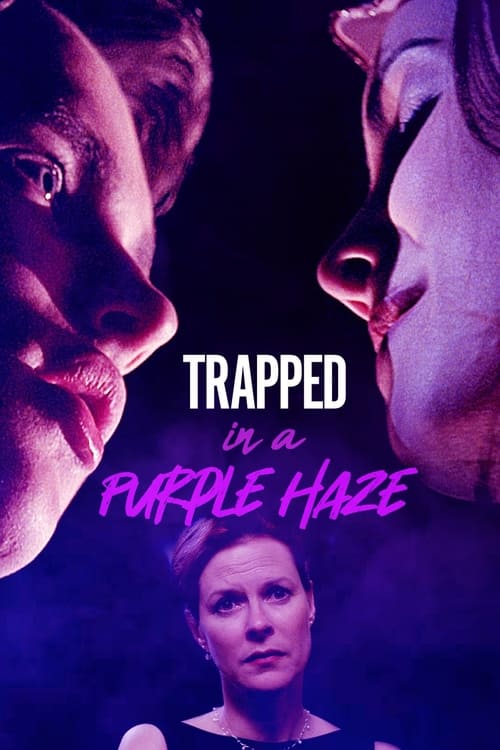












Popular
What role does the character of 'Jake' play in Megan's journey?
What challenges does the main character face while trying to escape the purple haze?
How does Megan's relationship with her friends evolve throughout the film?
What are the significant turning points in Megan's character development?
How does the visual representation of the purple haze affect the storytelling?
Should I watch it?
Ask Your Own Question

What is the plot?
Max Hanson begins the film in Chicago as the kind of teenager who seems to have everything and still feels trapped inside it: he is a gifted artist, a college student, and a hockey player, but his life is squeezed between his own uncertain desires and the ambitions of the people around him. His mother, Sophie Hanson, is the force that presses hardest. She is a former artist whose own career was interrupted by family life, and she now projects her unrealized dreams onto her son, pushing him to take art seriously and treat it as his future. Max, however, is far more interested in hockey, ordinary freedom, and the small, unremarkable pleasures of being young. His father, Ed Hanson, stands in contrast to Sophie. Ed is a tax attorney, easygoing where Sophie is intense, and he mostly wants Max to be happy rather than shaped into someone else's idea of success. The house already feels tense at the start of the story, with Sophie watching, correcting, and hoping, while Max quietly resists in every way he can. The emotional setup is clear from the beginning: Max is not yet addicted to anything except the feeling of not belonging to his own life.
The first loosening thread appears at the video rental store where Max works with his friends Orin and Kate. It is a normal, almost comforting setting in the middle of Chicago life, a place of boredom, banter, and routine. Then a girl comes in with her friends looking for a copy of Arachnophobia, and Max is instantly taken with her. She is Molly White, and she seems to arrive like the opposite of everything in his life at home. She is confident, a little rude, a little mysterious, and completely unburdened by the expectations that crush Max. She already knows his name from the hockey jersey he wears, which makes the encounter feel even more like fate to him, as though she has seen him before he has even properly seen himself. The next day he tracks her down on campus, and she introduces herself, gives him her phone number, and invites him to a party that night. The invitation is the first doorway into her world, and Max walks through it without understanding how far it leads.
Their relationship sparks quickly. Molly is seductive not only because she is attractive, but because she seems to embody a kind of dangerous freedom Max has never been allowed to imagine for himself. Before long they are an item, and the relationship moves from flirtation into intimacy with startling speed. In one of the film's earliest and most unsettling domestic disruptions, they even make love in Max's bedroom while Sophie and Max's younger sister Chloe are in the house. The scene is important because it shows how completely Molly begins to occupy Max's private world, not just his romantic life. She is no longer an escape from his family pressures; she is inside them. The family house itself begins to feel contaminated by secrecy and rebellion.
Then the truth of Molly's life begins to emerge. Max follows her on a trip to score heroin, and in doing so he enters the hidden infrastructure of addiction. Molly does not just dabble; she uses the drug with the confidence of someone for whom it is already a habit, a coping mechanism, a refuge. The moment she uses, the film's central trap snaps shut. Max is no longer merely a boyfriend trying to understand a troubled girl. He is now standing at the edge of a collapse he does not yet recognize as such. The act of seeing her use heroin strips away the illusion that her carefree attitude is innocence. What looked like spontaneity is revealed as damage.
The next major turning point comes when Molly celebrates their new connection by shooting up with Max in her apartment. This is the moment where the relationship stops being an outside temptation and becomes a shared dependency. Max takes the drug, and almost immediately the film begins its downward spiral. His judgment blurs, his focus loosens, and the things that once gave his life shape begin to fall away. School loses its importance. Hockey becomes harder to hold onto. Work becomes an afterthought. The high is not just chemical; it is emotional anesthesia, a way of not feeling the growing conflict between who he is and who he has been told to be.
Molly's apartment becomes one of the film's key spaces, a place that initially seems like an escape from Sophie's pressure but gradually reveals itself as another kind of cage. It is where Max and Molly use, where their relationship deepens into dependence, and where the practical failures of Molly's life become impossible to ignore. At one point it is revealed that she is three months behind on rent and has only a week to pay before eviction. The detail matters because it exposes the fragility beneath her pose of freedom. She is not simply living on the edge for the thrill of it; she is already close to being pushed off. Max, who is barely holding himself together, cannot save her, and his inability to solve her problems mirrors his own growing helplessness. He tries, in the small way a desperate teenager can, to find money and make things right, but he is always too late, too broke, too compromised.
Meanwhile, Sophie's pressure at home becomes sharper and more painful because she is not merely a controlling parent in the abstract; she is a woman haunted by her own past. She has given up the career she wanted and sees Max as the vessel for the life she lost. That history gives her demands an ache that goes beyond simple tyranny. She does not just want Max to succeed. She needs him to validate the sacrifices she believes she made. This makes every conversation between mother and son feel like a collision between grief and rebellion. Max repeatedly seeks help from his parents as things unravel, and Sophie repeatedly fails to reach him, not because she does not care, but because she cares so possessively that she cannot see him clearly.
As Max's heroin use grows, the film shows the broader collapse of his daily life. He becomes less reliable at school and at work. At the video store, a small but devastating scene captures how far he has already drifted: he goes to pick up his paycheck, only to discover that because he worked only two hours that week, there is almost no money waiting for him, and he is handed a pink slip as well. The moment is humiliating not because of the money itself, but because it tells the truth in plain language. Max is no longer functioning as a student, athlete, employee, or son. He is becoming a person whose life is organized around the next fix, and everything else is being sold off in pieces.
His hockey career, which once represented a real passion rather than a parent's dream, also begins to slip away. The ice rink, like the family home and the apartment, becomes another setting in which Max's identity is tested and then weakened by what he is doing to himself. His friends notice the change. His discipline dissolves. His body and attention are no longer entirely his own. The film carefully builds the sense that heroin is not simply ruining one part of Max's life; it is eating through all of it at once. School, work, family, friends, and sport all begin to lose their force as the addiction takes over the center.
The relationship between Max and Molly becomes increasingly poisonous even as it remains emotionally binding. Molly is not presented as a simple villain. She is damaged, secretive, and self-destructive, but the film also makes it clear that she is herself escaping trauma and instability. She is from a troubled suburban background, and the freedom she projects is a performance covering the fact that she has already been living in survival mode. For Max, Molly is both the person who offers him an exit from his mother's control and the person who leads him into a deeper captivity. The title of the film takes on its full meaning here: the "purple haze" is not only the narcotic cloud of heroin, but the emotional blur that prevents him from seeing what is happening until it is almost impossible to reverse.
Tension with Sophie escalates as Max's behavior grows more erratic. He lies, withdraws, and becomes impossible to reason with. One of the more painful confrontations comes when Ed notices something wrong and gently tries to approach the subject. He even offers help, which makes the argument that follows feel especially tragic because it is one of the few moments in the film where a parent truly tries to meet Max halfway. But the family conflict cannot remain gentle for long. The situation turns ugly, and Sophie strikes Max in a moment of fury and panic. That blow is not just physical; it is the shattering of whatever illusion remained that this family can simply talk its way out of the crisis. Love and control have become indistinguishable. Concern has become violence. Max, already unraveling, is now left with the additional wound of being hit by the person who wants to save him most.
At this point the film's rhythm becomes one of deterioration and repeated attempts at rescue. Max keeps reaching for help, but the help arrives too late or in the wrong form. Sophie's anger masks fear. Ed's kindness cannot outmatch the grip of addiction. Molly keeps sliding deeper into the same destruction she first presented as glamorous. Their lives become linked in a grim loop of need, money problems, deception, and relapse. Max's desperation eventually drives him to take money from Ed's wallet, another sign of how far his judgment has fallen. Even that theft does not bring relief; it only confirms that he is now acting from the logic of addiction rather than any stable moral center.
The final stretch of the story tightens around Max and Molly as their relationship begins to break apart under the weight of the very drug that bound them together. The film's last major emotional revelation is not a sudden secret but the full visible truth of what has already been happening all along: Molly is not free, Max is not in control, and the romance that once seemed rebellious has become lethal. After a conflict between them, Molly leaves and goes to a hotel. The setting matters because hotels in the film feel temporary and anonymous, a place where a person can disappear without witnesses. It is there, alone, that she uses heroin again. This time she overdoses.
The death is the film's only major on-screen fatality, and it belongs to Molly White. She dies from a heroin overdose after taking a "golden shot," with Max unable to stop what is already in motion. The tragic irony is devastating: the girl who first seemed like the embodiment of life without rules ends up alone in a sterile room, destroyed by the very escape she used to survive. Max reaches the hotel too late. When he finds her, the moment confirms the irreversibility of the damage. There is no dramatic rescue, no last-minute reversal. The movie refuses to soften the consequence. Molly is dead, and Max is left to confront the fact that the person who drew him into the drug world has been consumed by it before he can save her or himself.
The aftermath brings the story back to the family it was always circling. Sophie finally has to face what she has done and what she has failed to see. In one of the film's most emotionally direct moments, she acknowledges that she never truly saw Max for who he is. Her tone changes from command to surrender, and she tells him she loves him and that he should be whatever he wants. It is a crucial release in the mother-son conflict, because for the first time Sophie stops trying to shape him into an answer to her own abandoned life. The line lands not as a magical fix, but as a painful admission that her love had become entangled with control. She gives up the fantasy of ownership and finally offers acceptance instead.
The final resolution is quiet and fragile rather than triumphant. Max says goodbye to Brian and Chloe before leaving for rehab with Ed. That departure is the film's closing movement, a final attempt to pull him away from the spiral and into treatment. The fact that Ed accompanies him suggests that the father-son bond, calmer and less coercive than the bond with Sophie, may now be the more stable path forward. The ending does not pretend that recovery will be easy or that the damage is undone. Molly is dead, the family has been scarred, and Max has lost a great deal of his youth to addiction. But the last scene still leaves room for the possibility of survival. Max leaves Chicago behind the way a person leaves a battlefield: shaken, grieving, and not yet healed, but at least moving toward help instead of away from it.
More Movies Like This
Browse All Movies →







What is the ending?
In the ending of "Trapped in a Purple Haze," the protagonist, a young man named Jake, confronts the reality of his life choices and the impact of his drug use. After a series of intense and surreal experiences, he ultimately decides to seek help and turn his life around. The film concludes with a sense of hope as Jake begins to take the first steps toward recovery, leaving behind the chaos of his past.
As the final act unfolds, the scene opens with Jake sitting alone in a dimly lit room, the remnants of his chaotic lifestyle scattered around him. The walls are adorned with graffiti and remnants of his past, symbolizing the turmoil he has faced. He stares blankly at a mirror, his reflection a haunting reminder of the person he has become. The weight of his decisions presses heavily on his shoulders, and the internal struggle is palpable as he grapples with feelings of despair and hopelessness.
In a pivotal moment, Jake receives a phone call from his estranged mother, who expresses her concern and love for him. Her voice, filled with emotion, cuts through the haze of his drug-induced stupor. This connection stirs something deep within him, igniting a flicker of hope. He realizes that he is not alone in his battle; there are people who care about him and want to see him succeed.
The scene shifts to a flashback of happier times, where Jake is seen laughing with friends and enjoying life without the influence of drugs. This juxtaposition serves as a stark reminder of what he has lost and what he could regain if he chooses to fight for his future. The memories flood his mind, and he begins to understand the importance of reclaiming his life.
With newfound determination, Jake stands up, shaking off the remnants of his past. He walks out of the room, leaving behind the chaos and confusion that once consumed him. The camera follows him as he steps into the sunlight, symbolizing a new beginning. The brightness of the day contrasts sharply with the darkness he has been living in, representing the hope and clarity that comes with making the right choices.
In the final scenes, Jake is seen attending a support group meeting, surrounded by others who share similar struggles. The atmosphere is filled with a sense of camaraderie and understanding, as each person shares their story. Jake listens intently, nodding in recognition of their pain and resilience. He finally stands up to share his own story, his voice trembling but filled with sincerity. This moment signifies his commitment to change and his willingness to confront his demons.
As the film draws to a close, the camera pans out, capturing the group in a circle, united in their fight against addiction. Jake's face reflects a mixture of vulnerability and strength, embodying the journey he has embarked upon. The screen fades to black, leaving the audience with a sense of hope and the understanding that recovery is a continuous process, filled with challenges but also the possibility of redemption.
In summary, Jake's fate is one of transformation; he chooses to embrace the path of recovery, reconnecting with his family and seeking support from others. The film emphasizes the importance of community, love, and the strength it takes to confront one's past in order to build a better future.
Is there a post-credit scene?
"Trapped in a Purple Haze," produced in 2000, does not feature a post-credit scene. The film concludes its narrative without any additional scenes or content after the credits roll. The story wraps up with the main character, a young woman named Kelsey, having navigated her struggles with identity and the challenges posed by her environment, leaving the audience with a sense of resolution regarding her journey. The film focuses on her emotional growth and the relationships she has built throughout the story, culminating in a poignant ending that emphasizes her newfound strength and clarity.
What role does the character of 'Jake' play in Megan's journey?
Jake serves as both a love interest and a source of conflict for Megan. He embodies the life she desires but also represents the distractions that pull her deeper into the haze. Throughout the film, his presence challenges Megan to confront her feelings of inadequacy and fear of commitment. As the story progresses, Jake becomes a catalyst for Megan's growth, pushing her to make difficult choices about her future.
What challenges does the main character face while trying to escape the purple haze?
The main character, a young woman named 'Megan', faces numerous challenges while trying to escape the purple haze, including battling her own fears and insecurities. She encounters surreal and disorienting environments that test her mental strength, as well as confrontations with shadowy figures that represent her inner demons. Each challenge forces her to confront her past and the choices that led her to this point.
How does Megan's relationship with her friends evolve throughout the film?
Megan's relationship with her friends is strained as the purple haze begins to affect their perceptions and interactions. Initially, they are supportive, but as the haze deepens, misunderstandings and conflicts arise. Megan feels increasingly isolated, leading to moments of tension where her friends question her sanity. Ultimately, their bond is tested, but they come to realize the importance of unity in overcoming the haze.
What are the significant turning points in Megan's character development?
Significant turning points in Megan's character development include her initial acceptance of the haze as a part of her life, followed by a moment of clarity where she realizes she must confront her fears. Another pivotal moment occurs when she chooses to stand up to the shadowy figures, symbolizing her acceptance of her past mistakes. This transformation is marked by her growing determination to reclaim her life and break free from the haze.
How does the visual representation of the purple haze affect the storytelling?
The visual representation of the purple haze is crucial to the storytelling, as it serves as a metaphor for Megan's internal struggles. The haze is depicted with swirling colors and distorted imagery, creating a dreamlike atmosphere that reflects her confusion and emotional turmoil. As the haze thickens, the visuals become more chaotic, mirroring her descent into despair. Conversely, as she begins to confront her issues, the visuals shift to clearer, more vibrant colors, symbolizing her path to clarity and resolution.
Is this family friendly?
"Trapped in a Purple Haze" is a drama that explores themes of addiction, family struggles, and the impact of substance abuse. While it does not contain explicit content, there are several elements that may be considered objectionable or upsetting for children or sensitive viewers:
-
Substance Abuse: The film deals with the effects of drug use and addiction, which may be distressing for younger audiences or those sensitive to such topics.
-
Emotional Turmoil: Characters experience significant emotional pain, including feelings of despair, loss, and conflict, which could be heavy for younger viewers to process.
-
Family Conflict: There are scenes depicting strained family relationships and arguments, which may be uncomfortable for children to witness.
-
Depictions of Consequences: The film shows the negative consequences of addiction on individuals and their families, which could be upsetting.
-
Intense Situations: Some scenes may involve intense emotional confrontations or moments of crisis that could be alarming.
Overall, while the film does not contain graphic violence or explicit content, its themes and emotional weight may not be suitable for all children or sensitive viewers.









