
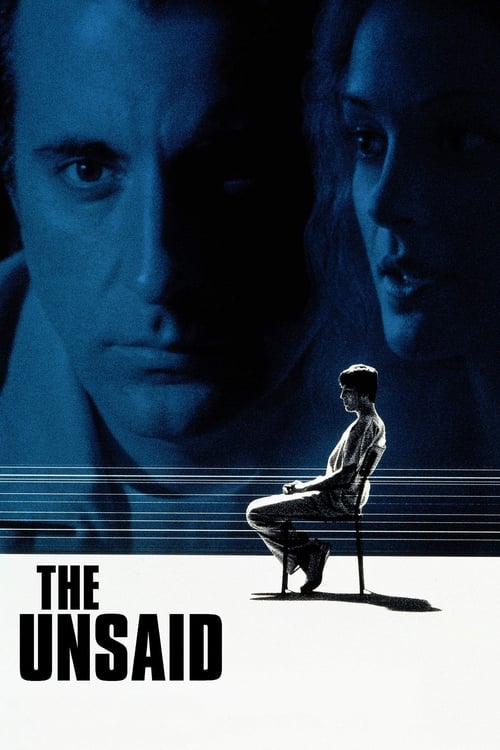















Popular
What is the significance of the character Michael's relationship with his son?
How does the character of the therapist, Dr. Lila, influence Michael's journey?
What role does the character of the young boy, Tommy, play in the story?
How does the setting of the film contribute to the mood and themes?
What are the key moments that lead to Michael's realization about his past?
Should I watch it?
Ask Your Own Question

What is the plot?
Sorry, we aren't able to watch and write up a full detailed plot yet. Check back in a few days.








What is the ending?
In the ending of "The Unsaid," Michael, the protagonist, confronts the truth about his son's death and the events surrounding it. He finally comes to terms with his grief and guilt, leading to a cathartic resolution. The film concludes with Michael finding a sense of peace, while the other characters also begin to heal from their traumas.
As the film approaches its climax, we find Michael, played by Andy Garcia, deeply entrenched in his emotional turmoil. He has been grappling with the tragic death of his son, which has haunted him for years. The narrative builds tension as Michael's investigation into the circumstances of his son's death leads him to confront painful memories and unresolved feelings.
In a pivotal scene, Michael meets with a woman named Claire, who has been a significant figure in his journey. She represents a connection to the past and a potential path toward healing. Their conversation is charged with emotion, as Michael reveals the depth of his sorrow and the weight of his guilt. Claire listens intently, her presence offering him a glimmer of hope amidst his despair.
As Michael delves deeper into the mystery surrounding his son's death, he uncovers crucial information that leads him to confront the truth. This moment is marked by a series of flashbacks that illustrate the bond he shared with his son, juxtaposed against the tragedy that tore them apart. The visuals are poignant, capturing the innocence of their relationship and the stark contrast of Michael's current state of grief.
In the climax, Michael faces the individual responsible for his son's death. This confrontation is fraught with tension, as Michael struggles between his desire for vengeance and the need for closure. The emotional stakes are high, and the audience can feel the weight of his internal conflict. Ultimately, Michael chooses to let go of his anger, realizing that holding onto it only prolongs his suffering. This decision marks a significant turning point in his character arc.
The film concludes with Michael standing at his son's grave, a place that has been a source of pain for him. In this moment of solitude, he reflects on his journey and the lessons he has learned. The camera captures the serene landscape around him, symbolizing the peace he has finally found. As he speaks to his son, there is a sense of reconciliation, both with his son's memory and with himself.
In the final scenes, we see Michael beginning to rebuild his life. He reconnects with Claire, hinting at the possibility of a new relationship that could help him move forward. The film closes on a hopeful note, suggesting that while the past will always be a part of him, he is ready to embrace the future.
The fates of the main characters are intertwined with this resolution. Michael, having faced his demons, is on a path toward healing. Claire, who has supported him throughout his journey, stands by his side as he takes these first steps. The film leaves the audience with a sense of closure, emphasizing the importance of confronting one's past to find peace and the potential for new beginnings.
Is there a post-credit scene?
The movie "The Unsaid," produced in 2001, does not have a post-credit scene. The film concludes its narrative without any additional scenes after the credits roll. The story wraps up with a focus on the emotional resolution of the main characters, particularly the protagonist, Michael, as he comes to terms with his past and the tragic events surrounding his son's death. The film emphasizes themes of grief, guilt, and the struggle for redemption, leaving the audience with a sense of closure rather than an open-ended continuation.
What is the significance of the character Michael's relationship with his son?
Michael's relationship with his son is central to the narrative, showcasing his struggle with guilt and grief after the tragic death of his son, which he feels responsible for. This relationship drives his actions throughout the film as he attempts to connect with his son's memory and find redemption.
How does the character of the therapist, Dr. Lila, influence Michael's journey?
Dr. Lila serves as a catalyst for Michael's emotional healing. Through their sessions, she encourages him to confront his past and the trauma surrounding his son's death, helping him to articulate his feelings and ultimately guiding him towards acceptance and understanding.
What role does the character of the young boy, Tommy, play in the story?
Tommy represents a pivotal figure in Michael's journey, as he becomes a surrogate for the son Michael lost. Their interactions evoke Michael's unresolved feelings of loss and guilt, pushing him to confront his past and seek closure.
How does the setting of the film contribute to the mood and themes?
The film's setting, often depicted in somber, muted tones, reflects Michael's internal turmoil and emotional state. The contrast between the serene landscapes and Michael's chaotic mind emphasizes his struggle with grief and the haunting memories of his son.
What are the key moments that lead to Michael's realization about his past?
Key moments include flashbacks that reveal Michael's memories of his son, conversations with Dr. Lila that challenge his perceptions, and encounters with Tommy that force him to confront his unresolved feelings. These moments build up to a climax where Michael must face the truth about his past actions and their consequences.
Is this family friendly?
"The Unsaid," produced in 2001, is a drama that deals with heavy themes and emotional turmoil, making it less suitable for younger audiences or sensitive viewers. Here are some potentially objectionable or upsetting aspects:
-
Themes of Grief and Loss: The film centers around the emotional struggles of a father dealing with the death of his son, which may be distressing for children or those sensitive to themes of loss.
-
Depictions of Trauma: There are scenes that explore the psychological impact of trauma, including flashbacks and emotional breakdowns, which could be unsettling.
-
Substance Abuse: The film touches on issues of addiction and the effects it has on family dynamics, which may be inappropriate for younger viewers.
-
Intense Emotional Scenes: The characters experience significant emotional pain, leading to confrontational and intense moments that could be overwhelming.
-
Suicidal Ideation: The narrative includes references to suicidal thoughts and actions, which can be particularly triggering for sensitive individuals.
Overall, the film's exploration of complex emotional issues and its intense subject matter may not be suitable for children or those who are easily upset.









