
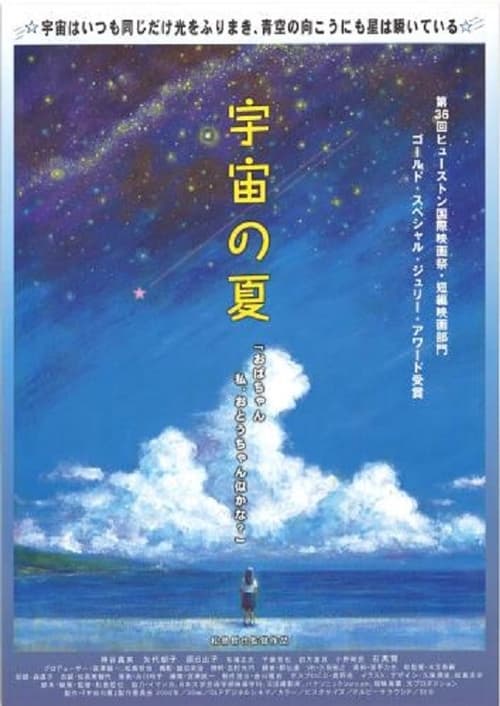







Popular
What is the significance of the summer festival in Uchū no natsu?
How does the character of Kōhei evolve throughout the film?
What role does the mysterious girl play in Kōhei's journey?
How do the friendships among the main characters impact the story?
What is the significance of the recurring motif of the stars in Uchū no natsu?
Should I watch it?
Ask Your Own Question

What is the plot?
Sorry, we aren't able to watch and write up a full detailed plot yet. Check back in a few days.








What is the ending?
In the ending of "Uchū no natsu," the main characters, a group of children, successfully launch a homemade rocket into space. They experience a mix of joy and bittersweet emotions as they realize their dreams have come true, but they also confront the reality of growing up and the changes that lie ahead. The film concludes with a sense of hope and the promise of new beginnings.
As the final scenes unfold, the children gather at their launch site, a makeshift area in a field where they have spent countless hours preparing for this moment. The sun is setting, casting a warm golden hue over the landscape, symbolizing both the end of their childhood and the dawn of new adventures. The air is thick with anticipation and excitement, as they huddle together, their hearts racing with a blend of fear and exhilaration.
The leader of the group, a boy named Kōhei, stands at the forefront, his eyes shining with determination. He reflects on the journey they have taken to reach this point, recalling the challenges they faced, the friendships they forged, and the dreams they nurtured. His internal struggle is palpable; he grapples with the idea of leaving behind the innocence of childhood while also yearning for the future that awaits them.
As the countdown begins, the camera captures the anxious faces of his friends--each one a unique blend of hope and trepidation. There's Yuki, who has always been the dreamer, her eyes filled with wonder as she imagines the stars. Then there's Satoshi, the practical one, who worries about the rocket's success but supports his friends wholeheartedly. The group shares a moment of silence, a collective breath before the leap into the unknown.
With a loud roar, the rocket ignites and lifts off the ground, soaring into the sky. The children cheer, their voices echoing in the twilight. They watch in awe as the rocket ascends, leaving behind a trail of smoke that dissipates into the evening sky. This moment is a culmination of their hard work and dreams, a testament to their friendship and determination.
As the rocket disappears into the vastness of space, the children's expressions shift from joy to a bittersweet realization. They understand that this moment signifies a turning point in their lives. Kōhei, feeling the weight of this transition, looks at his friends and sees the mixture of emotions reflected in their faces. They are no longer just children; they are on the brink of adulthood, with all its complexities and challenges.
The film closes with a shot of the night sky, filled with stars, as the children stand together, united in their shared experience. They may be stepping into a new phase of life, but the bond they have formed will remain a guiding light. Each character's fate is intertwined with this moment; they will carry the memories of their childhood and the lessons learned into their futures.
Kōhei, Yuki, and Satoshi, along with their friends, are left with a sense of hope and possibility. They may face uncertainties ahead, but they have each other and the dreams that propelled them to this moment. The film ends on a note of optimism, suggesting that while childhood may end, the spirit of adventure and friendship will continue to guide them as they navigate the complexities of life.
Is there a post-credit scene?
In the movie "Uchū no Natsu," there is no post-credit scene. The film concludes its narrative without any additional scenes after the credits roll. The story wraps up with a sense of closure, focusing on the emotional journeys of the characters and their experiences throughout the film. The absence of a post-credit scene allows the audience to reflect on the themes of connection, loss, and the vastness of space that the film explores.
What is the significance of the summer festival in Uchū no natsu?
The summer festival serves as a pivotal backdrop for the characters' emotional journeys. It symbolizes the fleeting nature of youth and the connections formed during this time. The vibrant colors, sounds of laughter, and the scent of festival food create a nostalgic atmosphere that heightens the characters' longing for connection and the bittersweet nature of their experiences.
How does the character of Kōhei evolve throughout the film?
Kōhei begins as a reserved and introspective boy, struggling with feelings of isolation and the pressure of expectations. As the story unfolds, particularly through his interactions with his friends and the events of the summer festival, he learns to embrace his emotions and confront his fears. This evolution is marked by moments of vulnerability, such as when he shares his dreams and insecurities, ultimately leading to a deeper understanding of himself and his relationships.
What role does the mysterious girl play in Kōhei's journey?
The mysterious girl represents Kōhei's idealized vision of connection and love. Her enigmatic presence sparks curiosity and longing within him, serving as a catalyst for his emotional growth. As Kōhei navigates his feelings for her, he grapples with the complexities of young love, ultimately leading him to confront his own desires and the reality of relationships.
How do the friendships among the main characters impact the story?
The friendships among the main characters are central to the narrative, providing both support and conflict. Each character brings their own struggles and aspirations, which are explored through their interactions. The dynamics of loyalty, jealousy, and camaraderie are vividly portrayed, particularly during key moments like the festival, where their bonds are tested and strengthened, highlighting the importance of friendship in navigating the challenges of adolescence.
What is the significance of the recurring motif of the stars in Uchū no natsu?
The stars serve as a powerful motif throughout the film, symbolizing hope, dreams, and the vast possibilities of the future. They often appear during moments of introspection for Kōhei and his friends, reflecting their aspirations and fears. The night sky becomes a canvas for their dreams, contrasting with the realities they face, and ultimately guiding them toward self-discovery and acceptance.
Is this family friendly?
"Uchū no natsu," or "Summer in Space," is a Japanese film that combines elements of science fiction with a coming-of-age story. While the film is generally suitable for family viewing, there are a few aspects that may be considered objectionable or upsetting for children or sensitive viewers:
-
Emotional Themes: The film explores themes of loss, longing, and the challenges of growing up, which may evoke strong emotions. Some scenes depict characters dealing with feelings of isolation and sadness.
-
Mild Violence: There are moments of tension that may include mild peril or conflict, which could be unsettling for younger viewers.
-
Existential Questions: The film raises philosophical questions about life, purpose, and the universe, which might be confusing or overwhelming for children.
-
Character Struggles: Some characters face personal struggles and conflicts that may be intense, including feelings of inadequacy or fear of the unknown.
Overall, while "Uchū no natsu" is not overtly graphic or violent, its emotional depth and thematic content may require parental guidance for younger audiences.









