











Popular
What motivates Ruth to support her husband in his transition?
How does Roy's decision to transition affect his relationship with his children?
What role does the small-town setting play in the story?
How does Roy's character evolve throughout the film?
What are the key moments that highlight Ruth's internal conflict regarding Roy's transition?
Should I watch it?
Ask Your Own Question

What is the plot?
Sorry, we aren't able to watch and write up a full detailed plot yet. Check back in a few days.
More Movies Like This
Browse All Movies →







What is the ending?
In the ending of the movie "Normal," Roy, who has been struggling with his identity and the desire to transition to a woman, finally takes a significant step towards living authentically. He undergoes gender confirmation surgery, which symbolizes his commitment to embracing his true self. The film concludes with Roy, now going by the name Ruth, stepping into a new life, while his family grapples with the changes and the impact on their relationships.
As the final scenes unfold, we see Roy, who has been living a dual life, finally making the decision to transition. The emotional weight of this choice is palpable, as he prepares for the surgery that will allow him to become Ruth. The scene is filled with tension, as Roy's family, particularly his wife Irma, struggles to come to terms with the transformation. Irma's internal conflict is evident; she loves Roy but is also deeply affected by the changes that threaten their marriage and family dynamics.
In the hospital, the atmosphere is charged with anticipation and anxiety. Roy, now in a hospital gown, is surrounded by medical staff who are supportive yet professional. The moment before the surgery is a poignant one, filled with a mix of fear and hope. Roy's face reflects a deep sense of resolve, as he understands that this surgery is not just a physical change but a crucial step towards living authentically.
As the surgery takes place, the film cuts to Irma, who is in the waiting room, visibly distressed. She grapples with her feelings of loss and confusion, reflecting on the life they built together and the uncertainty of what lies ahead. The juxtaposition of Roy's transformation and Irma's emotional turmoil highlights the complexities of their relationship.
After the surgery, we see Ruth waking up in the recovery room. The first moments are filled with a sense of relief and liberation. Ruth's expression conveys a newfound sense of peace, as if a heavy burden has been lifted. The camera lingers on her face, capturing the joy and apprehension of stepping into her new identity.
In the following scenes, Ruth begins to navigate her new life. She faces challenges, including the reactions of her family and community. Irma, still struggling with her feelings, attempts to support Ruth but is also confronted with her own fears and uncertainties about their future together. Their interactions are fraught with tension, as they both seek to understand each other in this new reality.
The film concludes with a powerful scene where Ruth stands outside, taking in the world around her. The sunlight bathes her in warmth, symbolizing hope and new beginnings. The final moments are filled with a sense of possibility, as Ruth embraces her identity and the journey ahead, while Irma watches from a distance, still processing the changes but beginning to accept Ruth for who she is.
In summary, the ending of "Normal" encapsulates the themes of identity, transformation, and the complexities of love and acceptance. Each character's fate is intertwined with the central conflict of self-discovery and the impact of societal norms on personal relationships. Ruth steps into her new life with courage, while Irma's journey towards understanding and acceptance remains ongoing, leaving the audience with a sense of both resolution and uncertainty.
Is there a post-credit scene?
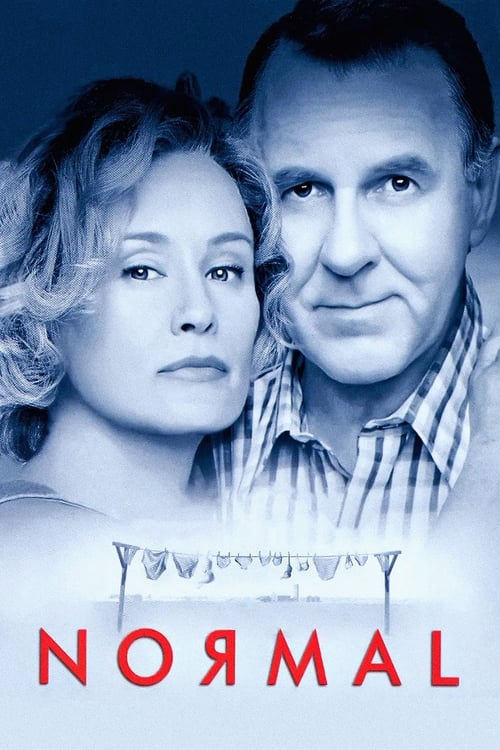
The movie "Normal," produced in 2003, does not have a post-credit scene. The film concludes its narrative without any additional scenes after the credits roll. The story focuses on the life of Roy, a middle-aged man who decides to undergo gender reassignment surgery, exploring themes of identity, family dynamics, and societal acceptance. The ending leaves viewers with a sense of resolution regarding Roy's journey, but there are no further scenes or additional content after the credits.
What motivates Ruth to support her husband in his transition?
Ruth, played by Jessica Lange, is initially shocked and confused by her husband Roy's desire to transition to a woman. However, as the story unfolds, her motivation shifts from disbelief to a deep sense of love and commitment. She grapples with her own identity and societal expectations, ultimately choosing to support Roy's journey as a way to preserve their long-standing relationship and to honor the person he has always been inside.
How does Roy's decision to transition affect his relationship with his children?
Roy's decision to transition creates a significant rift in his relationship with his children, particularly with his son, who struggles to understand and accept his father's new identity. The children experience a mix of confusion, anger, and fear, leading to emotional confrontations. As the story progresses, they are forced to confront their feelings about gender identity and familial love, which adds layers of complexity to their interactions.
What role does the small-town setting play in the story?
The small-town setting of Normal serves as a backdrop that amplifies the challenges faced by Roy and Ruth. The conservative community's reactions to Roy's transition highlight societal prejudices and the struggle for acceptance. The town's close-knit nature means that gossip and judgment are rampant, creating an atmosphere of tension and fear for the couple as they navigate their new reality.
How does Roy's character evolve throughout the film?
Roy's character evolves from a man who feels trapped in the wrong body to a person who embraces his true identity as a woman named Ruth. This transformation is marked by moments of vulnerability, courage, and self-discovery. As he begins to express himself more authentically, Roy confronts societal norms and personal fears, ultimately finding a sense of liberation and acceptance, both from himself and from those who matter most.
What are the key moments that highlight Ruth's internal conflict regarding Roy's transition?
Ruth's internal conflict is highlighted in several key moments, such as when she first learns about Roy's desire to transition, leading to a visceral reaction of shock and denial. Another pivotal moment occurs during a family dinner where tensions rise, and Ruth's struggle to reconcile her love for Roy with her fear of societal judgment becomes palpable. Additionally, her emotional breakdown in private moments reveals her deep-seated fears about losing her husband and the life they built together, showcasing her journey from confusion to acceptance.
Is this family friendly?
The movie "Normal," produced in 2003, deals with complex themes surrounding gender identity and personal transformation, which may not be suitable for younger audiences or sensitive viewers. Here are some potentially objectionable or upsetting aspects:
-
Gender Identity Exploration: The film centers on a character's journey of transitioning from male to female, which includes discussions and depictions of gender dysphoria that may be difficult for children to understand.
-
Emotional Turmoil: There are scenes that depict significant emotional distress, including family conflict and personal struggles, which may be intense for sensitive viewers.
-
Family Reactions: The film portrays various family members grappling with the protagonist's transition, leading to moments of tension, misunderstanding, and emotional pain.
-
Social Stigma: The narrative includes elements of societal judgment and discrimination, which may be upsetting for viewers who are sensitive to themes of bullying or exclusion.
-
Intimate Relationships: There are scenes that explore intimate relationships and the complexities that arise from the protagonist's transition, which may not be appropriate for younger audiences.
Overall, while "Normal" offers a poignant exploration of identity and acceptance, its themes and emotional depth may be challenging for children and sensitive viewers.








