






















Popular
What role does the character of the sheriff play in the story?
What motivates the character of John Kane to return to his hometown?
How does John Kane's past as a missionary influence his actions in the film?
How does the relationship between John Kane and the local townspeople evolve throughout the film?
What is the significance of the final confrontation between John Kane and the gang leader?
Should I watch it?
Ask Your Own Question

What is the plot?
Sorry, we aren't able to watch and write up a full detailed plot yet. Check back in a few days.
More Movies Like This
Browse All Movies →








What is the ending?
In the ending of "Missionary Man," the protagonist, a mysterious drifter known as the Missionary Man, confronts the local gang responsible for the death of his friend. After a series of intense confrontations, he ultimately defeats the gang members, bringing justice to the town. The film concludes with the Missionary Man leaving the town, having fulfilled his purpose.
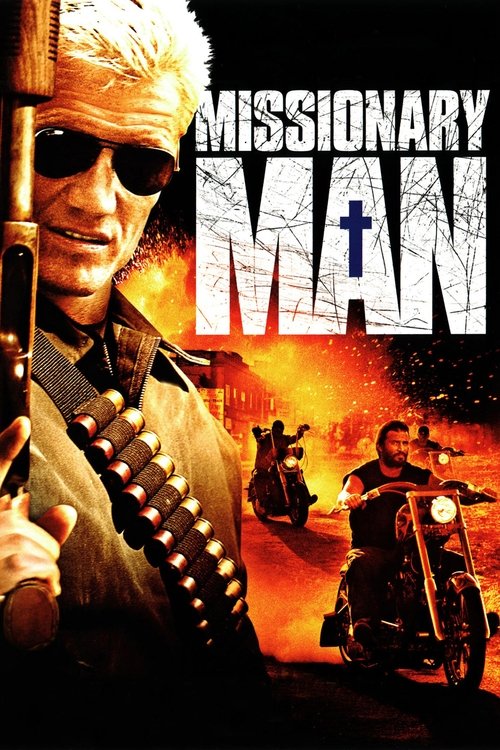
As the film approaches its climax, the Missionary Man, played by Dolph Lundgren, stands resolute in the face of the local gang's tyranny. The tension in the air is palpable as he prepares to confront the gang that has terrorized the town and caused the death of his friend, a man he deeply cared for. The Missionary Man's internal struggle is evident; he is driven by a sense of justice and a desire to protect the innocent, yet he is also haunted by the violence that he knows he must unleash.
In the first scene of the ending, the Missionary Man gathers his resolve, recalling the moments he shared with his friend. The memories flash through his mind, fueling his determination. He steps out into the town, the sun setting behind him, casting long shadows that symbolize the darkness he is about to confront.
The next scene unfolds in the gang's hideout, a dilapidated building that serves as their base of operations. The atmosphere is thick with tension as the gang members, led by a ruthless leader, are caught off guard by the Missionary Man's sudden appearance. He enters with a calm demeanor, but his eyes betray the storm brewing within. The confrontation escalates quickly, and the Missionary Man showcases his combat skills, taking down gang members with precision and a fierce sense of purpose.
As the fight progresses, the Missionary Man's motivations become clearer. He is not just seeking revenge; he is fighting for the town's freedom from oppression. Each blow he delivers is not only a physical act but also a symbolic strike against the fear that has gripped the community. The gang members, once confident in their power, begin to falter as they realize they are no match for the Missionary Man's resolve.
In a pivotal moment, the Missionary Man faces the gang leader. The tension is thick as they exchange words, revealing the leader's arrogance and the Missionary Man's unwavering commitment to justice. The fight that ensues is brutal, showcasing the Missionary Man's strength and skill. Ultimately, he overpowers the leader, delivering a final blow that signifies the end of the gang's reign of terror.
With the gang defeated, the townspeople emerge from their homes, witnessing the aftermath of the battle. There is a mix of relief and gratitude in their expressions as they realize that the Missionary Man has liberated them from their oppressors. The Missionary Man, however, does not linger. He understands that his journey is not over, and he must continue on his path.
In the final scene, the Missionary Man walks away from the town, the sun rising in the distance. He carries the weight of his actions but also a sense of fulfillment. The townspeople watch him leave, their lives forever changed by his intervention. Each character's fate is intertwined with the Missionary Man's actions; the gang is dismantled, and the townspeople are given a chance to rebuild their lives free from fear.
As he disappears into the horizon, the Missionary Man embodies the themes of justice, sacrifice, and the relentless pursuit of righteousness, leaving behind a legacy that will resonate within the town long after he has gone.
Is there a post-credit scene?
The movie "Missionary Man," produced in 2007, does not have a post-credit scene. The film concludes its narrative without any additional scenes or content after the credits roll. The story wraps up with the main character, a mysterious drifter played by Dolph Lundgren, having resolved the central conflict, leaving the audience with a sense of closure regarding his journey and the fate of the town he intervened in.
What role does the character of the sheriff play in the story?
The sheriff, portrayed as a conflicted character, represents the law's struggle against corruption. Initially, he appears to be an ally to Kane, but as the story unfolds, it becomes clear that he is compromised by the local crime syndicate. His internal conflict and eventual choices highlight the challenges of maintaining integrity in a corrupt environment.
What motivates the character of John Kane to return to his hometown?
John Kane, played by Dolph Lundgren, returns to his hometown driven by a sense of duty and a desire for redemption. He is a former missionary who has experienced personal loss and trauma, and his return is marked by a need to confront his past and help those in need, particularly in a community plagued by crime and corruption.
How does John Kane's past as a missionary influence his actions in the film?
John Kane's past as a missionary deeply influences his actions throughout the film. His experiences have instilled in him a strong moral compass and a desire to protect the innocent. This is evident in his willingness to confront the local gang and corrupt figures, as he seeks to restore peace and justice in a community that has lost its way.
How does the relationship between John Kane and the local townspeople evolve throughout the film?
Initially, the townspeople are wary of John Kane due to his past and the violence that follows him. However, as he begins to stand up against the local gang and protect the community, their perception shifts. They start to see him as a protector and a beacon of hope, leading to a growing bond as they unite against their common enemy.
What is the significance of the final confrontation between John Kane and the gang leader?
The final confrontation between John Kane and the gang leader serves as a culmination of Kane's journey of redemption. It is not just a physical battle but also a clash of ideologies--Kane's commitment to justice and protection of the innocent against the gang leader's ruthless pursuit of power. This showdown encapsulates Kane's transformation and his ultimate acceptance of his role as a protector.
Is this family friendly?
"Missionary Man," produced in 2007, is not considered family-friendly due to several potentially objectionable elements. Here are some aspects that might be upsetting for children or sensitive viewers:
-
Violence: The film contains scenes of intense violence, including fights and gunplay, which may be graphic and disturbing.
-
Death: There are moments that depict death and loss, which can be emotionally heavy and distressing.
-
Themes of Revenge: The narrative revolves around themes of vengeance and justice, which may not be suitable for younger audiences.
-
Language: The dialogue includes strong language that may be inappropriate for children.
-
Mature Themes: The film explores darker themes such as betrayal, moral ambiguity, and the consequences of violence, which may be challenging for sensitive viewers to process.
These elements contribute to a tone that is more suited for adult audiences rather than children.








