


































Popular
Should I watch it?
Ask Your Own Question

What is the plot?
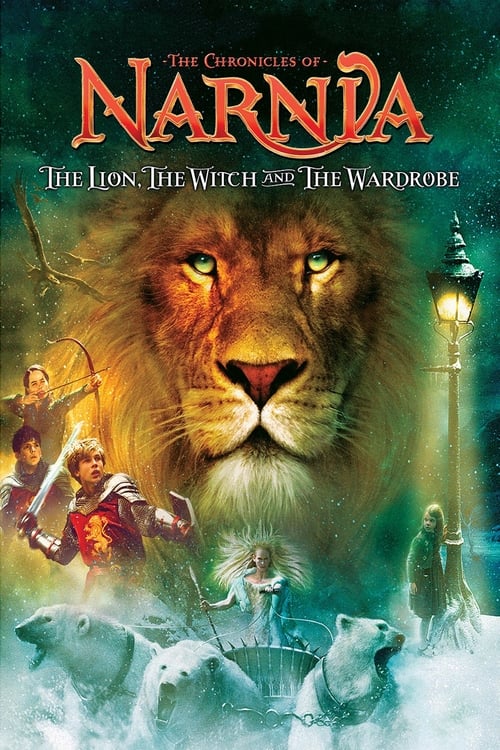
The story begins in the midst of World War II, in the year 1940. London is under the shadow of Nazi bombing raids, and the four Pevensie children--Lucy, Edmund, Susan, and Peter--are evacuated from the city to escape the danger. They are sent to live with an elderly professor, Digory Kirke, in his sprawling country estate, far from the war and the smoke-filled skies of London. The house is grand and mysterious, filled with winding corridors, dusty rooms, and the watchful eye of the stern housekeeper, Mrs. Macready, who warns them not to disturb the house or wander into forbidden areas.
The children, restless and eager to explore, begin playing hide-and-seek through the vast mansion. Lucy, the youngest, hides in a spare room and discovers an enormous wardrobe. Curious, she opens the doors and steps inside, only to find herself walking through a thick layer of fur coats into a snowy forest. She has entered a magical land called Narnia. The air is crisp, the trees are covered in snow, and the world feels ancient and enchanted. As she wanders, she comes upon a lamppost, the first landmark she will ever see in this new realm.
Lucy meets a faun named Mr. Tumnus, a gentle creature with the legs of a goat and the upper body of a man. He invites her to his cozy home, where he plays music and tells her stories of Narnia. But Mr. Tumnus is conflicted--he has been ordered by the White Witch, Jadis, to capture any human children he finds. Torn between his duty and his conscience, he decides to help Lucy instead, warning her of the Witch's tyranny and sending her back to the wardrobe before he can be discovered. Lucy returns to the real world, breathless and excited, and rushes to tell her siblings about her adventure. But Peter, Susan, and Edmund do not believe her. They think she is making up stories, and Edmund, in particular, mocks her, insisting that she only imagined it.
A few days later, Lucy returns to the wardrobe, determined to prove she is telling the truth. This time, Edmund follows her through the wardrobe and into Narnia. He wanders alone and soon encounters the White Witch herself, Jadis, a regal and terrifying woman with pale skin and a cold, commanding presence. She is accompanied by her servant, the dwarf Ginarrbrik. Jadis learns from Edmund that he has a brother and two sisters, and she sees an opportunity. She offers him Turkish delight, a sweet treat that seems to enchant him, and promises that if he brings his siblings to her, she will make him king alongside her. Edmund, dazzled by the promise of power and the taste of the candy, agrees.
When Lucy and Edmund return through the wardrobe together, Peter and Susan question them. Edmund, still under the Witch's influence, denies ever being in Narnia, claiming that Lucy is lying. The siblings argue, and Lucy is left heartbroken and disbelieved. But the Professor, observing their quarrel, quietly suggests to Peter and Susan that Lucy might be telling the truth. He tells them that logic and reason do not always explain everything, and that sometimes, the impossible is real.
Later, while playing in the house, the children accidentally break a window and flee from Mrs. Macready, running through the mansion and into the wardrobe room. This time, all four of them step through the wardrobe together and find themselves in Narnia. The snow-covered forest is real, and the lamppost stands as proof. Peter, Susan, and Edmund are stunned, and Edmund is forced to admit that Lucy was right. But their wonder is short-lived. They soon discover that Edmund's betrayal has consequences. The White Witch, having learned from Edmund about Mr. Tumnus, has captured the faun and taken him to her camp. The children realize that Edmund's actions have put their new friend in danger.
As they wander through Narnia, they meet two talking beavers, Mr. and Mrs. Beaver. The beavers are wary at first, but when Lucy mentions Mr. Tumnus, they trust the children and invite them to their home. There, the beavers reveal the true nature of Narnia's plight. The land is cursed by the White Witch, who has cast an eternal winter that never ends. The beavers also speak of a prophecy: when two sons of Adam and two daughters of Eve sit on the thrones of Cair Paravel, the Witch's reign will end. They tell the children that Aslan, the great lion and true king of Narnia, has returned and is gathering an army to challenge the Witch.
The children are filled with hope, but their journey is not safe. The White Witch's spies are everywhere, and Edmund, still tempted by the Witch's promises, slips away in the night and heads to her camp. The beavers and the other children realize he is gone and set out to find him. Along the way, they encounter Father Christmas, a sign that the Witch's power is weakening. He gives each of them gifts: Lucy receives a dagger and a cordial that can heal any injury; Susan is given a magical horn and a bow with a quiver of arrows; Peter receives a sword and a shield. These gifts are symbols of their roles in the coming battle.
Meanwhile, Edmund arrives at the Witch's camp, where he is greeted with cold hospitality. The Witch reveals her true nature, slapping him and ordering Ginarrbrik to hold a knife to his throat. She mocks him for his betrayal and tells him that he will never be king. Edmund is imprisoned, and the Witch begins to plot her next move. She knows that Aslan is gathering an army, and she is determined to stop him.
The children, guided by the beavers, make their way to Aslan's camp. The journey is perilous, and they are pursued by the Witch's wolves. Near the camp, Maugrim, the leader of the wolves, ambushes Lucy and Susan. Peter, stepping forward as the eldest, fights Maugrim and kills him in a fierce battle. The other wolves flee, and the children are brought to Aslan's camp, where they meet the great lion for the first time. Aslan is majestic and wise, and he welcomes the children as the fulfillment of the prophecy.
But the joy is short-lived. The Witch arrives at the camp, demanding that Edmund be handed over to her. She claims that, according to the Deep Magic, she has the right to execute any traitor. Edmund, she says, has betrayed his siblings and must pay the price. Aslan speaks with her privately, and in a tense, whispered conversation, he offers to take Edmund's place. The Witch agrees, and Aslan secretly leaves the camp that night. Lucy and Susan, sensing something is wrong, follow him.
They watch in horror as Aslan is taken to the Stone Table, a sacred site where the Deep Magic is enacted. The Witch's followers shave his mane, tie him up, and mock him. Aslan does not resist. The Witch stands over him with a spear and plunges it downward, killing him. Lucy and Susan weep, and the camp is filled with grief. But the story is not over. The Deep Magic is not the only law in Narnia. There is a deeper magic, known only to Aslan, that allows the innocent to take the place of the guilty and to rise again. In the dead of night, the Stone Table cracks, and Aslan returns to life, stronger and more powerful than before.
With Aslan resurrected, the children and the army of Narnia prepare for the final battle. The Witch, unaware that Aslan has returned, leads her forces against the children and their allies. The battle is fierce and bloody. The Witch turns many of Aslan's followers to stone, including Mr. Fox, who sacrifices himself to help the children escape. Peter, Susan, and Lucy fight bravely, using the gifts they received from Father Christmas. Peter duels with the Witch, but she is too powerful. At the last moment, Aslan arrives, roaring with fury. He confronts the Witch and declares, "Do not cite the Deep Magic to me, Witch. I was there when it was written." With a single blow, Aslan kills the Witch, ending her reign forever.
The eternal winter begins to melt, and Narnia is freed from her glacial enslavement. The children are crowned as kings and queens of Narnia, fulfilling the prophecy. They rule the land for many years, bringing peace and prosperity to all its creatures. Fifteen years pass, and the siblings, now adults, pursue a white stag through the forest. They find the lamppost, the very first landmark Lucy encountered, and step through the wardrobe once more. As they do, they become children again, for little time has passed in the real world.
They emerge from the wardrobe, breathless and amazed, and are greeted by Professor Kirke. He asks why they were in the wardrobe, and Peter, remembering the Professor's earlier words, says, "I wouldn't believe you if you told me." The Professor smiles and replies, "Try me." The children exchange knowing glances, and the story ends with the sense that their adventure is not over, but only just beginning.
Throughout the film, every death and confrontation is vividly depicted. Mr. Tumnus is captured but later freed. Mr. Fox is turned to stone by the Witch. Maugrim is killed by Peter. Aslan is executed by the Witch but resurrected by the deeper magic. The Witch is killed by Aslan in the final battle. The children, their courage tested and their bonds strengthened, emerge as heroes, forever changed by their journey through Narnia.
More Movies Like This
Browse All Movies →





What is the ending?
At the end of The Chronicles of Narnia: The Lion, the Witch and the Wardrobe, the Pevensie siblings--Peter, Susan, Edmund, and Lucy--defeat the White Witch in a climactic battle. As a result, they are crowned as the new kings and queens of Narnia. They rule for many years, bringing peace and prosperity to the land. Eventually, they return to the real world through the wardrobe, finding that no time has passed.
Now, let's delve into the ending in a detailed, chronological narrative.
As the final battle approaches, the Pevensie siblings gather their forces to confront the White Witch. Peter, the eldest, takes on the role of a leader, filled with determination and courage. The air is thick with tension as they prepare for the fight, knowing that the fate of Narnia hangs in the balance. Lucy and Susan, armed with their bows and arrows, stand resolutely beside their brother, while Edmund, having been redeemed from his earlier betrayal, fights alongside them, seeking to prove his loyalty.
The battle erupts in a flurry of chaos. The White Witch, fierce and unyielding, commands her army of wolves and other dark creatures. Peter faces her directly, wielding his sword with skill and bravery. The clash of metal and the cries of warriors fill the air as the forces of good and evil collide. In a pivotal moment, Peter confronts the Witch, who attempts to use her magic against him. However, with a combination of strategy and valor, Peter ultimately overcomes her, striking a decisive blow that leads to her defeat. The Witch shatters into ice and disappears, her reign of terror finally at an end.
With the White Witch vanquished, Aslan, the great lion and true king of Narnia, appears to celebrate the victory. He acknowledges the bravery of the Pevensie siblings and the sacrifices made during the battle. The atmosphere shifts from one of conflict to one of joy and relief. The creatures of Narnia rejoice, celebrating their newfound freedom and the return of hope.
Aslan then crowns Peter, Susan, Edmund, and Lucy as the new kings and queens of Narnia in a grand ceremony at Cair Paravel. Each sibling is given a title: Peter becomes the High King, Susan is the Gentle Queen, Edmund is the Just King, and Lucy is the Valiant Queen. They are adorned with crowns and robes, symbolizing their new roles and responsibilities. The siblings embrace their destiny, filled with a sense of purpose and belonging in this magical land.
Years pass, and the Pevensies rule Narnia with wisdom and kindness. They experience adventures, forge alliances, and bring peace to the realm. The seasons change, and the land flourishes under their reign. The siblings grow into their roles, each developing their strengths and character. Peter becomes a wise and just leader, Susan embodies grace and diplomacy, Edmund learns the value of redemption and justice, and Lucy remains the heart of the group, always believing in the magic of Narnia.
One day, while out hunting, the Pevensies stumble upon the wardrobe that brought them to Narnia. They step through it, expecting to return to their world. However, upon exiting, they find themselves back in the Professor's house, where no time has passed. They are still children, and the adventure in Narnia feels like a distant dream. The siblings share a knowing look, understanding that their time in Narnia has changed them forever, even if the world outside remains the same.
In the end, the Pevensies return to their ordinary lives, but they carry the memories of their extraordinary journey and the lessons learned in Narnia. Each sibling has grown, having faced their fears, learned the importance of loyalty, and discovered the power of love and sacrifice. Their experiences in Narnia will forever remain a cherished part of their lives, a reminder of the magic that exists beyond the ordinary.
Is there a post-credit scene?
The Chronicles of Narnia: The Lion, the Witch and the Wardrobe, produced in 2005, does not have a post-credit scene. After the film concludes, the credits roll without any additional scenes or content following them. The story wraps up with the Pevensie siblings returning to their world after their adventures in Narnia, and the film ends on a note of resolution and reflection on their experiences.
What role does Aslan play in the story?
Aslan, the great lion, serves as a central figure in 'The Chronicles of Narnia: The Lion, the Witch and the Wardrobe.' He represents the true king of Narnia and embodies themes of sacrifice, redemption, and resurrection. Aslan's arrival in Narnia brings hope to the oppressed creatures under the White Witch's rule. He is a powerful and wise leader who guides the Pevensie siblings in their quest to defeat the Witch and restore peace to Narnia.
How does the White Witch maintain her power over Narnia?
The White Witch, also known as Jadis, maintains her power over Narnia through fear, manipulation, and the use of magic. She has cast a spell that makes it always winter but never Christmas, symbolizing her cold and oppressive rule. The Witch uses her army of wolves and other dark creatures to enforce her will, and she is particularly ruthless in her pursuit of power, even going so far as to claim the lives of those who oppose her, including the prophecy that states two sons of Adam and two daughters of Eve will end her reign.
What is the significance of the Stone Table?
The Stone Table is a pivotal symbol in the story, representing the ancient laws of Narnia and the sacrificial aspect of Aslan's character. It is at the Stone Table that Aslan willingly sacrifices himself in place of Edmund, who has betrayed his siblings and fallen under the Witch's influence. This act of selflessness is crucial, as it fulfills the deeper magic of Narnia, allowing Aslan to rise again and ultimately defeat the White Witch. The Stone Table thus serves as a site of both sacrifice and resurrection.
What motivates Edmund's betrayal of his siblings?
Edmund's betrayal is driven by a combination of jealousy, desire for power, and manipulation. When he first encounters the White Witch, she tempts him with promises of Turkish Delight and the allure of being a prince in Narnia. His feelings of inadequacy and longing for acceptance lead him to betray his siblings, believing that aligning with the Witch will grant him the power and status he craves. However, as the story progresses, he experiences guilt and regret, especially after witnessing the consequences of his actions.
How do the Pevensie siblings come to understand their roles in Narnia?
The Pevensie siblings--Peter, Susan, Edmund, and Lucy--each undergo a journey of self-discovery that helps them understand their roles in Narnia. Lucy, the youngest, is the first to believe in Narnia and Aslan, showing courage and faith. Peter, the eldest, grows into a leader, embracing his responsibility to protect his siblings and the realm. Susan, initially skeptical, learns to trust her instincts and support her brothers and sister. Edmund's journey is one of redemption, as he ultimately seeks forgiveness and fights alongside his siblings against the White Witch. Their experiences in Narnia help them realize their strengths and the importance of unity.
Is this family friendly?
The Chronicles of Narnia: The Lion, the Witch and the Wardrobe (2005) is generally considered family-friendly, but it does contain some scenes that may be potentially objectionable or upsetting for children or sensitive viewers. Here are a few aspects to consider:
-
Violence and Battle Scenes: There are several intense battle sequences featuring sword fighting, magical duels, and the depiction of war. Characters are shown in peril, and there are moments of injury and aggression.
-
Death and Sacrifice: The film includes themes of sacrifice and death, particularly surrounding the character of Aslan. His fate is depicted in a solemn and impactful manner that may be distressing for younger viewers.
-
Dark Imagery: The White Witch and her minions are portrayed with a menacing presence, and some scenes may evoke fear due to their dark and threatening nature.
-
Emotional Turmoil: Characters experience significant emotional struggles, including betrayal, loss, and fear. These themes may resonate deeply and could be upsetting for sensitive viewers.
-
Implied Threats: There are moments where characters face threats from the White Witch, including imprisonment and the threat of violence, which may be unsettling.
While the film conveys themes of bravery, friendship, and redemption, these elements may require parental guidance for younger audiences.









