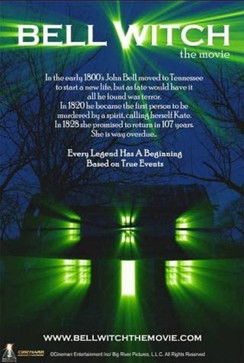






Popular
What is the significance of the Bell Witch legend in the movie?
How does the character of John Bell respond to the haunting?
What role does Betsy Bell play in the story?
How does the film depict the relationship between the Bell family members?
What supernatural events occur that escalate the tension in the story?
Should I watch it?
Ask Your Own Question

What is the plot?
The film opens in the early 1800s in Adams, Tennessee, where John Bell lives a hard but familiar life as a farmer with his wife, Lucy Bell, and their children, including Betsy Bell, whose future seems to be opening toward marriage with Joshua Gardner. That fragile peace is shattered when John Bell's sons, John Jr. Bell and William Bell, wander near the Bell Witch Cave and disturb an ancient burial site, unknowingly tearing open the boundary between the living and the dead and bringing home a curse that will hollow out the family from the inside. From that moment, the story moves forward like a tightening noose, with the house, the land, and even the family's private hopes all becoming infected by the same unseen force.
At first the disturbance is subtle enough to feel almost like a cruel joke: knocks in the walls, scratching in the dark, unexplained noises in the night, and the sense that something watches from just beyond the lamplight. But the Bell home quickly becomes the central battlefield, and the attacks grow more personal and more vicious. John Bell starts suffering phantom assaults and strange torment, while Betsy Bell becomes a favored target as the spirit claws at her sleep, invades her waking hours, and turns her body into a site of fear and humiliation. The terror is not random; it has a cruel intelligence behind it, as if the unseen presence is choosing exactly where to strike so that the family feels trapped, exposed, and powerless.
As the haunting intensifies, the family learns that the spirit does not merely want to frighten them. It wants to break them. Betsy Bell's love for Joshua Gardner becomes especially important, because the spirit turns possessive and enraged at the thought of Betsy building a life beyond the house. The romance that should have offered hope instead becomes another wound, and the Bell Witch seems to feed on that hope before crushing it. The film frames this as a tragic love story twisted by supernatural jealousy: Joshua Gardner stands for the ordinary future Betsy might have had, while the witch's attacks try to sever her from that future completely. The more Betsy and Joshua cling to one another, the more violent the haunting becomes, and the family's private grief hardens into panic.
Lucy Bell tries to hold the family together, but the home is no longer a home in any normal sense. Every room feels compromised. Every night brings a new escalation. The house that once contained work, meals, prayer, and family talk now echoes with terror, and the Bell family's daily life becomes a cycle of dread and recovery that never truly recovers. John Bell, as the patriarch, takes the full weight of the curse on himself, but his suffering is not noble in a simple way; it is exhausting, humiliating, and relentless. He becomes visibly weakened by the haunting, as if the witch is draining him bit by bit, not only of strength but of authority, so that the father who should protect the household becomes another victim inside it.
The story keeps returning to the origin point of the curse: the burial site near the cave. That location is more than a backdrop; it is the wound that never closes. The disturbance of the ancient grave is the inciting sin, and everything the family experiences afterward is tied back to that act of violation. The film treats the land itself as haunted now, with the woods and the path between the cave and the Bell house carrying the sense that the family has crossed into territory where the ordinary rules no longer apply. Each return to the house feels like a return to siege, and each return to the woods feels like moving closer to a buried truth the family does not yet understand.
The spirit eventually makes itself known not as a vague threat, but as a force with purpose. The haunting has a personality, and that personality is cruel, mocking, and vindictive. In the legend the film draws from, the entity identifies herself as "Kate," though history knows her as the Bell Witch. That name matters because it gives the terror a face and a voice, transforming the haunting from an abstract evil into an adversary with will and memory. From then on, the Bell family is not just frightened by noises and visions; they are at war with something that seems to have chosen them deliberately.
Tension builds toward the point where the family can no longer pretend the attacks are temporary or explainable. John Bell's health declines, and the house becomes a place where everyone waits for the next blow. Betsy Bell's suffering is especially devastating because it is not only physical fear but emotional captivity: the witch is not simply attacking her body, but threatening her identity, her future, and her ability to love Joshua Gardner without punishment. The family's confrontations with the unseen force do not produce relief. They only prove how helpless human effort is against a curse that seems to anticipate every attempt to resist it.
The film's darkest revelation is that the Bell Witch's fury is not only about the burial disturbance. The spirit also seems to target the family's emotional bonds, especially the bond between Betsy and Joshua, because that relationship represents continuity, life, and the possibility of escape from the house's doom. By turning that love into another source of suffering, the witch attacks the family's last hope. The story's tragedy lies in the fact that the Bells are not destroyed all at once; they are dismantled piece by piece, through fear, helplessness, and the slow realization that the haunting is not going to stop simply because they want it to.
By the time the film reaches its climax, the curse has become inseparable from John Bell's fate. The spirit's torment culminates in his collapse, and the family's struggle narrows to a desperate waiting game against a death that feels both supernatural and inevitable. John Bell dies in 1820, and the film presents that death as the haunting's final and fatal victory. The legend around the Bell Witch treats him as the first person in the American historical record to be killed by a spirit, and the movie leans into that dreadful idea by making his death the endpoint of the Bell family's suffering. The curse has done what it set out to do: it has broken the father, ruined the household, and left the survivors with nothing but memory and fear.
The ending does not offer a cleansing exorcism or a tidy explanation. Instead, it closes on the bleak sense that the Bell Witch has achieved her purpose and that the Bell family's ordinary life is gone forever. The house no longer feels like a place of safety, and the final emotional residue is one of loss rather than closure. Betsy Bell survives, but survival is not victory; it is the burden of carrying forward after the family has been spiritually shattered. Joshua Gardner is left as the abandoned promise of a life that might have been, and Lucy Bell is left to endure the aftermath of a horror that has already taken the shape of a tragedy.
In the last movement of the story, the grave becomes the final image of consequence, tying the ending back to the original disturbance and the dead buried beneath the land. The Bell Witch's promise of return hangs over the story like a final whisper, reinforcing the sense that this evil is larger than one family and more enduring than one night of terror. The film ends not with peace, but with the grim completion of a curse: a family is torn apart, John Bell is dead, Betsy Bell's love is poisoned by fear, and the Bell Witch remains the only force in the story that seems to have won.


What is the ending?
In the ending of "Bell Witch: The Movie," the main character, a man named John, confronts the malevolent spirit of the Bell Witch. After a series of terrifying encounters, he ultimately faces the spirit in a climactic showdown. The film concludes with John realizing the true nature of the curse and the spirit's connection to his family, leading to a resolution that leaves him changed forever.
As the film approaches its climax, the tension escalates. John, having experienced the haunting manifestations of the Bell Witch, gathers his courage to confront the entity that has tormented him and his family. The atmosphere is thick with dread as he enters the darkened woods, where the Bell Witch is said to dwell. The trees loom ominously, their branches twisting like skeletal fingers against the night sky.
In a pivotal scene, John stands alone in a clearing, the air crackling with supernatural energy. He calls out to the Bell Witch, demanding to know why she has targeted his family. The silence is deafening until a chilling voice echoes through the trees, revealing the spirit's deep-seated anger and sorrow. The Bell Witch, once a victim of her own tragic past, now seeks revenge on those she believes have wronged her.
As the confrontation intensifies, John is filled with a mix of fear and determination. He realizes that the Bell Witch is not just a malevolent force but a tortured soul seeking recognition and justice. This revelation shifts the dynamic of their encounter. Instead of fighting against her, John begins to empathize with her plight, understanding that her rage stems from a history of betrayal and loss.
In a moment of vulnerability, John pleads with the spirit to find peace, acknowledging the pain she has endured. The Bell Witch, momentarily taken aback by his compassion, hesitates. This moment of connection allows John to break through the cycle of violence and fear that has defined their interactions. The atmosphere shifts, and the oppressive weight of the haunting begins to lift.
As dawn breaks, the first light of day filters through the trees, illuminating the clearing. The Bell Witch, her form flickering like a candle in the wind, begins to dissipate. With a final, sorrowful glance at John, she vanishes into the morning mist, leaving behind a sense of calm and closure. John stands alone, transformed by the experience, carrying the weight of the Bell Witch's story with him.
In the aftermath, John returns to his family, who have been anxiously waiting for his return. The tension that once filled their home has dissipated, replaced by a newfound sense of peace. John shares his experience with them, revealing the truth about the Bell Witch and the importance of understanding the past to heal from it. The family embraces, united in their shared ordeal, and they begin to rebuild their lives, free from the haunting that once plagued them.
The film concludes with a sense of hope, emphasizing the themes of empathy, understanding, and the power of confronting one's fears. Each character, particularly John, emerges from the experience changed, having faced the darkness and found a way to bring light back into their lives.
Is there a post-credit scene?
In "Bell Witch: The Movie," there is no post-credit scene. The film concludes without any additional scenes or content after the credits roll. The story wraps up with the resolution of the haunting and the characters' experiences, leaving the audience with a sense of closure regarding the events that transpired throughout the film. The absence of a post-credit scene emphasizes the finality of the narrative and the impact of the Bell Witch legend on the characters involved.
What is the significance of the Bell Witch legend in the movie?
The Bell Witch legend serves as the central theme of the movie, depicting the haunting of the Bell family in the early 19th century. The film explores the origins of the legend, focusing on the malevolent spirit that torments the family, particularly targeting John Bell and his daughter, Betsy. The supernatural occurrences are depicted through chilling manifestations, such as disembodied voices, physical attacks, and psychological torment, which reflect the historical accounts of the Bell Witch haunting.
How does the character of John Bell respond to the haunting?
John Bell, portrayed as a strong-willed patriarch, initially approaches the haunting with skepticism. As the supernatural events escalate, he becomes increasingly distressed and fearful. His internal struggle is palpable as he grapples with the reality of the haunting, feeling a mix of anger, helplessness, and desperation to protect his family. His character arc reflects a transition from disbelief to a deep sense of dread as he confronts the malevolent force.
What role does Betsy Bell play in the story?
Betsy Bell is a pivotal character in the film, representing the innocence and vulnerability of the family. As the haunting intensifies, she becomes the primary target of the Bell Witch's wrath, experiencing physical assaults and emotional turmoil. Her character embodies the fear and confusion of a young girl caught in a terrifying situation, and her relationship with her father, John, becomes strained as he struggles to protect her from the supernatural threats.
How does the film depict the relationship between the Bell family members?
The film intricately portrays the dynamics within the Bell family, highlighting their close-knit bond and the strain caused by the haunting. John Bell's protective instincts clash with his wife's growing fear, while Betsy's suffering creates a rift between her and her parents. The emotional weight of their shared trauma is depicted through tense interactions, moments of despair, and the family's collective struggle to maintain their unity in the face of the supernatural terror.
What supernatural events occur that escalate the tension in the story?
The film showcases a series of escalating supernatural events that heighten the tension throughout the narrative. These include eerie sounds, such as whispers and laughter, physical manifestations like objects moving on their own, and direct attacks on family members, particularly Betsy. Each incident builds upon the last, creating an atmosphere of dread and uncertainty, as the family grapples with the reality of their situation and the malevolent force that seems to know their deepest fears.
Is this family friendly?
"Bell Witch: The Movie" is not considered family-friendly due to its horror themes and supernatural elements. Here are some potentially objectionable or upsetting aspects that may affect children or sensitive viewers:
-
Supernatural Violence: The film includes scenes depicting violent encounters with supernatural entities, which may be frightening for younger audiences.
-
Disturbing Imagery: There are moments of unsettling visuals that could evoke fear or anxiety, including ghostly apparitions and intense emotional confrontations.
-
Themes of Possession: The narrative explores themes of possession and torment, which can be distressing and may not be suitable for sensitive viewers.
-
Emotional Turmoil: Characters experience significant emotional distress, including fear, despair, and conflict, which may be intense for some viewers.
-
Dark Atmosphere: The overall tone of the film is dark and foreboding, contributing to a sense of dread that may be overwhelming for children.
These elements combine to create a film that is more appropriate for mature audiences rather than families or younger viewers.