








Popular
What challenges does Moondance face in her journey to become a successful dancer?
How does Moondance's relationship with the horse, a former racehorse named Checkers, develop throughout the film?
What role does Moondance's mother play in her journey, and how does their relationship change?
What is the significance of the dance competition in Moondance's character development?
How do Moondance's friendships influence her journey in the film?
Should I watch it?
Ask Your Own Question

What is the plot?
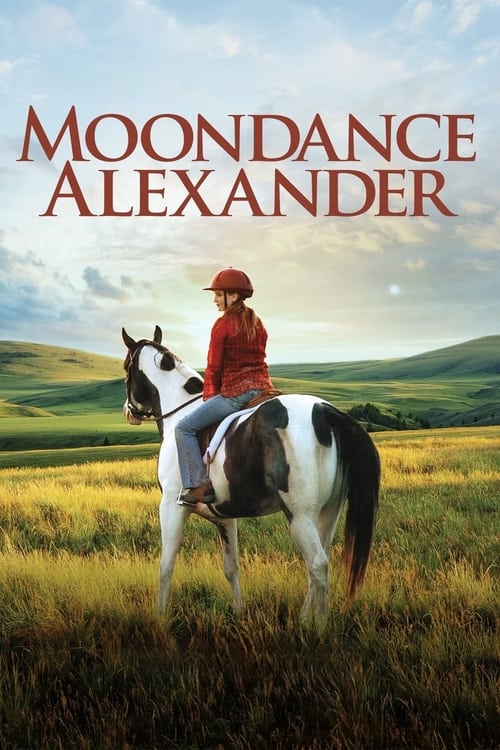
Moondance Alexander begins in the bright, drifting heat of summer, with twelve-year-old Moondance Alexander moving through her days like someone slightly outside the world that everyone else seems to inhabit. She is lonely, awkward, and intensely imaginative, the kind of girl who keeps her pain private until she can no longer bear it and then walks to her father's grave to talk to him as if he might answer back. Her grief is still fresh enough to shape everything she does. At school, she is the easy target of the rich, polished girls who judge her clothes, her bluntness, and her lack of interest in performing the kind of femininity they value. Their cruelty lands with particular force because Moondance already feels like an outsider in her own life, trapped between a father who is gone and a mother, Gelsey Alexander, who hovers too closely, trying to manage every detail of her daughter's life out of fear and love. The house itself feels like a place of unfinished healing, a home where everyone is careful around the subject of loss, and where Moondance's need to breathe on her own is becoming stronger by the day.
While the summer stretches ahead with little promise, Moondance supports herself by working deliveries for McClancy, the owner of a horse-supply shop. The job gives her a small sense of independence and a practical way of moving through the town, even if she is still mostly invisible to the people around her. On one of these deliveries, out on a country road, she notices a lost pinto pony standing alone, vulnerable and half-wild-looking in the light. The animal is a surprise in the middle of her otherwise ordinary day, and the moment has the feeling of fate arriving quietly. Moondance approaches him with caution and wonder, immediately sensing something special in the pony's alertness and spirit. She is charmed at once and, without hesitation, begins caring for him in the way she has long wanted someone to care for her. She names him Checkers, and the name itself becomes an act of emotional possession, a declaration that this stray pony is no longer simply lost.
The discovery changes the course of her summer, but not immediately in the way she hopes. Moondance brings Checkers home, only to be forced back into the reality of adult authority when her mother insists that the pony must be returned to his rightful owner. Gelsey Alexander's concern is practical and protective, and it makes sense: this is not their horse, they are not set up to keep him, and Moondance's attachment is too quick, too fierce. Reluctantly, painfully, Moondance returns Checkers to Dante Longpre, the gruff and mysterious man who owns him. Dante is immediately set apart from the other adults in Moondance's life. He is rough around the edges, suspicious, and closed off, the kind of man whose silence feels like a warning. But even in this first encounter, Moondance senses that there is more to him than his brusque manner suggests.
Once Checkers is returned, Moondance cannot let the pony go emotionally. She is certain, almost instinctively, that he is not just any pony but one with genuine jumping talent. This conviction becomes the central obsession of her summer. She returns to Dante with a proposition that is as bold as it is desperate: she will work at his stable, cleaning and helping out, if he will let her stay close to Checkers and eventually ride him. The bargain is simple, but for Moondance it is life-changing. It allows her to turn longing into action, and action into a chance at belonging. Dante, at first reluctant and perhaps amused by her persistence, eventually agrees. Moondance begins arriving early, doing the hard, unglamorous work without complaint, and slowly earning the stable owner's respect. The stable becomes a second home of sorts, a place where she is no longer just the town misfit but a girl with a purpose.
As she works, Moondance's bond with Checkers deepens. She learns his rhythms, his moods, his intelligence, and his energy. Each moment with him strengthens her belief that he is capable of something extraordinary. The pony is small, quick, and lively, and Moondance sees in him a kind of hidden potential that everyone else has missed. Her confidence in him is not merely sentimental; it becomes a form of faith that begins to reshape how she sees herself. She is no longer only the grieving girl at the grave or the mockable girl at school. She is someone who can recognize talent, who can work for what she believes in, who can stand alone against doubt.
Dante Longpre remains central to this transformation, and the story gradually reveals why. Beneath his stern exterior, he is not simply a reclusive horse owner. He is a man with a buried past, a former world-class horse trainer whose history has been hidden under bitterness and regret. That revelation changes everything, because it explains both his skill and his resistance. He is not incompetent or small-minded; he is someone who has been wounded by the world of horses, competition, and memory. The stable is full of the weight of that history, and Moondance, by insisting that he train her and Checkers, begins forcing him to confront it again. Their relationship becomes one of mutual resistance and mutual rescue. She needs his knowledge, and he needs her belief.
The pressure on Moondance only grows as she learns of the Bow Valley Classic, an equine jumping competition that becomes the mountain she decides to climb. The event is both a literal and symbolic test. If she can get Checkers ready, and if she can compete against the established riders who dismiss her, then she can prove that her instincts matter and that her strange little partnership with the pony is real. The Bow Valley Classic offers the possibility of public vindication, not just personal satisfaction. It is the stage on which all of her private defiance will either collapse or become something visible enough to change how everyone sees her.
Training is hard, and the film makes the effort feel earned. Moondance works through repeated practice, falls, frustrations, and moments of doubt. Dante's instruction is not gentle or sentimental; it is shaped by discipline and old expertise, and yet his roughness gradually becomes a form of care. He does not indulge her fantasies, but he does not dismiss them anymore either. Instead, he begins teaching her how to ride Checkers with seriousness and precision. The scenes at the stable carry the emotional weight of a slow-blooming trust. Moondance's determination and Dante's reluctant mentorship create a partnership that both of them need, even if neither is willing to admit it easily. The visual contrast between her youthful stubbornness and his weathered reserve gives their scenes a quiet tension that steadily builds toward the competition.
Meanwhile, the social world outside the stable remains hostile. Fiona Hughes emerges as Moondance's primary rival, a wealthy, polished, confident rider with a fancy horse named Monte Carlo. Fiona is everything the school's mean-girl clique admires: poised, privileged, and accustomed to winning. She mocks Moondance's appearance and outsider status, reinforcing the idea that the competition is not only about skill but about belonging to the right world. Fiona's presence sharpens the stakes of the Bow Valley Classic, because she represents the public validation Moondance lacks and wants to overturn. The rivalry is never just about horses. It is about class, image, and the right to take oneself seriously.
Moondance's emotional life continues to surface in private scenes, especially when she returns to her father's grave. These conversations with the dead are among the film's most intimate moments. She speaks to him honestly, sometimes with frustration, sometimes with vulnerability, as though he remains the one person who could truly understand how lost she feels. The grave is a quiet place, but emotionally it is one of the film's loudest spaces. It holds her grief, her loneliness, and her hope that somehow, if she keeps moving forward, she can carry his memory without being trapped by it. These scenes are not merely background melancholy; they are the emotional engine of her persistence. Moondance is not only trying to win a competition. She is trying to find a way to live in the world after loss.
As the Bow Valley Classic approaches, the narrative gathers force. The stable work, the training, the rivalry, and the buried family pain all converge into one final test. Moondance and Checkers arrive as underdogs in a space that is not built for them. The competition environment is polished, formal, and intimidating, full of riders with better equipment, better status, and much lower expectations for the girl no one takes seriously. Fiona Hughes and Monte Carlo are there as the team to beat, the embodiment of established confidence. Moondance, by contrast, looks like someone who should not belong anywhere near the arena, and that makes her presence all the more defiant.
When the jumping begins, the tension turns physical. Checkers proves himself in a way that vindicates Moondance's faith. The pony moves with agility, heart, and surprising talent, clearing obstacles with a grace that shocks the people who had written him off. Moondance, riding with a mix of fear and conviction, matches him step by step. The film makes the competition feel like a culmination of every earlier scene: every insult, every delivery run, every chore in the stable, every private moment at the grave. It all comes together in the arena, where a girl who was expected to fail is instead riding toward recognition.
The climax lands with the shocking result that Moondance ties Fiona Hughes, the reigning Bow Valley Classic champion. This outcome is not presented as a perfect fairy-tale victory over an unbeatable opponent, but as something just as meaningful: proof that she belongs there at all. The tie is a dramatic revelation of worth. It says that Moondance's faith in Checkers was justified, that her stubbornness was not childishness but insight, and that the world's judgment of her has been wrong. Fiona's status no longer protects her from being matched by someone she had dismissed. The competition ends not with humiliation for the rival, but with a public equality that feels like a triumph for the outsider.
Dante's own arc resolves through this performance as well. By training Moondance and Checkers, he has confronted the part of his past that had made him shut himself away. Their success at the Bow Valley Classic restores his credibility and forces others to acknowledge his skill again. The man who had been treated as a gruff recluse is revealed, through the evidence of the arena, as the experienced horseman he has always been. His redemptive role is not loud or sentimental; it is earned through work and the quiet return of purpose. The victory, or near-victory, becomes his as much as Moondance's.
The emotional resolution also comes through Moondance's relationship with her mother. Gelsey Alexander has spent much of the story trying to manage her daughter's life, still shaped by her own fear after the loss of Moondance's father. But by the end, Moondance is no longer the same child who began the summer. She has learned how to persist, how to trust her own instincts, and how to make a place for herself in the world. Her mother is forced to see that independence is not rebellion for its own sake but part of her daughter's healing. The tension between protection and freedom settles into a new balance, one built on the knowledge that Moondance can survive disappointment and still keep going.
There are no deaths in the story's events. No one is killed, no tragedy interrupts the arc beyond the already existing loss of Moondance's father, which remains the foundational absence shaping her life. The film's drama comes instead from emotional risk, social humiliation, and the possibility of failure. The danger is not mortal; it is the fear of remaining unseen, unworthy, and alone.
In the final scenes, the story closes on the sense that Moondance has found something she did not have at the start of summer: a community of two, a self she can believe in, and the beginning of a future that is not defined by grief alone. Checkers remains the living symbol of that change, the lost pony who becomes a partner, a challenge, and a source of confidence. Dante stands as the unexpected mentor who helps unlock both the pony's talent and Moondance's own strength. Fiona and the school girls no longer have the power to define her. Moondance has proven herself in the only way that matters to her, not by becoming someone else, but by becoming more fully herself.
The last feeling the movie leaves behind is one of hard-won tenderness. The summer begins in loneliness and quiet shame, but it ends in motion, trust, and a modest but profound victory. Moondance Alexander does not conquer the world; she simply refuses to be erased by it. In the end, she rides, she competes, she stands her ground, and when the dust settles after the Bow Valley Classic, she is no longer the girl talking only to her father's grave. She is a rider, a friend, and someone who has discovered that perseverance can turn even the smallest, strangest bond into a life-changing triumph.







What is the ending?
In the ending of "Moondance Alexander," Moondance competes in the equestrian competition with her horse, a spirited mustang named "Duke." Despite facing challenges, she finds her confidence and connection with Duke, leading to a successful performance. The film concludes with Moondance realizing her dreams and embracing her unique identity, while her relationships with her friends and family strengthen.
As the final act unfolds, the scene transitions to the day of the equestrian competition. The atmosphere is charged with excitement and nervous energy. Moondance Alexander, dressed in her riding gear, stands beside Duke, her mustang, who has become a symbol of her journey and growth. The sun shines brightly, casting a warm glow over the arena, where competitors and spectators gather, their chatter creating a lively backdrop.
Moondance's heart races as she watches the other riders perform. She feels a mix of anxiety and determination, recalling the struggles she faced throughout her training. Her mentor, the wise and supportive horse trainer, encourages her, reminding her to trust in her bond with Duke. This moment of reassurance helps Moondance center herself, focusing on the connection she has built with her horse.
As her turn approaches, Moondance takes a deep breath, visualizing the course ahead. She mounts Duke, feeling the familiar rhythm of his movements beneath her. The announcer calls her name, and she enters the arena, the crowd's applause ringing in her ears. The world around her fades as she concentrates on the task at hand, her heart swelling with a mix of fear and excitement.
The competition begins, and Moondance navigates the course with grace and determination. Each jump and turn is a testament to the hard work and dedication she has poured into her training. Duke responds to her cues, their partnership evident as they move in sync. The audience watches in awe, captivated by the bond between the girl and her horse.
As they approach the final jump, Moondance feels a surge of confidence. She remembers the lessons learned from her friends and family, who have supported her throughout her journey. With a final push, she guides Duke over the jump, and they land smoothly on the other side. The crowd erupts in cheers, and Moondance beams with pride, realizing that she has not only succeeded in the competition but has also discovered her true self.
After the competition, Moondance is surrounded by her friends and family, who celebrate her achievement. The joy in their faces reflects the growth they have all experienced together. Moondance's mother, who has been skeptical of her dreams, now embraces her daughter's passion, recognizing the strength and determination that Moondance has shown.
In the closing moments, Moondance stands with Duke, looking out at the horizon. She understands that this journey is just the beginning. The film ends on a hopeful note, emphasizing the importance of believing in oneself and the power of friendship and family support. Each character has grown through their experiences, and Moondance's journey serves as an inspiration to embrace one's uniqueness and pursue dreams with unwavering courage.
Is there a post-credit scene?
In the movie "Moondance Alexander," there is no post-credit scene. The film concludes with Moondance achieving her dreams and finding her place in the world of horse riding and competition. The story wraps up with a sense of fulfillment and closure, focusing on her journey of self-discovery and the relationships she has built along the way. The absence of a post-credit scene allows the audience to reflect on Moondance's growth and the lessons she has learned throughout her experiences.
What challenges does Moondance face in her journey to become a successful dancer?
Moondance Alexander faces several challenges on her journey to become a successful dancer, including her lack of confidence and the pressure of competing in the world of horse dancing. She struggles with self-doubt, especially when she is compared to more experienced dancers. Additionally, her relationship with her mother, who has high expectations for her, adds to her emotional turmoil. Moondance also has to overcome the initial rejection she feels when she is not taken seriously by others in the equestrian community.
How does Moondance's relationship with the horse, a former racehorse named Checkers, develop throughout the film?
Moondance's relationship with Checkers evolves significantly throughout the film. Initially, she is unsure of how to connect with the horse, who has a troubled past and is seen as a misfit. As they spend time together, Moondance learns to understand Checkers' needs and insecurities, which mirrors her own struggles. Their bond deepens as they train together, and Moondance discovers that Checkers is not just a horse but a partner who helps her gain confidence and find her own identity.
What role does Moondance's mother play in her journey, and how does their relationship change?
Moondance's mother plays a significant role in her journey, initially serving as a source of pressure and high expectations. She wants Moondance to succeed and often pushes her to excel, which creates tension between them. As the story progresses, Moondance's mother begins to understand her daughter's passion for dancing and the importance of following her own path. This shift leads to a more supportive relationship, where the mother learns to appreciate Moondance's individuality and the joy she finds in dancing with Checkers.
What is the significance of the dance competition in Moondance's character development?
The dance competition serves as a pivotal moment in Moondance's character development. It represents not only a chance to showcase her skills but also a test of her growth and self-acceptance. Throughout the preparation for the competition, Moondance learns to confront her fears and insecurities, ultimately realizing that success is not just about winning but about embracing her passion and the bond she has formed with Checkers. The competition becomes a culmination of her journey, highlighting her transformation from a hesitant girl to a confident dancer.
How do Moondance's friendships influence her journey in the film?
Moondance's friendships play a crucial role in her journey, providing her with support and encouragement. Her friends, particularly her best friend, help her navigate the challenges she faces in the competitive world of dance and equestrianism. They offer emotional support during her moments of doubt and celebrate her successes, reinforcing the idea that friendship is essential in overcoming obstacles. These relationships also help Moondance realize the importance of community and collaboration, which ultimately enrich her experience as a dancer.
Is this family friendly?
"Moondance Alexander," produced in 2007, is generally considered a family-friendly film. However, there are a few scenes and themes that might be potentially objectionable or upsetting for children or sensitive viewers:
-
Emotional Struggles: The protagonist, Moondance, faces personal challenges and insecurities, which may resonate with viewers but could also evoke feelings of sadness or discomfort.
-
Family Dynamics: There are moments of tension between Moondance and her father, which may touch on themes of disappointment and misunderstanding within family relationships.
-
Competition Pressure: The film includes scenes depicting the pressures of competition in the world of horse riding and showmanship, which might be intense for younger viewers.
-
Loss and Grief: There are references to loss and the emotional impact it has on characters, which could be sensitive for some audiences.
-
Bullying: Moondance experiences moments of bullying and exclusion from her peers, which may be upsetting for children who have faced similar situations.
Overall, while the film promotes positive messages about perseverance, friendship, and self-acceptance, these elements may require parental guidance for younger viewers.








