
















Popular
What role does the character of Brandt play in the story?
How does the character of Marsha affect Brandt's journey?
What is the significance of the fictional country of Turaqistan in the film?
How does the character of the General influence the plot?
What is the relationship between Brandt and the character of the assassin?
Should I watch it?
Ask Your Own Question

What is the plot?
Sorry, we aren't able to watch and write up a full detailed plot yet. Check back in a few days.
More Movies Like This
Browse All Movies →







What is the ending?
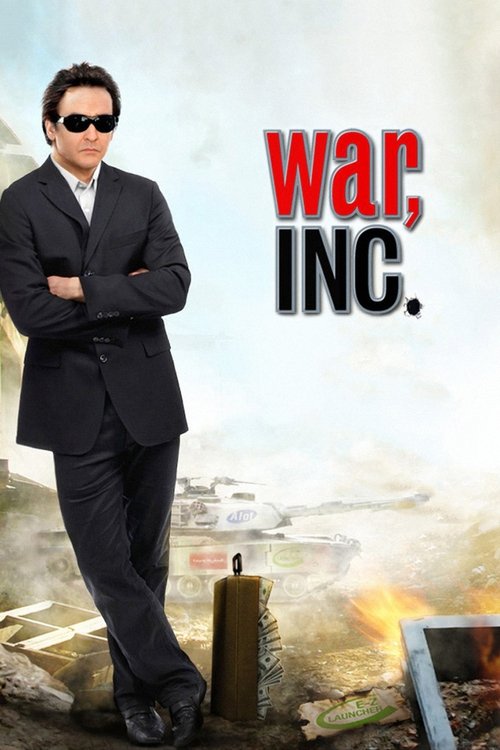
In the ending of "War, Inc.," the main character, Brand Hauser, confronts the corrupt system he has been a part of. After a series of chaotic events, he ultimately decides to expose the truth about the war and the corporate interests behind it. The film concludes with a sense of unresolved tension, as the characters grapple with the consequences of their actions.
As the climax unfolds, Brand Hauser, played by John Cusack, finds himself in a tense standoff. He has been deeply affected by the events surrounding him, particularly the manipulation and exploitation of the war-torn country of Turaqistan. The atmosphere is thick with tension as he realizes the extent of the corruption that has infiltrated the government and military operations.
In a pivotal scene, Brand confronts the corporate overlords, including his former boss, who has orchestrated much of the chaos for profit. The confrontation is charged with emotion, as Brand's internal struggle comes to the forefront. He is torn between his past as a soldier and his current role as a pawn in a larger game. The stakes are high, and the weight of his decisions hangs heavily on him.
As the confrontation escalates, Brand's ally, the journalist, attempts to document the truth, capturing the moment when Brand decides to take a stand. He realizes that the only way to make a difference is to expose the lies and corruption that have led to the suffering of the people in Turaqistan. This moment of clarity is both liberating and terrifying for him, as he understands the risks involved in challenging the powerful forces at play.
In the final moments, Brand's actions lead to a chaotic showdown. The military and corporate forces clash, and the consequences of their greed and manipulation become evident. The film does not provide a neat resolution; instead, it leaves the audience with a sense of uncertainty about the future. Brand's fate is left ambiguous, symbolizing the ongoing struggle against corruption and the complexities of war.
The other main characters also face their own fates. The journalist, who has been a voice of truth throughout the film, continues to fight for justice, but the path ahead is fraught with danger. The corporate leaders, on the other hand, remain entrenched in their power, illustrating the film's commentary on the cyclical nature of corruption and the challenges of enacting real change.
In the end, "War, Inc." closes on a note of unresolved tension, reflecting the ongoing conflicts in the world and the personal battles of its characters. The film leaves viewers contemplating the implications of war, corporate greed, and the quest for truth in a world filled with deception.
Is there a post-credit scene?
The movie "War, Inc." does not have a post-credit scene. The film concludes without any additional scenes or content after the credits roll. The narrative wraps up with the resolution of the main plot, focusing on the themes of war, corporate greed, and the consequences of political manipulation. The ending leaves the audience with a sense of the ongoing struggles faced by the characters, but there are no further revelations or scenes provided in the credits.
What role does the character of Brandt play in the story?
Brandt, played by John Cusack, is a former soldier turned corporate executive who is deeply involved in the privatization of war. He is portrayed as a cynical and disillusioned character, grappling with the moral implications of his actions as he navigates the corrupt landscape of a war-torn country.
How does the character of Marsha affect Brandt's journey?
Marsha, portrayed by Hilary Duff, is a young journalist who becomes romantically involved with Brandt. Her idealism and passion for uncovering the truth challenge Brandt's cynical worldview, pushing him to confront his own complicity in the war and the corporate greed that fuels it.
What is the significance of the fictional country of Turaqistan in the film?
Turaqistan serves as a satirical backdrop for the film, representing a war-torn nation exploited by corporate interests. The country's chaotic environment highlights the absurdity of privatized warfare and the moral decay of those who profit from conflict.
How does the character of the General influence the plot?
The General, played by Ben Kingsley, is a powerful figure in Turaqistan who embodies the corrupt military-industrial complex. His interactions with Brandt and other characters reveal the deep-seated corruption and manipulation at play, driving the narrative forward as Brandt seeks to navigate this treacherous landscape.
What is the relationship between Brandt and the character of the assassin?
The assassin, portrayed by a character named 'The Man,' represents the darker side of the conflict in Turaqistan. His relationship with Brandt is complex, as they both operate in the shadows of the war. The assassin's motivations and actions force Brandt to confront the consequences of his choices and the moral ambiguity of his involvement in the war.
Is this family friendly?
"War, Inc." is not considered family-friendly due to its mature themes and content. Here are some potentially objectionable or upsetting aspects that may occur for children or sensitive viewers:
-
Violence and Warfare: The film depicts scenes of war and violence, including gunfire and explosions, which may be distressing.
-
Political Satire: The movie contains sharp political commentary that may be confusing or inappropriate for younger audiences.
-
Strong Language: There are instances of profanity throughout the film, which may not be suitable for children.
-
Sexual Content: The film includes suggestive themes and scenes that involve sexual situations, which may be uncomfortable for some viewers.
-
Corruption and Greed: The portrayal of corporate and political corruption can be unsettling, as it reflects real-world issues in a satirical manner.
-
Emotional Turmoil: Characters experience significant emotional distress, including betrayal and loss, which may be heavy for sensitive viewers.
Overall, the film's tone and content are geared towards an adult audience, making it less appropriate for children.








