













Popular
What role does the character of the police officer play in the story?
What motivates the main character, Ruslan, to take action against the drug dealers?
How does Ruslan's relationship with his daughter evolve throughout the film?
What is the significance of Ruslan's past as a mobster in the film?
How does the film depict the theme of vengeance through Ruslan's actions?
Should I watch it?
Ask Your Own Question

What is the plot?
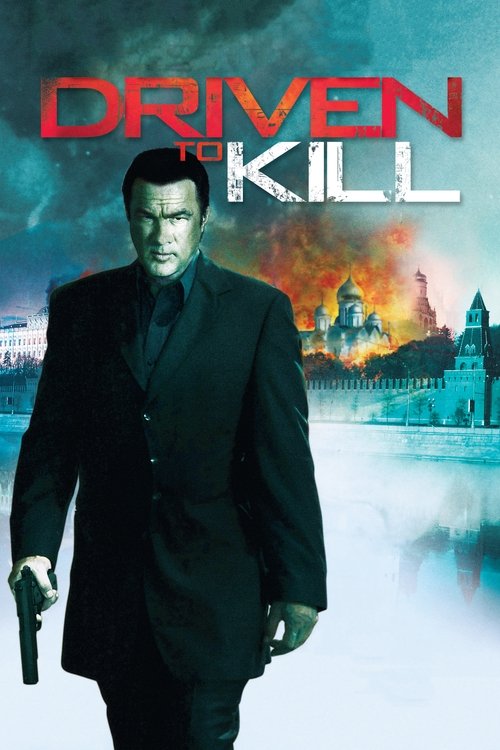
Driven to Kill (2009): Complete Plot Narrative
Ruslan Drachev exists in a carefully constructed duality--a former Russian mobster turned successful crime novelist living quietly in California, writing hardboiled pulp fiction under the pen name Jim Vincent. His past life, however, has never truly left him. He carries it visibly in the form of tattoos marking his forearms in the style of Cain, a visual reminder of the violent man he once was. When the phone rings and his ex-wife Catherine's voice comes through the line, Ruslan learns that their daughter Lanie is getting married. Without hesitation, he boards a plane heading east to New Jersey, abandoning his carefully maintained distance from the life he left behind.
Upon arrival in New Jersey, Ruslan stops first at a local bar, a place where he can reacquaint himself with the physicality of his former existence. Two disrespectful punks approach him, testing the waters with a man they don't recognize. Ruslan quickly and efficiently takes them down, his movements fluid and practiced, demonstrating that despite years of writing crime novels instead of committing crimes, his combat skills remain sharp and lethal. He then hails a cab to Catherine's new home, a luxurious house provided by her second husband, Terry Goldstein, a wealthy and successful defense attorney.
The house is alive with wedding preparations when Ruslan arrives. Catherine greets him, and he reconnects with his daughter Lanie, who is preparing for her wedding to a young man named Stephen. During their conversation, Lanie confides in her father that she finds Terry to be a jerk, a sentiment that troubles Ruslan but which he accepts as part of her adult life. Ruslan pulls Stephen aside privately, and the young man assures him that he has no interest in joining the family business--the Russian mob world that Ruslan once inhabited. Stephen simply wants to love his new wife and build a normal life, free from the violence and criminality that has defined Ruslan's existence. Ruslan accepts this, perhaps seeing in Stephen a chance at redemption through his daughter's new family.
What Ruslan doesn't know is that Stephen is the son of Mikhail, Ruslan's arch-nemesis and a rival Russian mob boss. Mikhail despises the idea that his own son would marry a prosecuting attorney--Lanie's profession--rather than follow in his father's criminal footsteps. The wedding represents not just a union of two people, but a betrayal of mob tradition and loyalty. Additionally, Catherine has become a liability. She is preparing to blow the whistle on corrupt activities involving Terry Goldstein, her current husband and Mikhail's attorney. These two facts--Stephen's defection and Catherine's impending testimony--seal the fate of the family gathering.
The wedding day arrives, and the family prepares to leave Catherine's home for the church where the ceremony will take place. But before they can depart, violence erupts. A pair of unnamed men break into the house with brutal efficiency. They move through the rooms with purpose, finding Catherine first. They stab her repeatedly, their knives finding their mark with deadly accuracy. Catherine falls, her life draining away as her daughter watches in horror. The attackers then turn on Lanie, stabbing her as well, leaving her bleeding and critically wounded. The scene is staged to look like a robbery, a crude attempt to misdirect investigators, but the violence is too personal, too targeted to be anything but a deliberate hit.
Detectives Norden and Lavastic arrive at the scene to investigate the attack. They treat it as a potential robbery, following the surface narrative that the perpetrators have left behind. But Ruslan knows better. He has lived in this world long enough to recognize the signature of a mob hit when he sees one. This wasn't random violence; this was calculated, personal, and directed at his family.
At East Lawn Hospital, Dr. Brown examines Lanie and delivers news that provides a glimmer of hope in the darkness. She expects Lanie to recover from her wounds, though the road ahead will be long and painful. Ruslan sits with his daughter, and in a moment of fierce determination, he makes her a promise: "Those who did this to you will cry tears of blood. This I promise you". It is a vow that will drive every action he takes from this moment forward.
Ruslan begins his own investigation, moving through the criminal underworld with the knowledge and connections of a man who once lived there. He learns that Mikhail orchestrated the attack, that his old enemy has struck at the heart of his family. But there is more to uncover. Terry Goldstein, Catherine's husband and Mikhail's attorney, is also implicated in the conspiracy. Terry knew about the attack, perhaps even facilitated it, all while maintaining his facade of respectability and wealth.
Ruslan needs weapons, and he needs them quickly. Terry, perhaps sensing that Ruslan will come looking for answers, offers to connect him with a contact--a gun dealer he once defended. It is a gesture that appears helpful on the surface, a way for Terry to seem like an ally in Ruslan's quest for justice. Ruslan accepts the offer and travels to meet the dealer at what appears to be a pawn shop. When he arrives, he begins negotiations for the weapons he will need to wage war against those responsible for attacking his family.
But as Ruslan is about to complete the transaction, the gun dealer receives a mysterious phone call. The caller's voice comes through, and suddenly the dealer's demeanor changes. He accuses Ruslan of being a cop, his suspicion triggered by whatever was said on that call. The dealer and his associates move to eliminate Ruslan, but they have made a fatal miscalculation. Ruslan is faster, more skilled, and more ruthless than they anticipated. In the ensuing violence, Ruslan kills the dealer and his men, leaving their bodies behind. He then checks the phone that received the mysterious call and discovers the truth: the call came from Terry Goldstein. The plot thickens indeed. Terry has betrayed Ruslan, tipping off the dealer to eliminate him before he could acquire the weapons he needs.
But Ruslan survives, and he takes the weapons anyway, arming himself for the war ahead. He then recruits Stephen to help him find those responsible for the attack on Lanie. Stephen, young and clearly in over his head, agrees to join his future father-in-law in this quest for vengeance. Together, they begin to close in on Mikhail and Terry, following leads and gathering intelligence about where their enemies might be found.
The investigation takes Ruslan to a strip club, where he engages in a brutal fight scene with men connected to Mikhail's organization. The violence is graphic and uncompromising, showcasing Ruslan's willingness to use any means necessary to extract information and eliminate obstacles. This is not a man constrained by law or morality; this is a man driven by a singular purpose: making those who hurt his daughter pay.
Meanwhile, Mikhail learns that Lanie is still alive--information that reaches him through a dirty cop on Mikhail's payroll. This news troubles Mikhail. He had intended for Lanie to die in the attack, and her survival represents a failure in his plan and a continued threat to his operation. Mikhail decides that Lanie must be eliminated, that the job must be finished. He assembles a team of goons and prepares to strike at the hospital where Lanie is recovering.
Dr. Brown, the physician treating Lanie, becomes aware of the threat. She notices that the police officers assigned to protect Lanie's room have suddenly disappeared, vanished from their posts without explanation. She immediately contacts Ruslan and alerts him to the danger. Ruslan understands what this means: Mikhail is making his move, and Lanie is in immediate peril.
Ruslan acts with characteristic decisiveness. He instructs Dr. Brown to move Lanie to a different location within the hospital, away from the main corridors and standard rooms. The hospital has an entire wing that is no longer in use, a section that has been abandoned and sealed off from regular operations. It is here that Dr. Brown relocates Lanie, creating a hidden sanctuary where Mikhail's men will have difficulty finding her.
Mikhail's goons arrive at the hospital, but they do not come as criminals openly declaring their intentions. Instead, they masquerade as police officers, wearing uniforms and carrying the authority of law enforcement. It is a deception designed to move through the hospital without raising alarms, to reach Lanie's room and finish what they started. But Ruslan and Stephen are waiting for them in the abandoned wing where Lanie has been hidden.
What unfolds is an intense and brutal shootout. Mikhail's men, expecting to find a vulnerable woman in a hospital bed, instead encounter two armed and determined men ready to defend her with lethal force. Bullets tear through the unused wing, ricocheting off walls and echoing through the empty corridors. Ruslan moves with the precision of a trained killer, taking down Mikhail's goons one by one, his movements economical and deadly. Stephen fights alongside him, the young man discovering depths of violence within himself that he never knew existed.
As the shootout concludes and Mikhail's foot soldiers fall, Ruslan comes face to face with Mikhail himself. This is the moment Ruslan has been working toward, the confrontation that will determine whether his promise to Lanie can be fulfilled. The two men, former allies turned bitter enemies, engage in a final struggle. Ruslan emerges victorious, killing Mikhail in what is described as a "brutally awesome" manner, a death that is both violent and satisfying in its finality.
Terry Goldstein, the attorney who conspired with Mikhail and betrayed Ruslan, also faces the consequences of his actions. As part of Ruslan's systematic elimination of those responsible for the attack on his family, Terry is killed. Whether it happens during the hospital confrontation or in a separate encounter, Terry does not survive Ruslan's quest for vengeance.
The detectives investigating the case--Norden and Lavastic--remain largely ineffective throughout the ordeal. They spend their time talking about the case over coffee, discussing leads and theories, but they never actually intervene in any of the violence that unfolds. They are absent when the shootouts occur, absent when bodies pile up, absent when Ruslan systematically dismantles Mikhail's organization. The police force, represented by these two detectives and the corrupt officer on Mikhail's payroll, proves incapable of protecting Lanie or bringing the perpetrators to justice.
When the dust settles and the violence concludes, Ruslan has made good on his promise to Lanie. Those who did this to her have indeed cried tears of blood, though perhaps not in the literal sense. They have paid with their lives, their organizations dismantled, their plans destroyed. Mikhail is dead, killed by the man he sought to destroy. Terry Goldstein is dead, his betrayal answered with lethal consequences. The goons and foot soldiers who carried out the attack are dead, eliminated by Ruslan's hand.
The film concludes with Ruslan living happily ever after, free from any legal consequences for the mass killings he has committed. Despite the bodies left in his wake, despite the violence that has torn through New Jersey's criminal underworld, Ruslan faces no arrest, no prosecution, no repercussions. The police investigation goes nowhere, the detectives remain baffled, and Ruslan walks away from the carnage as a free man. Lanie survives her wounds and recovers, able to move forward with her life and her marriage to Stephen. Stephen, having participated in the violence alongside his future father-in-law, has been initiated into a world he once rejected, though whether this will lead him back into the family business remains unclear.
The story ends with the promise fulfilled and the debt paid in blood. Ruslan has returned to his past, confronted his enemies, and emerged victorious. Whether he returns to California and his life as a crime novelist, or whether he remains in the criminal underworld he once left behind, the narrative does not specify. What is certain is that those who threatened his family have been eliminated, and Ruslan Drachev has proven that despite years spent writing about violence, he remains more than capable of committing it.
More Movies Like This
Browse All Movies →





What is the ending?
In the ending of "Driven to Kill," the protagonist, a former Russian mobster named John, confronts the criminals responsible for his daughter's death. After a violent showdown, he manages to take down the main antagonist, but not without personal loss. The film concludes with John reflecting on his choices and the consequences of his past life.
As the climax of "Driven to Kill" unfolds, John, played by Steven Seagal, finds himself in a desperate race against time. The scene is set in a dimly lit warehouse, where the air is thick with tension. John, fueled by a mix of grief and rage over the murder of his daughter, has tracked down the criminals who orchestrated her death. The atmosphere is heavy, punctuated by the distant sounds of sirens and the faint echo of his own heartbeat.
In the first pivotal moment, John bursts into the warehouse, his expression a mask of determination and sorrow. He is armed and ready, his movements precise and calculated. The camera captures the intensity in his eyes, revealing the emotional turmoil within him. As he steps further inside, he is met with a group of armed thugs, their faces twisted with malice. A fierce gunfight erupts, bullets flying and ricocheting off the concrete walls. John's training as a former mobster comes into play, and he dispatches his enemies with a combination of skill and brute force.
The scene shifts as John confronts the main antagonist, a ruthless crime lord who had orchestrated the events leading to his daughter's demise. The tension escalates as they engage in a brutal hand-to-hand combat sequence. The choreography is raw and visceral, showcasing John's physical prowess and the emotional weight of his mission. Each punch thrown is not just a strike against an enemy but a release of his pent-up grief and anger.
As the fight reaches its climax, John gains the upper hand. He finally overpowers the crime lord, pinning him down. In a moment of catharsis, John confronts him with the truth of his daughter's death, his voice a low growl filled with pain. The crime lord, realizing his impending fate, tries to bargain for his life, but John, driven by the loss he has suffered, shows no mercy. The scene is heavy with emotion, the camera lingering on John's face as he wrestles with the weight of his actions.
In the aftermath of the confrontation, John stands amidst the chaos, breathing heavily, the adrenaline still coursing through his veins. The warehouse is silent now, save for the distant wail of sirens approaching. He looks around at the fallen bodies, a mix of relief and sorrow washing over him. He has avenged his daughter, but the cost is evident in the emptiness that fills him.
The film concludes with John walking away from the scene, the weight of his past heavy on his shoulders. He reflects on the choices he has made, the life he once led, and the family he has lost. The final shot captures him in silhouette against the backdrop of flashing police lights, a man forever changed by the violence and loss he has endured. The fate of the main characters is sealed: John has avenged his daughter but at the cost of his own peace, while the crime lord lies defeated, a testament to the cycle of violence that has consumed them both.
Is there a post-credit scene?
In the movie "Driven to Kill," there is no post-credit scene. The film concludes without any additional scenes or content after the credits roll. The story wraps up with the resolution of the main plot, focusing on the protagonist's journey and the emotional aftermath of the events that transpired throughout the film. The absence of a post-credit scene allows the audience to reflect on the intense narrative and the character's struggles without any further distractions.
What role does the character of the police officer play in the story?
The police officer, who is initially skeptical of Ruslan's involvement, becomes an ally as the plot unfolds. He represents the law and order that Ruslan is at odds with, but as the stakes rise, he begins to understand Ruslan's motivations and the depth of the threat posed by the drug dealers.
What motivates the main character, Ruslan, to take action against the drug dealers?
Ruslan, a former Russian mobster turned family man, is driven by a deep sense of responsibility and love for his daughter, who becomes a victim of the drug dealers. His emotional turmoil and protective instincts push him to confront his violent past and seek vengeance.
How does Ruslan's relationship with his daughter evolve throughout the film?
Initially, Ruslan is distant and struggles with his past, but as the story progresses, his love for his daughter becomes a central theme. After she is harmed, he becomes fiercely protective, leading to a transformation where he embraces his role as a father, ultimately prioritizing her safety above all.
What is the significance of Ruslan's past as a mobster in the film?
Ruslan's past as a mobster is crucial as it shapes his skills and mindset. His experience in the criminal underworld provides him with the tools necessary to confront the drug dealers, but it also creates internal conflict as he grapples with the violent tendencies that come with that life, especially in light of his desire to protect his family.
How does the film depict the theme of vengeance through Ruslan's actions?
Vengeance is depicted through Ruslan's relentless pursuit of the drug dealers who harmed his daughter. Each confrontation is charged with emotion, showcasing his internal struggle between his desire for revenge and the consequences of violence. His actions become increasingly brutal as he seeks to reclaim control and protect his family, illustrating the consuming nature of vengeance.
Is this family friendly?
"Driven to Kill," produced in 2009, is not considered family-friendly due to its mature themes and content. Here are some potentially objectionable or upsetting aspects that may affect children or sensitive viewers:
-
Violence: The film contains several intense action sequences, including hand-to-hand combat and gunfights, which may be graphic and disturbing.
-
Death and Injury: Characters experience significant physical harm, and there are scenes depicting death that could be upsetting.
-
Drug Use: The film includes references to drug trafficking and the drug trade, which may not be suitable for younger audiences.
-
Language: There is strong language throughout the film, which may be inappropriate for children.
-
Emotional Turmoil: Characters deal with themes of loss, betrayal, and revenge, which may be heavy and distressing for sensitive viewers.
-
Crime and Criminal Behavior: The plot revolves around organized crime, which may not be suitable for younger audiences due to its portrayal of illegal activities.
These elements contribute to the film's overall tone and may not be appropriate for all viewers, particularly children.









