
















Popular
What are the main character's struggles with addiction throughout the film?
How does Neely's relationship with her husband evolve throughout the film?
What role does Anne play in Neely's life and career?
What is the significance of the title 'Valley of the Dolls' in relation to the characters' experiences?
How does Jennifer's character arc contribute to the overall narrative of the film?
Should I watch it?
Ask Your Own Question

What is the plot?
Sorry, we aren't able to watch and write up a full detailed plot yet. Check back in a few days.





What is the ending?
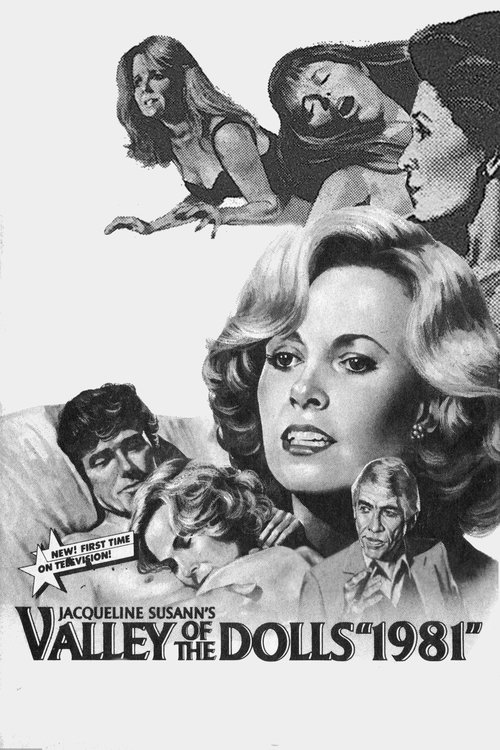
In the ending of Jacqueline Susann's Valley of the Dolls (1981), Anne, now a successful Broadway producer, confronts the realities of her friends' struggles. Neely, who has fallen into addiction and despair, is in a rehabilitation center, while Jennifer, who has succumbed to the pressures of fame, is in a tragic state. The film concludes with Anne reflecting on the cost of ambition and the toll it takes on personal relationships.
As the film approaches its conclusion, the narrative shifts to Anne, who has achieved a level of success as a Broadway producer. She stands in her office, surrounded by the hustle and bustle of the theater world, yet her expression is one of deep contemplation. The camera captures her internal conflict as she reflects on the paths her friends have taken.
The scene transitions to Neely, who is in a rehabilitation center. The stark, clinical environment contrasts sharply with the glamorous world of show business that she once inhabited. Neely, now gaunt and weary, struggles with her addiction. Her eyes, once filled with ambition and fire, now reveal a haunting emptiness. She is visited by Anne, who tries to reach out to her, but Neely's bitterness and despair are palpable. Their conversation is fraught with tension, as Neely lashes out, blaming the industry and her own choices for her downfall. Anne, filled with a mix of sadness and determination, tries to remind Neely of her talent, but the words seem to fall on deaf ears.
The narrative then shifts to Jennifer, who is in a state of decline. The once vibrant star is now a shadow of her former self, struggling with the pressures of fame and the expectations placed upon her. In a poignant scene, Jennifer is seen in her apartment, surrounded by remnants of her past glory. The camera lingers on her as she gazes at old photographs, her expression a mixture of nostalgia and regret. She is visited by Anne, who attempts to offer support, but Jennifer's despair is overwhelming. She reveals her feelings of inadequacy and the toll that the industry has taken on her mental health. The emotional weight of their conversation underscores the film's exploration of the darker side of fame.
As the film draws to a close, Anne stands alone in her office, reflecting on the choices she has made and the friendships that have been strained by ambition and the pursuit of success. The final scenes are intercut with flashbacks of happier times shared with Neely and Jennifer, highlighting the stark contrast between their past and present. The camera captures Anne's resolve as she vows to continue her work in the theater, but the weight of her friends' struggles hangs heavily on her heart.
The film concludes with a sense of bittersweet acceptance. Anne understands that while she has achieved her dreams, the cost has been high. The final shot lingers on her face, a mixture of determination and sorrow, as she contemplates the complexities of friendship, ambition, and the often harsh realities of life in the entertainment industry. The screen fades to black, leaving the audience with a poignant reminder of the sacrifices made in the pursuit of success.
Is there a post-credit scene?
The movie "Jacqueline Susann's Valley of the Dolls" produced in 1981 does not have a post-credit scene. The film concludes with a dramatic and emotional finale that encapsulates the struggles and fates of its main characters, Anne, Neely, and Jennifer. After the climactic events, the story wraps up without any additional scenes or content after the credits. The focus remains on the characters' journeys and the impact of fame, addiction, and personal relationships throughout the film.
What are the main character's struggles with addiction throughout the film?
In 'Jacqueline Susann's Valley of the Dolls,' the main characters, Anne, Neely, and Jennifer, each face their own battles with addiction. Neely, played by Katherine Kelly Lang, becomes increasingly dependent on pills, which she refers to as 'dolls.' Her addiction spirals out of control, leading to a series of emotional breakdowns and a tumultuous career in show business. Anne, portrayed by Barbara Parkins, initially tries to support Neely but eventually finds herself caught in the web of addiction as well. Jennifer, played by Lisa Hartman, also struggles with her own demons, showcasing the destructive nature of fame and substance abuse.
How does Neely's relationship with her husband evolve throughout the film?
Neely's relationship with her husband, Ted Casablanca, played by Paul Burke, begins with passion and excitement but quickly deteriorates as her addiction takes center stage. Initially, Ted is supportive of Neely's career, but as her dependence on pills grows, he becomes increasingly frustrated and helpless. Their relationship is marked by emotional turmoil, with Neely's erratic behavior pushing Ted away. Eventually, Ted's disillusionment leads to a separation, highlighting the impact of Neely's addiction on her personal life.
What role does Anne play in Neely's life and career?
Anne, portrayed by Barbara Parkins, serves as both a friend and a caretaker to Neely throughout the film. She is initially drawn to Neely's talent and charisma, and their friendship blossoms as they navigate the challenges of the entertainment industry together. However, as Neely's addiction worsens, Anne finds herself increasingly burdened by the responsibility of trying to save her friend. Anne's emotional state fluctuates between loyalty and frustration, as she grapples with her own ambitions while trying to support Neely, ultimately leading to a strained relationship.
What is the significance of the title 'Valley of the Dolls' in relation to the characters' experiences?
The title 'Valley of the Dolls' symbolizes the hollow pursuit of fame and the reliance on pills, or 'dolls,' that the characters use to cope with their struggles. Each character's journey reflects the darker side of the glamorous life they seek. Neely's addiction to pills represents her desire to escape the pressures of stardom, while Anne's initial naivety about the industry leads her to confront the harsh realities of life in Hollywood. The title encapsulates the themes of disillusionment and the cost of ambition, as the characters navigate their personal valleys filled with despair and addiction.
How does Jennifer's character arc contribute to the overall narrative of the film?
Jennifer, played by Lisa Hartman, represents the tragic consequences of the pursuit of fame and the impact of addiction. Her character begins as a hopeful actress, but as she becomes entangled in the world of show business, she faces her own struggles with substance abuse. Jennifer's arc is marked by her descent into addiction, paralleling Neely's journey and serving as a cautionary tale about the dangers of the industry. Her eventual breakdown and tragic fate highlight the film's exploration of the darker aspects of fame, reinforcing the emotional weight of the narrative.
Is this family friendly?
"Jacqueline Susann's Valley of the Dolls" (1981) contains several elements that may not be suitable for children or sensitive viewers. Here are some potentially objectionable aspects:
-
Substance Abuse: The film prominently features characters struggling with addiction to pills and alcohol, showcasing the negative effects of substance abuse on their lives.
-
Sexual Content: There are scenes that depict sexual relationships and suggestive situations, which may be inappropriate for younger audiences.
-
Mental Health Issues: Characters experience emotional turmoil, depression, and breakdowns, which could be distressing for some viewers.
-
Suicide Themes: The film addresses themes of despair and includes a significant plot point involving suicide, which may be upsetting.
-
Dramatic Conflict: Intense interpersonal conflicts and betrayals among characters can evoke strong emotional reactions.
These elements contribute to a mature narrative that may not be suitable for all viewers, particularly children.