











Popular
How do the supporting characters impact the main storyline?
What is the significance of the character Jean in the story?
How does the setting of Paris influence the characters' relationships?
What role does the character Claire play in Jean's journey?
What are the key moments that define Jean's character development?
Should I watch it?
Ask Your Own Question

What is the plot?
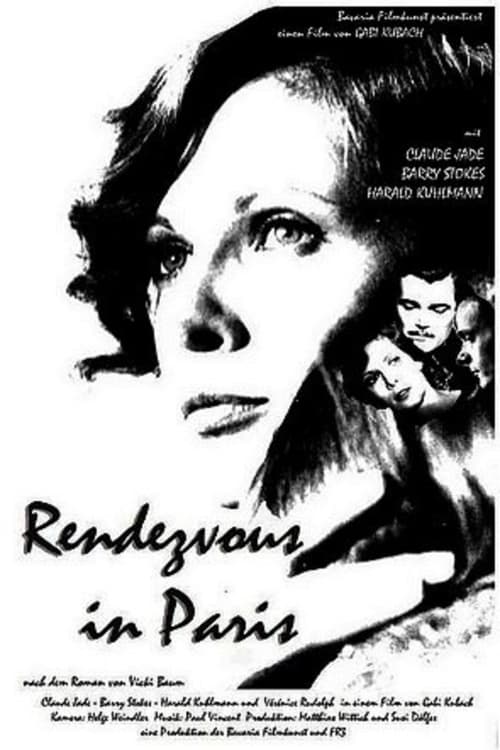
In Berlin in 1930, Evelyne Droste lives as if behind glass: delicate, protected, and quietly suffocating inside a respectable marriage to the lawyer Kurt Droste. The house is orderly, the children are kept under the constant care of a governess and a nanny, and every detail of her life has been arranged so carefully that she has almost no room left for desire, restlessness, or even ordinary self-definition. Kurt treats her with exaggerated caution, as though she is too fragile for pressure or disappointment, and the result is that Evelyne feels not cherished but unnecessary, a woman whose vitality has been stored away for so long that it is ready to burst out at the first opening. Marianne, a friend of Kurt who becomes Evelyne's closest companion, watches this state of affairs with more honesty than anyone else around her. The marriage looks proper from the outside, but the emotional air inside it is thin and stale, and the film begins with that quiet, poisonous sense that something in Evelyne is already drifting toward collapse or escape.
That pressure starts to break when Marianne takes Evelyne into more public life and encourages her to play tennis. The court becomes a small but important threshold: a place of movement, exposure, and possibility, the opposite of the sealed domestic world she inhabits at home. There, Evelyne meets the American businessman Frank Davis. He is everything Kurt is not--easy, modern, self-assured, charming in a way that seems to promise freedom rather than duty--and Evelyne is immediately struck by the sense that he is alive in a different register from the men and routines that have governed her existence. At first she resists his advances, but the resistance does not last long, because what Frank awakens in her is not simply attraction but recognition: he seems to see a self in her that the people around her have never allowed to exist. The first encounter is only the opening spark. At a later ball, the attraction becomes impossible to deny, and during a walk Frank kisses her, turning a social flirtation into a genuine moral rupture. The scene carries the charge of someone stepping off a ledge while still pretending to be on solid ground.
The kiss changes everything, because Evelyne's life is now split between the life she has been given and the one she suddenly imagines might be possible. Frank soon has to leave for Paris, but before he goes he asks her to come and visit him there for a weekend. The invitation is not merely romantic; it is a test, and Evelyne is already failing it in the most human way possible, by wanting both safety and danger at once. Marianne notices that Evelyne is confused, but instead of exposing the secret to Kurt at dinner, she keeps silent and preserves the fragile new possibility forming around her friend. Then she says the line that crystallizes the film's moral and emotional tension: "Du und Kurt, ihr lebt zu monogam"--you and Kurt, you live too monogamously. It is both teasing and diagnostic, a remark that cuts through the marriage's respectable surface and names the emotional starvation at its center. Kurt, meanwhile, remains almost willfully blind. He calls Evelyne "etwas abgewelkt"--a little faded, a little worn--and tries to protect her from every strain, which only deepens the irony that his care has become another form of confinement.
Evelyne's decision to follow Frank is not made in one dramatic instant but accumulates through longing, embarrassment, and the quiet violence of being unseen. She understands that she is risking her bourgeois existence, but that is also exactly what gives the choice its power. In order to go, she lies to Kurt and tells him she is traveling with Marianne to Gatow, while in fact she is going to Paris for the weekend to be with Frank. Kurt believes she is away in the countryside, safe and properly accounted for. The lie matters because it is not only a practical deception; it is the first time Evelyne actively authors her own story. Until now, everyone else has written her role for her. Now she writes a false one and steps inside it, trembling but determined.
Paris is where fantasy and reality meet head-on. The city itself is not described in detailed landmark terms in the available material, but it functions unmistakably as the destination of romantic projection and the site where that projection is tested against the actual character of the man she has chased. Evelyne arrives believing that this trip may be the beginning of a fuller life, perhaps even a genuine love affair that justifies all the risk she has taken to get there. For a little while, that hope sustains her. She has left Berlin, left Kurt, left the governess, the nanny, the polite suffocation of her home, and she is now outside the architecture of her old life. But the film is built on the hard truth that escape does not guarantee freedom; sometimes it only reveals the shape of the cage in a different city.
Frank's true nature emerges gradually, and the revelation is the central emotional twist of the story. What Evelyne takes for passion turns out to be, for Frank, little more than an adventure. He is not the figure of rescue she has projected onto him but a seducer who enjoys transience, novelty, and the romance of the moment without the burden of responsibility. The sources do not preserve a single explicit confession in which Frank states this outright; instead, Evelyne realizes it through the structure of his behavior and the emotional distance between what she has imagined and what he is actually offering. That realization lands with the force of humiliation. She has not just fallen in love; she has wagered everything on the possibility that she might matter to someone who was never prepared to let her matter beyond the immediate thrill of pursuit. The film's suspense is therefore less about whether the affair will be discovered than about the moment Evelyne understands that discovery is not the real disaster. The real disaster is that Frank was never what she needed him to be.
From here, the narrative's momentum becomes quieter but sharper, because the crisis has moved inward. Evelyne is stranded between two forms of emptiness. On one side is the marriage she has left behind, respectable and emotionally anesthetized, with Kurt's protectiveness masking the fact that he has not truly seen her. On the other is the affair she thought would open her life, now stripped of illusion and exposed as a temporary indulgence for the man who initiated it. There is no triumphant emancipation, no lush romantic fulfillment, no clean break into a new identity. Instead, Evelyne finds herself face-to-face with the fact that her longing has outrun the reality available to her. That tension gives the final stretch of the film its sadness. The story is no longer asking whether she will choose home or lover, but what remains of a woman once both options reveal their hollowness.
The most important confrontation is therefore not a shouted argument or physical clash but the devastating internal confrontation when Evelyne understands that Frank is a flirt and a Verführer, a seducer interested only in a fleeting romance. That knowledge reverses the meaning of everything that came before it: the tennis lesson, the party, the ball, the kiss, the invitation, the secret trip, all of it now reads as the preparation for a disappointment she had been emotionally and socially too protected to anticipate. In another film, this might lead to a dramatic rejection scene, a direct accusation, or a calculated revenge. Here it leads instead to collapse into reality. Evelyne's tragedy is not that she is foolish, but that she has been made so unprepared for real desire that she can only meet it through idealization, and idealization is exactly what Frank exploits.
No deaths are described in the available material until the end of the trip, when the film turns suddenly and brutally outward again. On Evelyne's homeward flight, the airplane crashes. The sources provided do not specify any surviving passengers or detail a death toll, but the crash is clearly the film's final external catastrophe and the climax of its plot as summarized in the available accounts. Whatever emotional awakening Evelyne has experienced in Paris is cut short by this sudden disaster. The shift is stark: one moment the story is about a woman discovering that both her marriage and her affair are inadequate, and the next it is about a violent interruption in midair, a mechanical end to movement itself. The crash does not function as a melodramatic punishment so much as a final, merciless punctuation mark. Her flight home--already symbolically loaded as the return from false freedom to the world she left behind--ends in literal destruction before any return can be completed.
The final revelation belongs to Kurt. Only after the crash does he learn how lonely Evelyne has been all along. That late understanding is the film's bitterest emotional note, because it arrives too late to change anything and too late to save the marriage from its own structure of misunderstanding. Kurt's protective habits, his careful manner, his insistence on shielding her from strain, now look less like love than like a failure of recognition. He has not merely underestimated her strength; he has never truly understood the starvation beneath her passivity. The film closes on that realization, not on a reconciliation, and not on any easy moral judgment. Evelyne's secret life has exposed the emotional emptiness of the old one, but the new life she sought proves just as incapable of sustaining her. The marriage is revealed as deeply lonely, the affair as fleeting, and the journey to Paris as a passage through longing into wreckage.
What makes the ending so devastating is its refusal to offer recovery. Evelyne's rebellion is real, but it does not free her. Frank's charm is real, but it does not love her. Kurt's concern is real, but it does not reach her in time. Marianne's sympathy is real, but it can only delay disclosure, not transform the situation. Every major relationship in the film contains some partial truth and some fatal limitation. Even the places are charged with this contradiction: the protected Berlin home, the tennis court, the ball, Paris, the airplane homeward bound. Each space promises movement, and each one reveals constraint. The final image implied by the plot summaries is not one of redemption or open possibility but of collapse and belated knowledge, with Kurt left to reckon with the loneliness he never noticed until it is too late.
If the film's emotional structure is simple, its force comes from how precisely it stages the progression from repression to awakening to disillusionment. Evelyne begins as a woman whose life has been curated out from under her, moves through attraction and secret defiance, and ends in catastrophe without ever receiving the liberation she risks everything to find. Frank Davies enters as the embodiment of freedom and exits as the proof that freedom without attachment can be another form of carelessness. Kurt Droste enters as the respectable husband and exits as a man finally forced to understand that protection is not the same as intimacy. Marianne functions as the quiet hinge between these worlds, the one person who sees enough to encourage the rebellion but not enough to prevent the ruin. And Paris, the city of the weekend promise, becomes not a place of rescue but the brief stage on which Evelyne sees the truth too late to save herself from the consequences of wanting more than her life has prepared her to hold.




What is the ending?
In the ending of "Rendezvous in Paris," the main characters, Pierre and Christine, confront their feelings for each other amidst the backdrop of Paris. Their relationship reaches a pivotal moment as they must decide whether to pursue a future together or part ways. Ultimately, they choose to embrace their love, leading to a hopeful conclusion.
As the film approaches its climax, the scene shifts to a picturesque Parisian café, where Pierre and Christine sit across from each other, the ambiance filled with the soft murmur of conversations and the clinking of glasses. The sunlight filters through the trees, casting dappled shadows on their table. Pierre, visibly anxious, fidgets with his coffee cup, his mind racing with thoughts of what their future could hold. Christine, on the other hand, appears contemplative, her gaze drifting to the bustling street outside, reflecting her internal struggle between her past commitments and her burgeoning feelings for Pierre.
In this moment, the tension between them is palpable. Pierre finally breaks the silence, expressing his desire to be with Christine, to explore the depths of their connection. His voice trembles slightly, revealing his vulnerability. Christine, caught off guard, feels a rush of emotions. She grapples with the weight of her previous life, the expectations that have been placed upon her, and the undeniable chemistry that has developed between them.
As they talk, the camera captures close-ups of their faces, highlighting the flicker of hope in Pierre's eyes and the conflict in Christine's expression. The dialogue flows between them, filled with both hesitation and longing. They reminisce about their shared moments, the laughter, and the intimacy that has blossomed during their time together in Paris. Each word exchanged is laced with the unspoken acknowledgment of the risks involved in choosing love over comfort.
The scene transitions to a serene walk along the Seine River, where the iconic bridges and the shimmering water create a romantic backdrop. Here, the couple's conversation deepens. Christine reveals her fears of leaving her old life behind, while Pierre reassures her that love is worth the leap of faith. The emotional stakes rise as they stand at the edge of the river, the city of lights illuminating their faces, symbolizing the choices that lie ahead.
In a moment of clarity, Christine takes Pierre's hand, signaling her decision. The camera captures their fingers entwined, a visual representation of their commitment to each other. They share a tender kiss, surrounded by the beauty of Paris, a city that has witnessed their journey. This kiss signifies not just a romantic connection but a mutual understanding that they are ready to face the uncertainties of the future together.
As the film draws to a close, the final scene shows Pierre and Christine walking away from the river, hand in hand, their silhouettes framed against the glowing Paris skyline. The music swells, evoking a sense of hope and new beginnings. The screen fades to black, leaving the audience with the impression that love can triumph over fear and that the choices we make define our paths.
In summary, Pierre and Christine choose to embrace their love, stepping into an uncertain future together, symbolizing the film's overarching theme of love's power to transform lives.
Is there a post-credit scene?
Rendezvous in Paris, produced in 1982, does not have a post-credit scene. The film concludes its narrative without any additional scenes or content after the credits roll. The story wraps up with the main characters' arcs resolved, leaving the audience with a sense of closure regarding their romantic and emotional journeys throughout the film.
How do the supporting characters impact the main storyline?
The supporting characters, including Jean's friends and romantic interests, provide contrasting perspectives on love and relationships. Their interactions with Jean often serve to highlight his internal conflicts and the choices he must make, enriching the narrative with diverse viewpoints on romance.
What is the significance of the character Jean in the story?
Jean is a pivotal character whose romantic pursuits drive much of the narrative. His interactions with various women in Paris reveal his longing for connection and the complexities of love. His character embodies the struggles of balancing personal desires with societal expectations.
How does the setting of Paris influence the characters' relationships?
The enchanting backdrop of Paris serves as a catalyst for romance and introspection. The city's iconic landmarks and vibrant atmosphere enhance the emotional stakes for the characters, making their encounters feel more significant and charged with possibility.
What role does the character Claire play in Jean's journey?
Claire represents both a muse and a challenge for Jean. Her independent spirit and complex personality force him to confront his own insecurities and desires. Their relationship evolves throughout the film, highlighting themes of passion, misunderstanding, and the quest for true intimacy.
What are the key moments that define Jean's character development?
Key moments include his initial encounters with Claire, moments of vulnerability when he reveals his fears about love, and his eventual realizations about what he truly wants. These scenes are marked by emotional intensity, showcasing his growth from a carefree romantic to someone seeking deeper connections.
Is this family friendly?
"Rendezvous in Paris," produced in 1982, is a romantic drama that explores themes of love, relationships, and personal connections. While the film is not overtly explicit, there are a few elements that may be considered objectionable or upsetting for children or sensitive viewers:
-
Romantic Relationships: The film delves into adult romantic relationships, which may include themes of infidelity and emotional turmoil. These aspects might be complex for younger viewers to understand.
-
Emotional Conflict: Characters experience significant emotional struggles, including heartbreak and existential dilemmas. The portrayal of these feelings may be intense and could resonate deeply with sensitive audiences.
-
Mature Themes: The narrative touches on themes of longing, loss, and the complexities of love, which may be more suitable for older teens and adults.
-
Cultural Context: Some scenes may depict social situations or behaviors that reflect the cultural norms of the time, which could be confusing or uncomfortable for younger viewers.
Overall, while the film does not contain graphic content, its emotional depth and mature themes may not be ideal for a family-friendly viewing experience.








