





Popular
What role does the character of Detective Harris play in the story?
What motivates the main character, Johnny, to get involved in the drug trade?
How does the relationship between Johnny and his girlfriend, Lisa, evolve throughout the film?
How does the film depict the consequences of drug use on the characters?
What pivotal event leads to Johnny's turning point in the film?
Should I watch it?
Ask Your Own Question

What is the plot?
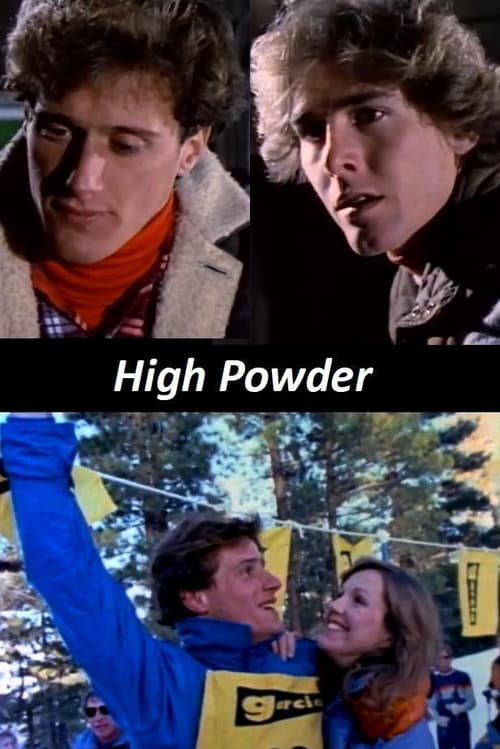
Bill Reed stands at the edge of the ski slope, the crisp mountain air biting at his cheeks as he watches the high school ski team prepare for the big downhill race. Snow dusts the pines, and the sun glints off the packed powder, but Bill's focus narrows on two figures huddled near the base of the lift: Joe, the team's charismatic captain, Joe Harlan, slipping a small vial of amphetamines--high powder, they call it--into the hand of Rick Dawson, Bill's best friend and fellow skier. Rick, lanky and nervous, pockets the pills with a quick nod, his eyes darting toward the steep course ahead. Bill's stomach twists; he's heard whispers about Joe's side hustle, pushing drugs through the high school halls, but seeing it hit the team like this feels like a punch. Joe claps Rick on the back, murmuring low, "This'll give you the edge, man. Courage for the win."
The race horn blares, and the skiers explode down the icy slope. Rick, fueled by the amphetamines surging through his veins, carves turns with unnatural precision, his body a blur against the white expanse. He crosses the finish line first, arms raised in triumph amid cheers from the team--Kathy Simmons, Bill's girlfriend and a team supporter, screams loudest from the sidelines, her ponytail whipping in the wind. Bill forces a smile but pulls Rick aside as the crowd thins, the adrenaline still pumping. "Rick, what the hell? You're taking stupid chances with that stuff," Bill hisses, grabbing his friend's arm. Rick shrugs him off, sweat beading on his forehead despite the cold, his pupils dilated wide. "Lay off, Bill. It worked, didn't it? I won." The words hang heavy, Rick's voice edged with defiance, but Bill sees the tremor in his hands, the reckless high masking fear.
Tension simmers as the day wears on, the team lingering at the slope's lodge, laughter echoing off wooden beams while coaches bark about the next practice. Bill can't shake the image of the exchange, Joe's smug grin as he chats up Tina, another team girl with sharp eyes and a knowing smile. Joe Harlan rules this world--star skier, team captain, the guy everyone wants to be. But Bill knows better now; Joe's empire, built on pills peddled in locker rooms, has snaked into the pure rush of the slopes. That night, under a starlit sky, Rick hits the powder again, amped up for an unsanctioned run on a closed section of the slope, ice patches gleaming treacherously in the moonlight. Bill shouts after him from the lift, "Rick, don't! That hill's off-limits!" But Rick, invincible in his drugged haze, rockets downward.
The crash shatters the night. Rick's skis catch an ice ridge--debated later as the culprit, but Bill knows the truth--and he tumbles in a violent somersault, body slamming into snowbanks and rocks. Paramedics swarm, sirens wailing through the pines, as the team gathers in stunned silence. Kathy clings to Bill, her face pale, whispering, "He'll be okay, right?" But at the hospital, under harsh fluorescent lights, the doctor delivers the verdict: Rick Dawson is paralyzed from the waist down, his spinal cord severed in the wipeout. Tubes snake into his arms, monitors beeping a grim rhythm. Bill paces the sterile hallway, guilt gnawing at him--he tried to intervene, but not hard enough.
Word spreads like wildfire through the high school corridors the next morning, lockers slamming as whispers turn to accusations. In Rick's room, family and teammates crowd around his bed, his face ashen against white sheets. An uncle or coach--voice gravelly with blame--points at Bill: "You really should have stopped him from going down that hill. What do you think I tried to do? I guess you should have tried harder. That slope was closed. I'd say it was a little bit of negligence." Bill's father, a steady presence with callused hands from years coaching youth sports, grips his son's shoulder. "You knew, Dad? You're responsible for that accident?" The room erupts in denial, Joe leading the charge from the doorway, his captain's jacket zipped tight. "The drugs had nothing to do with the accident. It was the ice on the slopes." His voice is smooth, practiced, eyes locking on Bill with a warning flicker. Tina nods vigorously beside him: "Tina told me that slope was in bad shape that day."
Bill doesn't buy it. He knows the amphetamines warped Rick's judgment, turned caution to recklessness. In the hospital cafeteria, steam rising from vending machine coffee, Bill corners Joe. "You gave him those pills, Joe. This is on you." Joe brushes him off with a laugh, leaning against a Formica table, his posture all easy confidence. "Prove it, squealer. Rick won that race clean. Ice happens." The rejection stings, but worse is seeing Joe back on the slopes that afternoon, whispering to other team members--handing off vials in the shadow of the gondola. Another kid pockets the high powder, eyes lighting with false fire. Bill's chest tightens; one accident wasn't enough. Joe's business thrives, unchecked, a powder keg waiting to blow.
Days blur into a moral storm for Bill. At home, in a modest kitchen lit by a single bulb, his father urges action: "Son, you can't let this slide. Joe's poison." Bill nods but hesitates, the weight of loyalty crushing him. Loyalty to Rick, now trapped in a wheelchair; to the team that's his second family; to Kathy, whose pleas grow desperate. They meet at the high school parking lot after classes, gravel crunching under her boots as she blocks his path. "Kathy, please, try to understand." She grabs his jacket, eyes welling. "Bill, I do understand. You're doing what you have to do, right?" He nods grimly. "That's right. It would be easier for me to do nothing." Her voice cracks, emotion raw: "Then why don't you? Your nobility kills me. You're not only hurting Joe--you hurt my folks, you hurt me, and you hurt the whole team!" Bill pulls away, the winter wind whipping between them, her words echoing like a curse. He sees the fracture lines spreading--friends averting eyes in the halls, whispers of "snitch" trailing him.
Tension builds like a gathering storm on the slopes. Practices intensify, Joe pushing the team harder, his deals more brazen. Bill overhears him in the locker room: "This powder'll make you fly, better than any ice." One skier nods, slipping a pill under his tongue before a training run. Bill intervenes again, grabbing the kid's arm mid-hand-off. "Don't. Look what it did to Rick." Joe shoves between them, faces inches apart, breath hot with anger. "Stay out of it, Reed. This team's mine." No fists fly, but the air crackles with threat, teammates circling like wolves. Bill backs off, heart pounding, the isolation sinking in. Kathy watches from afar, torn, her loyalty splintering.
Nights haunt Bill with what-ifs. He visits Rick in rehab, the room smelling of antiseptic and despair. Rick, propped in his chair, stares out at the parking lot lights. "Was it the pills, Bill? Or just bad luck?" Bill kneels, voice low: "It was the high powder, Rick. Joe's feeding it to everyone now. Another wipeout's coming." Rick's eyes harden, a flicker of rage breaking through paralysis. "Then stop him. For me." The plea ignites something in Bill--a resolve forged in fire. He confides in his father again, the two men silhouetted against the living room window. "I don't want to squeal, Dad. But I can't stand by." His father nods, pride in his eyes: "Blow the whistle, son. With my backing."
The climax erupts on a powder-blue afternoon at the main slope, team gathered for a championship qualifier. Bill slips away to the ranger station-- makeshift police outpost--heart hammering as he lays it all out: Joe's dealing, the amphetamines, Rick's crash, the ongoing sales. The officer nods gravely, radio crackling with confirmation. Word leaks fast; by evening, the team knows. Joe confronts Bill at the base lodge, fury twisting his perfect features, teammates flanking him like an angry mob. "You ratted me out? After everything?" Joe's voice booms, fists clenched. Kathy stands at the edge, tears streaming, pleading silently. Bill stands firm, chin up against the onslaught. "Someone had to stop you. Rick's paralyzed because of your powder." The team turns on him--shouts of "Traitor!" "Squealer!"--ostracizing him in a wave of cold shoulders and glares. Joe sneers, "You'll pay for this," but cops arrive, cuffing him amid the chaos, vials spilling from his pockets onto the snow.
Momentum peaks in the fallout. Joe Harlan faces arrest, his empire crumbling as teammates scatter, some confessing their own buys under questioning. Rick, hearing the news in his hospital bed, manages a weak smile--justice, partial, for his shattered legs. Bill's father stands by him, a rock amid the storm. But the personal cost cuts deep: Kathy walks away for good, her final words a whisper in the parking lot wind: "You chose this over us." The team shuns Bill, empty spots at practice where his skis once stood, echoes of laughter now silence.
In the final scene, Bill stands alone on the slope at dusk, the sun bleeding orange across the snow. Music swells, poignant strings underscoring his isolation, applause from a distant crowd mocking his solitude. He calls out softly into the emptying twilight: "Kathy? Kathy, you gonna talk to me?" She doesn't turn back, her figure receding into shadow. Bill exhales, resolve hardening like ice. He's paid the price--friendships shattered, status lost--but he's taken a stand against the evil threading through their world. Joe's in custody, the high powder off the slopes, no more accidents looming. Rick lives on, paralyzed but safe; Bill endures, scarred but unbroken. The mountain looms eternal, a silent witness to choices carved in snow.
More Movies Like This
Browse All Movies →



What is the ending?
In the ending of "High Powder," the main characters face the consequences of their actions as the drug deal spirals out of control. Tensions rise, leading to a violent confrontation. Ultimately, the characters are left to deal with the fallout of their choices, with some facing dire consequences while others find a way to escape.
As the climax of "High Powder" unfolds, the scene is set in a dimly lit warehouse where the drug deal is about to take place. The atmosphere is thick with tension, and the air is charged with the anticipation of betrayal. The main characters, including the desperate dealer and his anxious accomplices, gather, each one grappling with their own motivations and fears.
The dealer, driven by a mix of greed and desperation, paces nervously, his eyes darting around the room. He knows that this deal could either make or break him. His accomplices, a mix of seasoned criminals and naive newcomers, exchange worried glances, sensing the impending danger. The stakes are high, and the weight of their choices hangs heavily in the air.
As the deal begins, the atmosphere shifts. The arrival of the buyers, a group of hardened criminals, escalates the tension. The dealer tries to maintain control, but the situation quickly spirals out of hand. Words are exchanged, and the air crackles with hostility. The buyers, sensing weakness, become aggressive, and the dealer's facade begins to crumble.
Suddenly, a confrontation erupts. Shouts fill the warehouse as accusations fly, and the situation devolves into chaos. Characters scramble for safety, and the sound of gunfire pierces the air. The dealer, realizing that he has lost control, makes a desperate attempt to salvage the situation, but it is too late. The violence escalates, and one by one, characters are caught in the crossfire.
In the midst of the chaos, some characters make a break for it. The dealer, now panicked and desperate, tries to escape but is ultimately cornered. His fate is sealed as he faces the consequences of his choices. Meanwhile, other characters, who had initially been complicit in the deal, find themselves grappling with guilt and fear. Some manage to flee, but not without the emotional scars of the night's events.
As the dust settles, the warehouse is left in disarray, a stark reminder of the violence that unfolded. The surviving characters are left to confront the reality of their actions. The dealer's fate serves as a cautionary tale, illustrating the dangers of greed and the consequences of a life steeped in crime. The emotional weight of the night lingers, leaving the characters to ponder their choices and the paths they have taken.
In the end, the film closes on a somber note, with the surviving characters reflecting on their experiences. The warehouse, once a site of ambition and greed, now stands as a haunting reminder of the fragility of life and the heavy toll of their decisions. Each character is left to navigate their own path forward, forever changed by the events that transpired.
Is there a post-credit scene?
The movie "High Powder," produced in 1982, does not feature a post-credit scene. The film concludes without any additional scenes or content after the credits roll. The narrative wraps up with the resolution of the main plot, leaving no further developments or cliffhangers for the audience to ponder after the film's conclusion.
What role does the character of Detective Harris play in the story?
Detective Harris serves as the moral counterpoint to Johnny's descent into the drug world. He is determined to clean up the streets and sees Johnny as a potential informant. Harris's relentless pursuit of justice creates a cat-and-mouse dynamic that heightens the tension in the narrative.
What motivates the main character, Johnny, to get involved in the drug trade?
Johnny, a young man struggling with his identity and purpose, is initially drawn into the drug trade by the allure of quick money and the excitement it brings. His desire to escape his mundane life and prove himself to his peers drives him deeper into the dangerous world of drugs.
How does the relationship between Johnny and his girlfriend, Lisa, evolve throughout the film?
Johnny and Lisa's relationship begins with a sense of innocence and love, but as Johnny becomes more entrenched in the drug trade, Lisa grows increasingly concerned about his choices. Her emotional turmoil is palpable as she tries to support him while also fearing for their future, leading to tension and conflict between them.
How does the film depict the consequences of drug use on the characters?
The film starkly illustrates the devastating effects of drug use through various characters who spiral into addiction, showcasing their physical and emotional deterioration. Scenes of desperation, loss, and betrayal highlight the harsh realities of the drug culture, impacting not only the users but also their loved ones.
What pivotal event leads to Johnny's turning point in the film?
A pivotal event occurs when Johnny witnesses a violent confrontation between rival drug dealers, which shatters his romanticized view of the drug trade. This moment of clarity forces him to confront the dangers he has embraced and ultimately leads him to reassess his life choices and the path he is on.
Is this family friendly?
"High Powder," produced in 1982, is not considered family-friendly due to its mature themes and content. The film includes several potentially objectionable elements that may be upsetting for children or sensitive viewers.
-
Drug Use: The film prominently features drug culture, including scenes depicting drug use and the consequences associated with it, which may be distressing for younger audiences.
-
Violence: There are instances of violence that may be graphic or intense, contributing to a tense atmosphere that could be unsettling.
-
Adult Themes: The narrative explores complex adult relationships and moral dilemmas, which may not be suitable for children.
-
Language: The dialogue includes strong language and profanity, which could be inappropriate for younger viewers.
-
Emotional Turmoil: Characters experience significant emotional struggles, including addiction and betrayal, which may be heavy and difficult for sensitive viewers to process.
These elements combine to create a film that is more appropriate for mature audiences.









