





Popular
What motivates the cowboy character to pursue a relationship with the ballerina?
How does the ballerina's background influence her relationship with the cowboy?
What challenges do the cowboy and ballerina face in their relationship?
How does the setting influence the development of the characters' relationship?
What pivotal moment leads to a turning point in the cowboy and ballerina's relationship?
Should I watch it?
Ask Your Own Question

What is the plot?
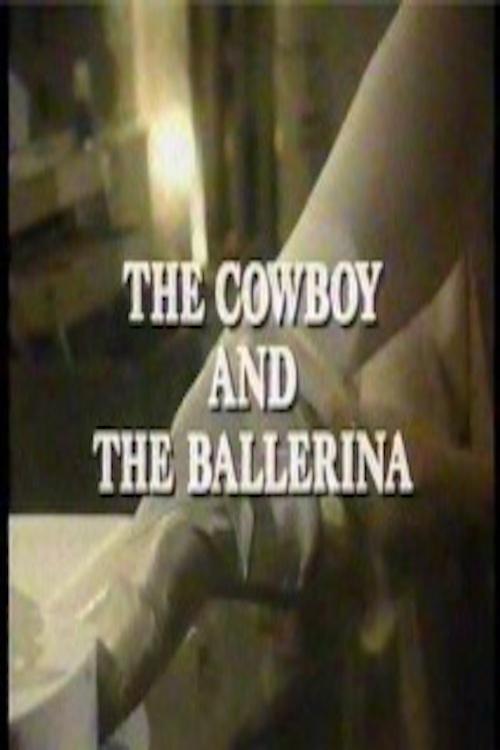
The film opens with Bob Clayton, a former world champion rodeo rider, living the rough, restless life of a man whose best years belong to the arena until fate throws him into the path of Natalia, a Russian ballerina traveling with her Soviet touring company in the United States. Natalia is elegant, controlled, and visibly frightened beneath the composure of a woman who knows she is being watched at every turn, because to her government she is not merely an artist but a national treasure. What she wants is simple and dangerous: to vanish from the company, defect, and make her way to New York City, where her mother now lives. Clay, a cowboy who has spent his life on broncos and open roads rather than in salons and theaters, finds himself drawn into her desperation almost before he understands the full risk of helping her. The romance begins in that first collision of worlds: his dust, leather, and instinct against her discipline, poise, and fear.
Natalia makes her move during the U.S. tour, slipping away from the company and landing in Clay's path when she needs it most. He gives her a ride, and what begins as a practical escape quickly becomes a shared journey across a country that feels enormous, dangerous, and strangely intimate when seen through the windshield of Clay's truck. Their early conversations reveal the cultural gulf between them, but also a growing tenderness. Clay is blunt and physically direct, while Natalia speaks with urgency about freedom, family, and the life she has been denied. She tells him she must reach her mother in New York, and that one chance at reunion is worth everything. Clay, who has likely lived by the code of helping a stranded person without asking too many questions, decides to stay with her. From that point on, the story becomes a chase, with their bond deepening even as the noose tightens around them.
Behind them come the Soviet agents, determined to stop the defection before Natalia can become unreachable. The opposition is personified by Col. Gori and Mme. Rostov, the two most important pursuers, who methodically work the routes, contacts, and likely hiding places Natalia and Clay might use. Their presence constantly interrupts any sense of safety. Every motel stop, every roadside conversation, every moment when Natalia might breathe is shadowed by the fear that someone has recognized her. The film plays that tension against the open American landscape: wide roads, lonely diners, neon signs, and isolated stretches of highway become places where pursuit feels inevitable. Clay's world of movement and risk proves useful, but it also exposes Natalia to new vulnerabilities. She is not only fleeing the Soviet system; she is trusting a man she has only just met, and Clay is risking his life for a stranger whose fate is already being treated as a political matter.
As they travel, the emotional center of the film shifts from mere escape into mutual dependence. Clay learns that Natalia's dream is not glamour but family. She is not chasing celebrity or comfort; she is trying to reclaim the human connection that state power has severed. Natalia, in turn, sees in Clay something unfamiliar: a man whose life has been shaped by physical courage rather than ideology, someone who can act before he has time to calculate consequences. The romance grows in the spaces between danger, in quiet exchanges inside the truck cab and in the nervous pauses after close calls. Their attraction is heightened by contrast: he is rugged and earthbound, she is graceful and almost ethereal, yet both are trapped in systems larger than themselves and both are trying to reclaim some kind of personal freedom.
The pursuit becomes more urgent as Col. Gori and Mme. Rostov close in. Each confrontation pushes the couple farther from simple flight and deeper into a series of moral and emotional choices. Clay cannot merely be her driver; he becomes her protector, strategist, and ultimately her partner. Natalia cannot remain a passive fugitive; she must decide whether she has enough trust in Clay and enough faith in her own resolve to keep going when every instinct says she should surrender. The Soviet agents, in contrast, stand for the machine she is fleeing: discipline without mercy, ownership disguised as duty. Their repeated attempts to recapture her reinforce the central conflict. Natalia is not only escaping individuals; she is defying a state that refuses to acknowledge her right to choose her life.
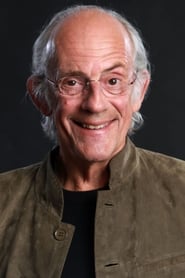
The supporting figures around them add texture to the chase. Woody, played by Christopher Lloyd, appears in the orbit of the story as part of the world Clay moves through, contributing to the film's offbeat tonal blend of western grit and romantic adventure. Wes Butler and Doc are part of the human landscape that Clay navigates, with Doc especially suggesting the kind of practical, world-weary wisdom that often surrounds a cowboy hero. A TV newsreader also appears, reminding the audience that Natalia's disappearance may not be just a private matter but a story that can spill into the public eye. The presence of Anjelica Huston in the cast materials suggests another important layer of intrigue, though the available information does not identify her role clearly enough to place her precisely in the action. Still, the film's structure makes clear that every side character functions inside the same pressure system: everyone either helps Clay and Natalia or threatens to expose them.
As the journey continues, the emotional stakes sharpen because Natalia's defection is no longer an abstract plan. Every mile brings her closer to her mother in New York and farther from the reach of the company that claims her. Clay, meanwhile, is pulled into a choice that may define the rest of his life. He begins as a man with a past--specifically, a former world champion bronco rider, someone who has already lived through the glory and punishment of competition--but now he is moving toward a different kind of test. The rodeo has taught him how to stay on something wild and dangerous long enough to survive. Natalia, in a way, is that wildness now: not uncontrollable, but impossible to reduce to easy rules. He has to ride out a pursuit he cannot defeat with strength alone.
The film's tension builds toward the final stretch as the agents keep coming and the couple's path narrows. What makes the climax effective is not just the external danger but the emotional realization that Natalia's freedom has become inseparable from Clay's willingness to stand with her. Their relationship is tested by the possibility that helping her may cost him everything he has left. Yet he continues. Natalia, seeing this, must confront the fact that freedom is no longer a dream she can pursue alone. She depends on his loyalty, and he depends on her trust.
The ending, in keeping with the romantic-chase structure, resolves around whether Natalia can finally break free of the Soviet net and reach the life she has been seeking in New York. The available plot material confirms that the story is driven by their attempt to outwit Col. Gori and Mme. Rostov while Clay helps Natalia reach her mother, but it does not provide a verified scene-by-scene account of the final confrontation, any specific deaths, or a detailed last exchange. What is clear is that the film completes its arc by bringing the escape and the romance to a conclusion in which Natalia's defection is the decisive act, Clay's support is the emotional fulcrum, and the pursuit by the Soviet agents is brought to its end. The narrative is built to close on the question of whether love can cross national, cultural, and political boundaries--and it answers that question by letting Clay and Natalia's bond carry them through the final danger and into the possibility of a new life together.
More Movies Like This
Browse All Movies →



What is the ending?
In the ending of "The Cowboy and the Ballerina," the cowboy, who has been struggling with his feelings for the ballerina, ultimately decides to embrace his emotions and pursue a relationship with her. The ballerina, having faced her own challenges, reciprocates his feelings. They share a heartfelt moment that signifies their connection, leading to a hopeful future together.
Now, let's delve into the ending in a more detailed narrative fashion:
As the final act unfolds, the scene shifts to a grand theater where the ballerina is preparing for her performance. The atmosphere is electric with anticipation, and the stage is adorned with vibrant colors and intricate set designs. The ballerina, dressed in her elegant costume, stands backstage, her heart racing. She is filled with a mix of excitement and anxiety, knowing that this performance could define her career.
Meanwhile, the cowboy, dressed in his rugged attire, arrives at the theater, his presence a stark contrast to the refined world of ballet. He navigates through the crowd, his eyes scanning for the ballerina. His internal struggle is palpable; he has come to realize that his feelings for her run deeper than mere admiration. He wants to support her, to be part of her world, despite the differences that separate them.
As the performance begins, the ballerina takes the stage, her movements graceful and captivating. The cowboy watches from the audience, his heart swelling with pride and longing. Each pirouette and leap she makes resonates with him, reminding him of the beauty and passion she brings to life. He feels a sense of urgency to express his feelings, to bridge the gap between their two worlds.
After the performance, the theater buzzes with applause and admiration. The ballerina, glowing from the success of her show, steps off the stage, her heart still racing. She is met by the cowboy, who approaches her with a mixture of nervousness and determination. Their eyes lock, and in that moment, the unspoken connection between them is undeniable.
The cowboy takes a deep breath, his voice steady yet filled with emotion. He confesses his feelings, expressing how he has come to appreciate not just her talent but the person she is. The ballerina, touched by his sincerity, reveals that she has also been grappling with her own feelings for him. She admires his strength and authenticity, qualities that have drawn her to him despite their contrasting lifestyles.
In a poignant moment, they share a tender embrace, symbolizing their willingness to overcome the barriers that once kept them apart. The cowboy's rugged exterior softens as he holds her close, and the ballerina feels a sense of safety and acceptance in his arms. This moment signifies a turning point for both characters, as they choose to embrace their love and the challenges that may come with it.
As they step outside the theater, the night sky is illuminated by stars, mirroring the hope and promise of their future together. The cowboy and the ballerina walk side by side, hand in hand, ready to face whatever lies ahead. Their journey is just beginning, but they are no longer alone; they have found a partner in each other.
In the final scenes, the camera captures their silhouettes against the backdrop of the city lights, a visual representation of their union. The film closes on this hopeful note, leaving the audience with a sense of warmth and the belief that love can transcend differences, bringing together even the most unlikely of pairs.
Is there a post-credit scene?
The movie "The Cowboy and the Ballerina," produced in 1984, does not feature a post-credit scene. The film concludes its narrative without any additional scenes or content after the credits roll. The story wraps up with the resolution of the main characters' arcs, focusing on the relationship between the cowboy and the ballerina, leaving audiences with a sense of closure.
What motivates the cowboy character to pursue a relationship with the ballerina?
The cowboy, initially portrayed as rugged and solitary, is drawn to the ballerina's grace and passion for dance. His motivation stems from a desire to break free from his mundane life and experience the beauty and artistry that the ballerina embodies. As he observes her dedication and talent, he becomes increasingly enchanted, leading him to confront his own vulnerabilities and desires.
How does the ballerina's background influence her relationship with the cowboy?
The ballerina comes from a world of discipline and artistic ambition, which contrasts sharply with the cowboy's free-spirited lifestyle. Her background instills in her a sense of commitment to her craft, but it also creates internal conflict as she grapples with the expectations of her career versus her growing feelings for the cowboy. This tension adds depth to her character and complicates their relationship.
What challenges do the cowboy and ballerina face in their relationship?
The couple faces several challenges, including societal expectations and their differing lifestyles. The cowboy struggles with his insecurities about fitting into the ballerina's refined world, while she faces pressure from her peers and the ballet community to remain focused on her career. These external and internal conflicts create a rich narrative tension as they navigate their feelings for each other.
How does the setting influence the development of the characters' relationship?
The contrasting settings of the cowboy's rugged, open landscapes and the ballerina's elegant, urban ballet studios serve to highlight their differences and the barriers they must overcome. The cowboy's world is one of freedom and simplicity, while the ballerina's environment is structured and demanding. These settings not only shape their individual identities but also play a crucial role in the evolution of their relationship as they learn to appreciate each other's worlds.
What pivotal moment leads to a turning point in the cowboy and ballerina's relationship?
A pivotal moment occurs during a climactic scene where the cowboy attends one of the ballerina's performances. Witnessing her in her element, he is overwhelmed by a mix of admiration and fear of inadequacy. This experience forces him to confront his feelings and ultimately leads to a heartfelt conversation between them, where they both express their fears and desires, marking a significant turning point in their relationship.
Is this family friendly?
"The Cowboy and the Ballerina," produced in 1984, is generally considered family-friendly, but it does contain some elements that may be sensitive for children or more sensitive viewers. Here are a few aspects to consider:
-
Romantic Tension: The film explores themes of romance and attraction, which may include scenes of flirtation or emotional conflict that could be confusing for younger audiences.
-
Conflict and Rivalry: There are moments of rivalry and conflict between characters, which may involve emotional confrontations or misunderstandings that could be upsetting for some viewers.
-
Cultural Differences: The film highlights the contrast between the cowboy lifestyle and the world of ballet, which may lead to moments of tension or misunderstanding that could be perceived as negative.
-
Emotional Struggles: Characters experience personal challenges and emotional struggles, including feelings of inadequacy or rejection, which may resonate deeply and evoke empathy but could also be heavy for sensitive viewers.
Overall, while the film is lighthearted in many respects, these elements may require parental guidance for younger audiences.








